China to Boost Low-Altitude Economy with Focus on Safety and Innovation in 15th Five-Year Plan
Information from the National Development and Reform Commission (NDRC) shows that in recent years, with joint efforts from all sectors, China’s low-altitude economy has made a good start. During the 15th Five-Year Plan period, the NDRC will adhere to healthy and orderly development as the theme and reform and innovation as the main line, striving to realize a low-altitude economy that is “well-managed, safely flown and fully utilized”.
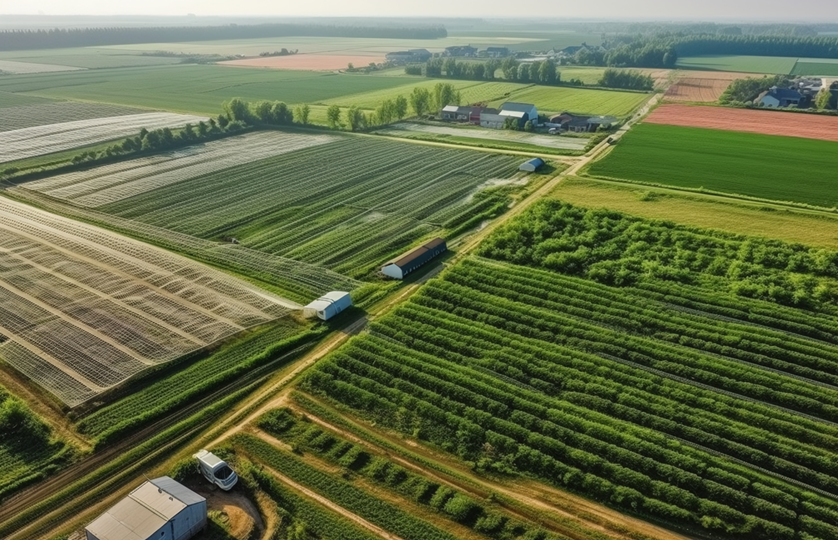
Zheng Jian, Director of the Low-Altitude Economy Development Department of the NDRC, said, “We have sorted out typical application scenarios of low-altitude economy in various regions in recent years, such as logistics and transportation, medical rescue, urban governance, agricultural and forestry operations, and surveying and mapping inspections, forming many vivid case studies.” He added that the low-altitude economy is entering daily life, safeguarding people’s well-being, effectively promoting economic and social development, and enhancing people’s sense of gain, providing an “airborne answer” to people’s livelihood needs.
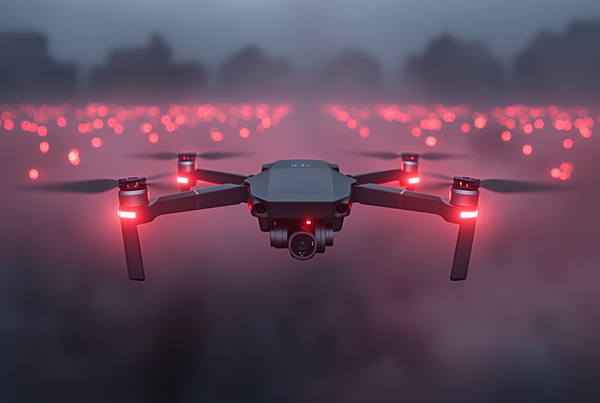
Zheng Jian noted that the NDRC will focus on five key areas in future development. First, taking safety as the premise, the commission will prioritize ensuring the safety of the low-altitude economy, especially flight safety, strengthen the full-cycle management of aircraft, innovate and improve safety supervision mechanisms, and strictly implement safety supervision measures. At present, various regions are introducing management regulations in line with their actual conditions to refine specific norms for low-altitude safety management.
Second, taking industry as the support, the NDRC will consolidate and enhance industrial advantages, increase the research and development of new aircraft such as large-load fixed-wing UAVs and long-endurance vertical take-off and landing aircraft, form a spectrum of key low-altitude equipment, drive upstream and downstream supporting industries, and build comprehensive cluster development highlands according to local conditions. China Aviation News reported that China’s low-altitude economy industry chain has initially taken shape, with continuous breakthroughs in core equipment research and development.
Third, taking scenarios as the driving force, the commission will adhere to the “three-first-three-later” principle: first cargo then passengers, first isolation then integration, first suburban then urban areas. On the premise of strict risk control and safety assurance, it will support qualified regions to prioritize the promotion of mature scenarios and foster potential new ones. It will also improve refined airspace management and plan low-altitude air routes scientifically.
Fourth, taking innovation as the driving force, the NDRC will deepen basic theoretical research, promote collaborative research among enterprises, universities and research institutes led by advantageous enterprises, support capable private enterprises to take the lead in major scientific and technological research tasks, and break through key technologies such as intelligent flight and hybrid power systems.
Fifth, taking cooperation as the path, China will actively participate in global low-altitude economy governance, improve foreign cooperation mechanisms, support overseas advantageous enterprises to carry out strategic investment or settle supporting industries in China, and help domestic enterprises expand overseas markets. “We are studying and promoting good experiences such as ‘scan-and-fly’ in some regions to improve the efficiency of flight plan approval,” Zheng Jian said.