China’s New Aerogel Insulation Sheet: A 1,300℃ Firewall for New Energy Batteries
A lightweight insulation sheet, as small as an A4 paper and as thin as a coin, has emerged as a vital “safety guard” for new energy lithium-ion batteries. At the 14th Energy Storage International Summit and Exhibition held in early April, a new material developed by Professor Shen Xiaodong’s team from Nanjing Tech University attracted widespread attention—it is the world’s first high-heat-resistance aerogel insulation sheet for new energy lithium-ion batteries that can withstand temperatures up to 1,300℃, according to Science and Technology Daily.
“Lithium-ion batteries are the ‘heart’ of new energy vehicles and energy storage systems. Once a battery undergoes thermal runaway, the temperature of a single cell can rise sharply within five to six seconds and even cause an explosion, so it is crucial to quickly block the transfer of high temperature to adjacent cells,” Shen Xiaodong explained, demonstrating the insulation sheet. Over 20 years, his team has improved the temperature resistance of aerogel insulation sheets from 650℃ to 1,300℃ and extended the heat insulation time to 2 hours by adjusting the aerogel network structure and optimizing drying technology.
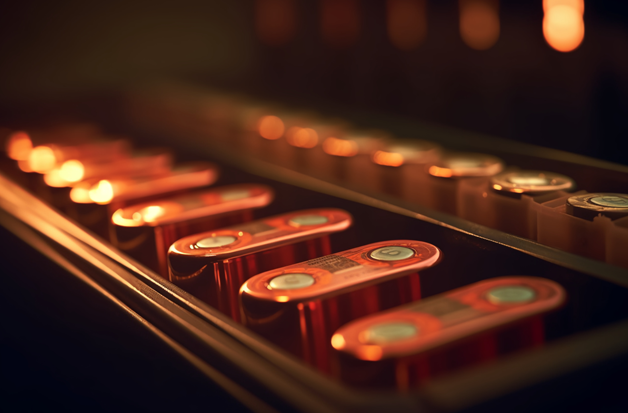
Aerogel, known as the “king of thermal insulation” in the material field, has a three-dimensional network structure woven by countless nanoparticles, with 99% of its space filled with air, according to China Materials News. This unique structure makes its thermal conductivity lower than that of air, making it ideal for lithium-ion batteries which require lightweight and high-temperature-resistant insulation materials.
The team overcame multiple technical challenges during the R&D process. “To make aerogel withstand temperatures above 1,000℃, we need a stronger nanopore framework and tighter combination between nanoparticles,” said Cui Sheng, a professor at Nanjing Tech University and core team member. After repeated attempts, Kong Yong, another core member, adjusted the pH value of the catalyst, which stabilized the aerogel framework while maintaining its thermal insulation performance.
Cost control and production efficiency were also key breakthroughs. Teng Kaiming, general manager of Jiangsu Jiayun New Materials Co., Ltd., led the team to optimize the supercritical drying process, increasing the purity of alcohol to over 95% and designing flexible breathable separation nets to improve extraction efficiency, according to Technology Daily. They also developed an alcohol recovery process, achieving a recovery rate of over 99.5% and reducing raw material costs by more than half.
Another major innovation is the aerogel’s flexibility. Traditional silica aerogel is brittle, but the team transformed its rigid structure into an elastic one by selectively “removing” some connection nodes of the nanopore network, allowing it to withstand over 90% elastic compression without structural damage. “This solves the problem of battery expansion and contraction during charging and discharging,” Kong Yong noted.
Currently, these aerogel insulation sheets have been widely applied in high-temperature kilns, aerospace, and power batteries of enterprises such as CATL, BYD, Sungrow Power Supply and Xiaomi Auto. CATL has integrated such aerogel insulation pads into its NP3.0 technology platform, enhancing battery safety in extreme thermal runaway scenarios. In 2025, Jiangsu Jiayun New Materials Co., Ltd. achieved sales revenue of over 200 million yuan, reflecting the broad market prospects of the new material.