World’s Highest Trough CSP Plant Breaks Ground in Tibet, China
China General Nuclear Power Group (CGN) announced that the world’s highest trough concentrated solar power (CSP) plant — the 50MW CGN Tibet Uma Tang CSP project — officially broke ground on the 6th. Located at an altitude of 4,550 meters, the project marks the first commercial application of China’s fully independent intellectual property 8.6-meter large-aperture trough collector, and is equipped with a 6-hour molten salt heat storage system to enable continuous power generation at night and flexible peak regulation, providing stable and reliable clean power support for Tibet’s power grid, according to Xinhua News Agency.
Mei Fangquan, Director of the Energy Bureau of the Tibet Autonomous Region, stated that CSP has great potential as a peak-regulating and basic power source in Tibet. “Accelerating the construction of CSP projects can effectively enhance the regulation and support capacity of the local power system,” he noted.
It is reported that the project adopts heat transfer oil trough CSP technology, with a collector field area of 242,000 square meters and 68 loops in total. Among them, 8 loops use the 8.6-meter large-aperture trough collector independently developed by CGN, while the remaining 60 loops adopt collectors with an aperture width of 5.77 meters. The project, invested and developed by CGN New Energy (Dangxiong) Co., Ltd., is undertaken by China Power Construction Group Northwest Survey, Design and Research Institute Co., Ltd. as the EPC general contractor, with Gansu Huayan Engineering Management Consulting Co., Ltd. responsible for construction supervision.
Hu Yaoguang, Chairman of CGN New Energy Holdings Co., Ltd., introduced: “The 8.6-meter large-aperture trough collector is currently the largest aperture trough collector in international commercial application.” Compared with the 5.77-meter aperture collector, this collector increases the concentration ratio and energy flux density by 18% and 17.5% respectively, and reduces the unit power generation cost by 10%.
He added that the commercial application of this technology will drive the coordinated upgrading of China’s entire trough CSP industrial chain, further consolidate the localization capacity of key materials and core components, and promote the transformation of China’s core CSP equipment from technology introduction to independent innovation. The project is located in an alpine and anoxic area, facing extreme natural conditions such as low average annual temperature, large temperature difference between day and night, low air density and strong ultraviolet radiation, with an effective construction period of only April to October each year.
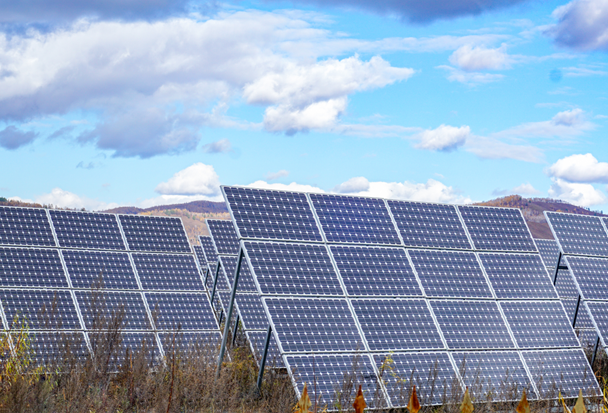
The newly started CSP project is a core component of the CGN Tibet Dangxiong Uma Tang “CSP + PV” integrated project, which includes 50MW CSP and 400MW photovoltaic power generation and is scheduled for full commissioning in 2027. The photovoltaic power generation project, which adopts a “photovoltaic-pastoral complementary” model to realize the coordinated development of photovoltaic power generation and ecological animal husbandry, started construction in September 2025.
It is estimated that after the full completion of the integrated project, the average annual on-grid electricity will be about 719 million kilowatt-hours, equivalent to saving about 216,900 tons of standard coal and reducing carbon dioxide emissions by about 652,300 tons. The project team has set up living heating and oxygen supply facilities, as well as supporting hyperbaric oxygen chambers, to fully ensure the health and safety of the construction team and the steady progress of the project.