China Advances Energy Power Construction Amid Global Uncertainty
BEIJING, April 1 — As the Middle East situation fluctuates and international crude oil prices swing sharply, energy security has once again become a core global concern. This year’s Government Work Report proposes formulating an outline for building an energy power, focusing on constructing a new power system, accelerating smart grid development, expanding new energy storage and promoting green electricity application, according to Xinhua News Agency.
The 15th Five-Year Plan Outline for the first time incorporates "building an energy power" into the national strategic plan. At the recently held 11th China Energy Development and Innovation Conference, Shi Yubo, Chairman of the China Energy Research Society, noted that energy consumption enters a long period of rigid growth after per capita GDP exceeds 10,000 US dollars, and a strong energy system is essential for building a powerful country.
Over the past decade, China has made historic achievements in building a new energy system: the proportion of non-fossil energy consumption has surpassed that of oil for the first time, and the installed capacity of wind and photovoltaic power has exceeded thermal power. By 2025, a "one decrease and multiple increases" power generation structure has become the norm, with investment in new energy storage and hydrogen energy doubling.
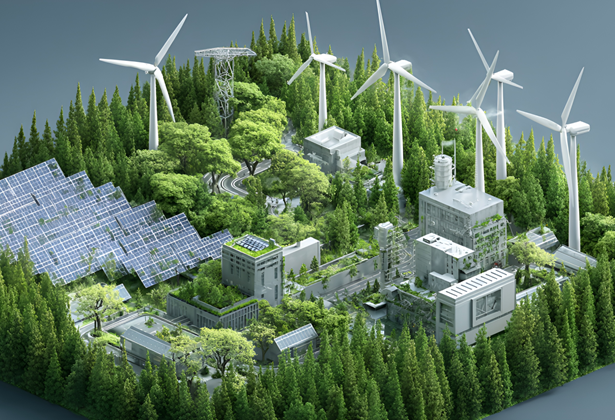
Liang Zhipeng, Director of the Renewable Energy Professional Committee of the China Energy Research Society, emphasized that renewable energy should shift from a "supplementary energy" to a "main energy", ensuring new installed capacity and expanding consumption channels. According to the "China Energy Transition Outlook 2025" released by the Energy Research Institute of the Chinese Academy of Macroeconomics, wind power installed capacity will rise from 520 million kW in 2024 to 3.22-3.34 billion kW by 2060, with photovoltaic capacity reaching 5.5-6.5 billion kW.
Terminal electrification is a necessary means to build an energy power. Data shows China’s electrification rate reached 28.8% in 2024, higher than major European and American economies, and is expected to hit 35% by 2030. He Yongjian, Party Secretary and Executive Director of SPIC Economic and Technological Research Consulting Co., Ltd., said power will account for over 50% of terminal energy consumption by 2050.
Hydrogen energy, a clean secondary energy, plays a key role in carbon reduction. This year’s Government Work Report proposes establishing a national low-carbon transition fund to foster hydrogen and green fuels as new growth drivers. Li Jingguang, Party Secretary and Chairman of China Energy Construction Hydrogen Energy Co., Ltd., stated that hydrogen helps reduce oil dependence and carbon emissions.
Currently, China’s planned green ammonia capacity is about 20 million tons/year and green methanol about 26 million tons/year. Calculations show green ammonia can reduce crude oil import dependence by 1.77%, while green methanol cuts it by 2.33%. Green methanol and ammonia reduce carbon emissions by 81% compared with petroleum, providing a competitive clean alternative.
With systematic policy support and technological innovation, China is steadily advancing energy power construction, balancing energy security with green transition. The country’s efforts in renewable energy development, electrification promotion and hydrogen application have laid a solid foundation for a clean, low-carbon and efficient modern energy system, setting an example for global energy transformation.