Chinese Regions Accelerate Application Scenario Cultivation to Boost Tech-Industry Integration
On March 23, the Guangdong Provincial Development and Reform Commission publicly released the Work Plan for Accelerating Application Scenario Innovation in Guangdong Province, putting forward a number of specific measures, including building a batch of application scenario innovation pilot zones, polishing and releasing application scenario demand lists, and exploring and promoting a number of new technologies and products.
In fact, since March, regions including Jiangsu Province, Shanxi Province, Hubei Province and Sichuan Province have all arranged a new round of work around application scenario cultivation.
In November 2025, the General Office of the State Council issued the Implementation Opinions on Accelerating the Cultivation and Opening Up of Scenarios to Promote the Large-Scale Application of New Scenarios. The accelerated pace of application scenario cultivation in various regions is the implementation of the Implementation Opinions, which helps reshape industrial structure and consumption patterns, guide various capitals to invest in truly valuable innovation directions, and accumulate energy for the integrated development of technological innovation and industrial innovation.

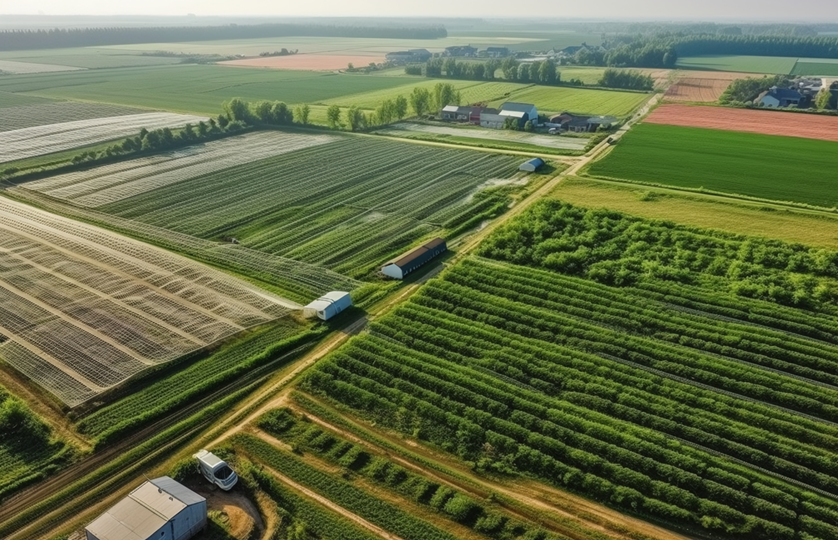
From smart agriculture and intelligent manufacturing to urban governance, the focus of local relevant departments in cultivating application scenarios covers the primary, secondary and tertiary industries, and also involves a number of emerging pillar industries, among which low-altitude economy has attracted much attention.
China’s low-altitude economy industrial ecosystem is accelerating improvement, with its relevant institutional framework, standard system and infrastructure construction having laid a certain foundation. At the same time, power battery technology continues to iterate, and flying vehicles are evolving in multiple directions. On the whole, the commercial inflection point of the low-altitude economy is approaching. At this time, local efforts to strengthen application scenario cultivation will greatly help open up the commercial closed loop of the low-altitude economy, making it easier to achieve social and economic benefits.
Application scenarios are the junction of technology and economy. In production practice, there is often a problem of difficult accurate connection between scientific and technological innovation achievements and industrial development pain points, which can be alleviated to a large extent by the large-scale emergence of application scenarios. Application scenarios can provide a dynamic iteration verification space for new technologies and products, allowing users to truly feel the practicality and reliability of new technologies and products, thus gaining a good consumption experience. Meanwhile, they can provide more channels for the R&D and production end to collect feedback, so as to make targeted optimization and adjustment of technologies and products in the follow-up and effectively avoid resource waste such as "innovation bubbles".
Since the release of the Implementation Opinions, China’s full-chain support system related to application scenario cultivation has been continuously improved. New policy measures and application scenario project lists have been intensively launched at the levels of relevant competent departments of the State Council, provinces and cities. Driven by this, application scenarios for emerging pillar industries such as satellite Internet and low-altitude logistics have been continuously expanded, and application scenarios for future industries have achieved multi-dimensional forward-looking layout, making the path from "application scenarios" to "urban landscapes" and "scientific and technological innovation scenes" broader and broader.
Accelerating the cultivation of application scenarios and giving full play to their leading role in the large-scale commercial application of new technologies and products requires pooling the efforts of relevant departments, enterprises, industry associations and other parties, establishing a normalized cross-departmental and cross-regional coordination mechanism, promoting the efficient flow of factors such as data, technology and capital, and promoting the formation of a smooth path of "technological breakthrough - scenario verification - industrial application - system upgrading".
After the completion of new scenarios, they should be opened for use as soon as possible, and relevant departments need to track their effects and collect feedback in a timely manner. In addition, after launching application scenario projects, various regions and departments should fully stimulate the enthusiasm of small and medium-sized enterprises to participate, and create good conditions for enterprises to play their role as innovation main bodies.