China’s Advanced Meteorological Observation Network Guards Future Home on World Meteorological Day
March 23 this year marks the 66th World Meteorological Day, with the theme “Measure Today’s Weather, Protect Tomorrow’s Home”. It has been learned that during the 14th Five-Year Plan period, China has achieved leapfrog development in meteorological observation, with a comprehensive three-dimensional observation system fully established.
This system comprises 10 in-orbit Fengyun meteorological satellites, 842 weather radars and more than 100,000 ground meteorological observation stations, with the average distance between automatic meteorological stations across the country reduced to 9.8 kilometres, significantly improving observation density and accuracy. Behind this “meteorological sky net” covering land and sky lies China’s upgrading strength in meteorological science and technology, advancing from catching up to keeping pace and even leading in some fields.
China is the only country in the world operating meteorological satellites on four near-Earth orbits — dawn-dusk, morning, afternoon and inclined — for operational purposes. Its independently developed Beidou Sounding System has achieved major breakthroughs, completing the upgrading of 131 sounding stations nationwide in September 2025 and pioneering a three-stage observation mode of “ascent — levitation — descent”. Meanwhile, the world’s largest ground-based remote sensing vertical observation network has been built simultaneously, enabling real-time observation of atmospheric temperature, humidity, wind speed, water vapour and aerosols from near the ground to an altitude of 10,000 metres.

Supported by this high-quality observation network, the accuracy of China’s weather forecasts has been continuously improved. The average advance time for severe convective weather warnings has reached 48 minutes, a record high, while the 24-hour typhoon track forecast error has been reduced to 58 kilometres, maintaining an internationally leading level.
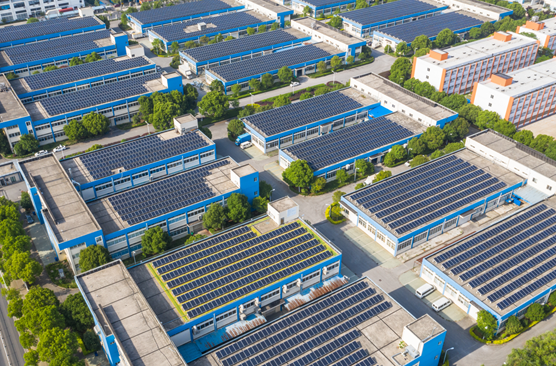
The “meteorological sky net” has not only strengthened the “monitoring line of defence” against disastrous weather, but also accelerated the transformation of observation efficiency into service benefits. Observation data has helped more than 2,000 new energy stations achieve accurate forecasting of wind and solar resources, while the “Waliguan Curve” has witnessed China’s commitment to global climate governance. The national agricultural meteorological experimental station network will achieve full coverage of grain production functional areas, and special observation products such as road icing and visibility have effectively guaranteed traffic safety.
At present, China has built an observation system featuring coordination between high and low orbits and multi-satellite networking. Hundreds of kilometres above the ground, 10 Fengyun meteorological satellites are performing their missions day and night. The Fengyun-4C satellite in geostationary orbit has the capability of continuous rapid imaging at 1-minute intervals in regional areas. The spatial resolution of the interferometric atmospheric vertical sounder has been improved from 12 kilometres to 8 kilometres, enabling normal observation every hour and intensive observation every 15 minutes to quickly lock onto targets when disastrous weather strikes suddenly.
During the 14th Five-Year Plan period, Fengyun meteorological satellites have provided services to 133 countries and regions around the world, with the number of countries and regions accessing the Fengyun Meteorological Satellite Application Service Platform increasing by 107 per cent. A total of 38 countries have registered in the international user disaster prevention and mitigation emergency support mechanism. Mazu, China’s national early warning programme, has been implemented in 5 countries and is accessible via the “cloud” to more than 40 countries, contributing Chinese wisdom to global meteorological disaster prevention and mitigation.
After the continuous efforts of several generations of meteorological workers, China has built the world’s largest, most comprehensive integrated observation system with coordination between land, sea, air and space, making the once unpredictable changes in wind and clouds increasingly “perceivable and predictable”.