China Accelerates 6G R&D, Stepping into Critical Phase of Technology Integration
From space-air-ground integrated networks to the in-depth integration of communication, perception and artificial intelligence, 6G is regarded as an important technological foundation for reshaping the global digital information infrastructure landscape. This year’s government work report proposes to foster and develop future industries including future energy, quantum technology, embodied intelligence, brain-computer interfaces and 6G.
Against the backdrop of intensive layout of 6G technology and industrial ecology by major global economies, how to seize the initiative while addressing key challenges has become a focus of attention among deputies, members and experts during the National Two Sessions.
China’s 6G R&D is accelerating, with the launch of the second phase of 6G technology trials and the accumulation of more than 300 key technological reserves. This marks that 6G R&D has stepped into a critical phase from "key technology verification" to "technical scheme integration and prototype development".
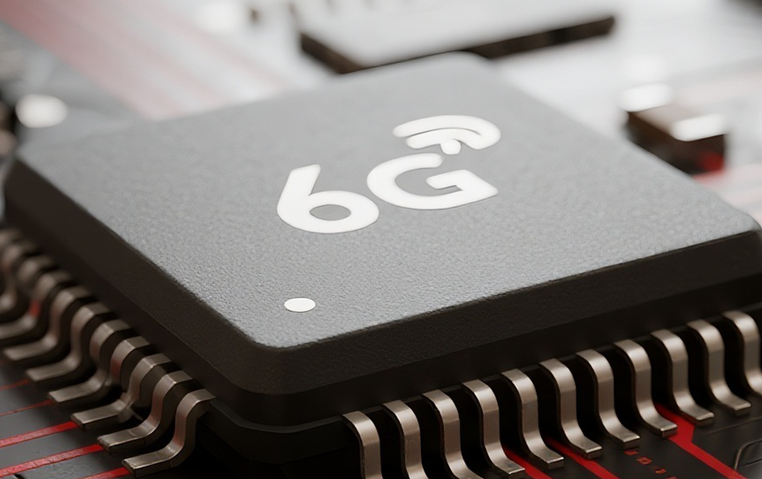
6G will deeply integrate multiple capabilities such as communication, perception, computing and artificial intelligence to achieve global coverage through space-air-ground integration. According to the 6G vision released by the International Telecommunication Union, 6G will significantly enhance peak data rate and spectral efficiency, and introduce a series of revolutionary new capabilities, driving the transformation of communication from "single transmission" to "comprehensive services".
Far more than just an improvement in communication speed, 6G represents a generational leap from connection to perception and from the ground to space and sky. Its most prominent feature is "network coverage everywhere, computing power everywhere, and intelligence everywhere". In daily life, 6G will support holographic communication, immersive entertainment and wide-area interconnection of multiple intelligent agents; in the production field, it will promote the upgrading of the industrial internet, enabling real-time monitoring and collaborative operation of factory equipment.
For instance, users can realize holographic interaction with relatives and friends far away through 6G networks, enjoying an immersive remote communication experience. In the future, 6G will also feature "intelligent agent communication networks", where devices such as nanny robots, robot dogs and intelligent mobile phones can collaboratively complete tasks such as order booking, travel arrangement and home care with user authorization, greatly improving life convenience. Moreover, 6G is an integration of computing power networks, artificial intelligence, new materials and aerospace, and its development will directly drive the accelerated growth of cutting-edge industrial chains such as satellite internet, intelligent metasurfaces and quantum communication.
China launched its 6G R&D layout as early as 2018. Relying on the advantages of the new nationwide system and the synergy of the entire industrial chain, it has made remarkable progress in technology trials, patent reserves and industrial advancement. Currently, China ranks first in the world in 6G patent applications, accounting for about 40%, with advantages in talent, technology and ecology, including a large-scale and well-structured talent team, leading patents, rich application scenarios, solid infrastructure and a complete industrial chain.
As China’s 6G R&D enters a critical stage of standard formulation and industrial shaping, continuous efforts are needed in technological research, standard setting and industrial ecology construction. Key research directions include new network architectures, intelligent agent communication, cooperative communication and sensing, and digital twins. Efforts will also be made to study new needs of information infrastructure through application scenarios, drive 6G technology development through scenario traction, and cultivate scalable new terminals and applications to build a prosperous ecology of terminal-network-industry synergy.
The period 2025-2026 is a critical period for 6G R&D, with the main task of integrating more than 300 key technologies into a prototype system that is operable, practical, low-carbon and applicable to global space-air-ground-sea scenarios. To support this, it is suggested that universities further break disciplinary barriers, set up interdisciplinary majors such as "communication + AI" and "communication + aerospace", and cultivate compound talents with multi-dimensional knowledge to provide solid talent support for the 6G era.