Guangdong Leads China’s Robot Industry, Forging Global Competitive Cluster
Robot automation has become a new normal in Guangdong, with 100% robotic operation in new energy vehicle flexible welding lines (production cycle only 74 seconds), 50% single-shift capacity increase via embodied intelligence welding robots in auto parts manufacturing, and 99.3% first-pass qualification rate in air conditioner automated assembly lines. Human-robot collaboration is reshaping production and living landscapes across the province.
Premier Li Qiang proposed in the government work report on the 5th that a growth and risk-sharing mechanism for investment in future industries should be established, fostering the development of future energy, quantum technology, embodied intelligence, brain-computer interfaces, 6G and other emerging sectors. As a key carrier and application scenario for embodied intelligence, the robot industry, deeply integrated with AI technology, has become a vital pillar for technological self-reliance and new productive forces, driving industrial upgrading in manufacturing, services and other fields.
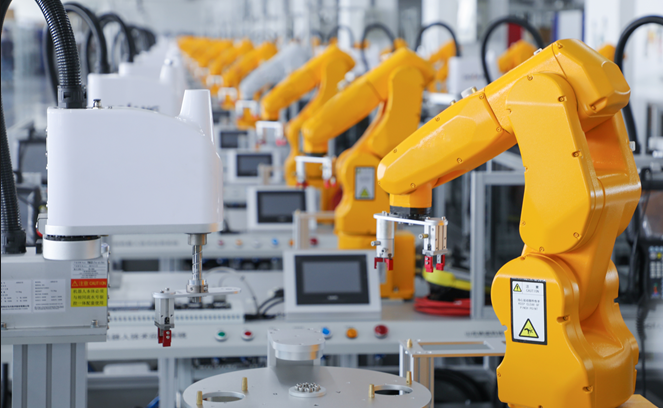
Marching toward the "15th Five-Year Plan" period, Guangdong is accelerating its lead in the intelligent robot track with a full industrial chain layout. As a major robot production province, Guangdong has ranked first in China in industrial robot output for six consecutive years, a testament to its strong strength in intelligent manufacturing and its pivotal position in the global robot innovation landscape.
Guangdong boasts a wide range of robot application scenarios, leading the country in penetration rate. From industrial manufacturing to urban services, deep-sea operations to high-altitude cleaning, and medical rehabilitation to elderly care, robots have been widely adopted. For instance, a self-developed single-port laparoscopic surgical robot has been put into clinical use, requiring only one incision compared to 4-6 incisions of traditional models, significantly reducing patient trauma.
Policy support underpins this large-scale application. In 2025, Guangdong issued policies to promote AI and robot industry innovation, launching "AI +" and "Robot +" initiatives, encouraging the opening of application scenarios in healthcare, education and urban management, and supporting the construction of robot production bases. The province also boasts unique strategic advantages: all 31 manufacturing categories, 70% of core robot component enterprises concentrated in the Pearl River Delta, and diverse "land-sea-air" application scenarios.
A sound industrial ecosystem drives efficient development. A robot can be assembled within 1-2 weeks in Guangdong, thanks to one-stop industrial chain services that reduce PCB prototyping costs and shorten delivery cycles. The Guangdong-Hong Kong-Macao Greater Bay Area is the only region globally with a complete robot supply chain, with an iteration speed 10 times that of Silicon Valley and 1/10 of the cost.
Technological innovation is the core driver. Guangdong has nearly 200 national and provincial AI innovation platforms, with nearly 1.5 billion yuan invested in five "Next-Generation AI" special projects since 2018. Breakthroughs include humanoid robots equipped with an open-source HarmonyOS-based operating system, expanding cross-field collaboration.
Targeting the "15th Five-Year Plan", Guangdong is building a "1+1+N" embodied intelligence training ground system to address data and training bottlenecks. Local governments have rolled out supportive measures: Shenzhen allocated 4.5 billion yuan for AI and robot development, while Guangzhou Development Zone issued 30 million yuan in "computing power, model and data coupons". The province’s first embodied intelligence robot insurance has also been launched to ease enterprise concerns.
Anchoring high-quality development goals, Guangdong is accelerating the upgrading of its robot industry toward high-end and intelligent directions. With continuous technological breakthroughs, policy support and industrial integration, it is poised to build a globally competitive robot industry cluster, providing strong support for a modern industrial system.