Proposals to Optimize China’s PV Industry and Promote High-Quality Development
Recently, relevant suggestions have been put forward to address the excessive competition in the photovoltaic (PV) industry, with targeted solutions proposed from multiple dimensions including industrial chain classification standards, product safety thresholds, and protection of talents and intellectual property rights, aiming to promote the industry’s healthy and high-quality development.
It is pointed out that the current challenges facing the PV industry, which appear to be supply-demand imbalance, stem from deviations in competition logic. Initial progress has been made in addressing excessive competition, with the downward price trend curbed, though recovery varies significantly across different industrial links.
The PV industrial chain covers four core links: polysilicon, silicon wafers, cells, and modules. Due to obvious differences in technological maturity and development logic among these links, a one-size-fits-all regulation is ineffective, requiring targeted and precise standardization.
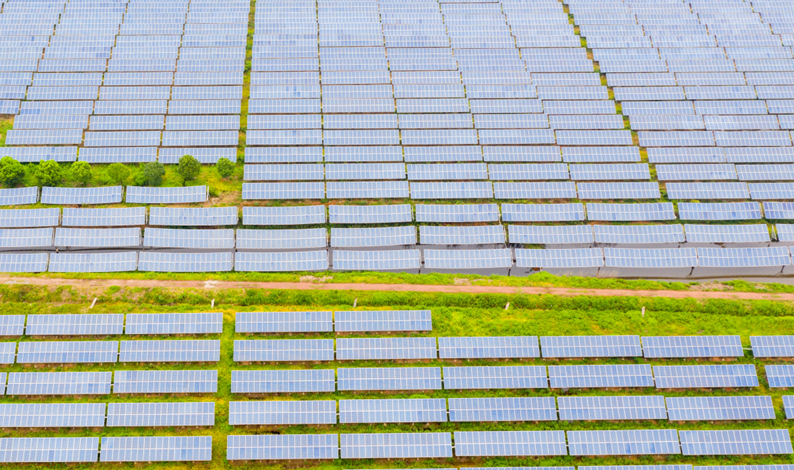
For links with mature technologies and convergent product performance such as polysilicon and silicon wafers, innovation focuses on cost and energy reduction. It is suggested to take energy consumption and environmental protection as the key, formulate and dynamically adjust per-unit product energy consumption quotas and pollutant discharge standards, order sub-standard enterprises to rectify within a time limit, and eliminate those that fail to rectify, thereby reducing inefficient production capacity through energy consumption standards.
As the technological core of the PV industry, the cell link is currently in a critical period of technological iteration such as Back Contact (BC) and Tunnel Oxide Passivated Contact (TOPCon). Strong support for innovation in this link is essential to maintain China’s global leading advantage. A technology classification and dynamic management mechanism should be established, with no scale restrictions on advanced production capacity and strict limits on sub-standard homogeneous capacity to encourage enterprises to increase R&D investment.
As the terminal of PV products facing the market, the module link is directly related to power station safety and user interests. Efforts should be made to protect consumers’ interests, adhere to quality and safety standards, and prohibit sales below cost to eliminate vicious price competition at the terminal and promote the industry’s transformation from "price competition" to "quality competition".
Weak protection of talents and intellectual property rights is identified as a key factor leading to excessive competition. Core technical talents and independent intellectual property rights are the foundation of enterprise innovation and a key support for national industrial competitiveness. It is urgent to take targeted measures at the national level to remove development obstacles and maintain a fair market environment.
Suggestions include strengthening the protection of talents and trade secrets by improving relevant legislation, optimizing judicial adjudication and lowering the threshold for rights protection. Meanwhile, the intellectual property protection system should be improved, with refined standards, enhanced support for cross-region evidence collection, and a fast-track for rights protection to severely punish malicious infringement. Only with legal protection can enterprises dare to invest in R&D and focus on innovation, ensuring China’s emerging industries maintain global advantages.
Standard system construction is emphasized to lead industrial upgrading. Low-quality PV products not only affect power generation benefits but also threaten the safety of power station property and people’s lives and property. It is suggested to raise the national mandatory safety access standards for PV modules, focusing on strengthening fire safety requirements, and further tighten module reliability standards to enhance product capacity to cope with extreme weather.
To transform the market orientation, it is proposed to learn from the experience of mandatory automobile emission standard upgrades, taking the corresponding module conversion efficiency of PV cell conversion efficiency as a mandatory indicator and prohibiting the sale of sub-standard products. Specific indicators can be dynamically adjusted according to industry capacity, such as setting a module conversion efficiency of over 23.2% corresponding to a reasonable capacity of 700GW to achieve supply-demand balance.
Three supporting measures are put forward: major purchasers should optimize bidding rules, reduce price weight, and give priority to advanced, efficient and reliable products; power grid enterprises should establish a mechanism of "no grid connection for modules with conversion efficiency below standard"; and product quality standards should be fully integrated into the procurement evaluation system to build a "high quality for high price" market orientation.
Optimism is expressed for the PV industry in 2026. With the improvement of various standards, the industry will gradually get rid of low-price competition, with enterprises focusing more on technological innovation and product quality improvement. High-quality enterprises with R&D, scale and financial stability advantages will take a leading position in industrial upgrading, promoting the high-quality development of China’s PV industry and contributing Chinese strength to global energy transition.