Proposals to Boost High-Quality Development of China’s PV Industry in 2026
During the 2026 national two sessions, how to better promote the high-quality development of the photovoltaic (PV) industry has become a focus of attention. Amid the country’s efforts to advance the "dual carbon" goals, it is proposed that the PV industry should no longer be managed as a general manufacturing sector, so as to better protect its leading global competitive edge and highlight its important role in national energy transition, as well as its significant strategic significance for national energy and foreign exchange security. Specific proposals include incorporating the PV manufacturing link into the energy industry management and establishing a dynamic balance mechanism for PV prices to achieve coordinated manufacturing and application, balanced security and transition, and unified policies and supervision.
As a key pillar for the country to achieve the "dual carbon" goals and build a new energy system, China’s PV industry has formed a global leading advantage. However, the industry is currently facing prominent issues such as insufficient coordination between manufacturing and application, mismatch between production capacity and power grid carrying capacity, and periodic imbalance between supply and demand.
Unregulated low-price competition has led the entire industry to suffer losses exceeding 100 billion yuan for two consecutive years, with the total market value in the capital market shrinking by nearly 4 trillion yuan from its peak. If this trend continues, it will not be conducive to the high-quality development of the industry.
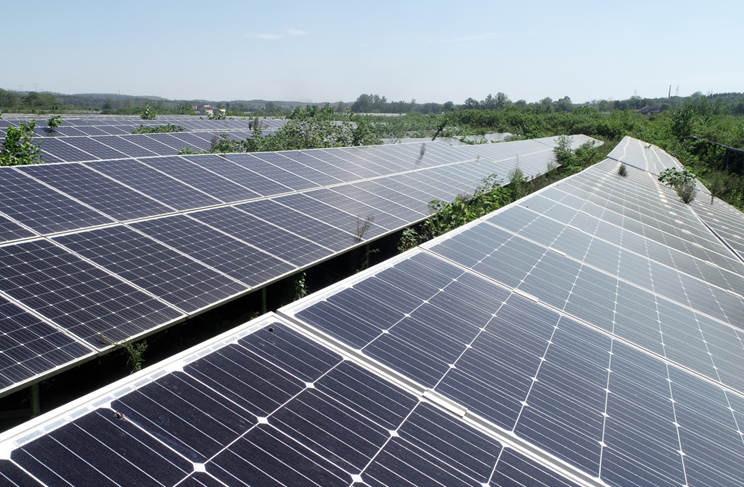
The internal and external market environment has also brought pressure to the industry. The implementation rules for the market-oriented reform of new energy on-grid electricity prices are inconsistent, and enterprises’ investment willingness has declined in the face of such uncertainties. Overseas, industry data shows that the global PV module production capacity outside China has exceeded 100GW, and the growth rate of China’s PV exports has slowed down, putting the industry under dual pressure from domestic and foreign markets.
To address the industry’s pain points, three proposals have been put forward to promote the PV industry to shift from "disordered expansion" to "high-quality development". Firstly, incorporate the PV industry into the overall planning and management of the energy sector. Multiple authorities should coordinate to integrate PV manufacturing capacity with energy development and power grid construction, and establish a coordinated linkage mechanism of "manufacturing - application - consumption" to solve the problem of production capacity mismatch from the source.
Secondly, establish a market regulation mechanism for the PV manufacturing link in accordance with the Energy Law of the People’s Republic of China. The operation of the PV manufacturing industry can be linked with the national PV installation plan and export demand to build a dynamic balance mechanism of "production based on demand", improve the price regulation system for the manufacturing end, establish a price early warning and emergency intervention mechanism, and build a risk mechanism to prevent and respond to abnormal fluctuations in market prices.
Thirdly, build a national unified monitoring platform. It is recommended to conduct real-time monitoring of the entire chain of PV data, including production capacity, output, prices and energy consumption, and improving the emergency guarantee and surplus monitoring system is also an important part.
Incorporating the PV manufacturing link into the energy industry management is not only an upgrade of the national energy management system, but also a key measure to safeguard the global leading advantage of PV, ensure energy security and support the implementation of the "dual carbon" goals. It is expected to help the industry get rid of vicious competition and enter a new stage of sustainable development.