China Makes Series of Breakthroughs in New Materials, Boosting Industrial Upgrade
Recent times have seen a spate of achievements in China’s new materials sector, with technological breakthroughs in various key materials—such as solar cells with a photoelectric conversion efficiency exceeding 15%, lithium batteries capable of efficient discharge at -50℃, and the verification of memory storage function of gallium oxide, a "star material" in semiconductors. These new materials are widely applied in important industries including new energy, medical care, aerospace and high-end manufacturing, playing a vital role in promoting industrial upgrading and ensuring industrial chain security, while also demonstrating China’s independent innovation capability in the new materials field.
Industry experts note that the recent concentrated technological breakthroughs in new materials have accurately addressed long-standing bottlenecks restricting industrial development.
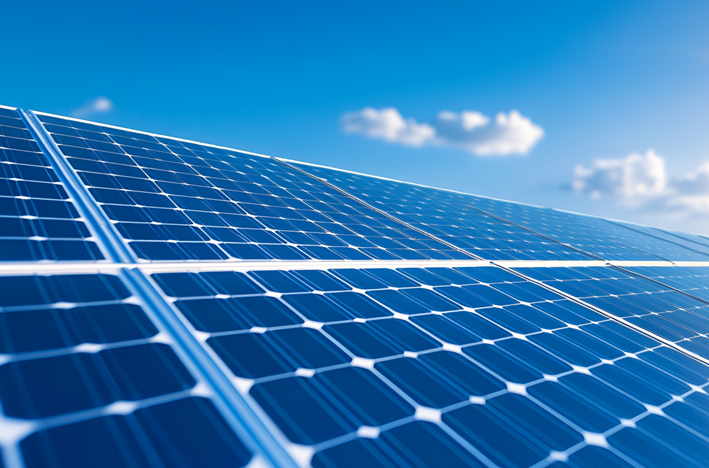
In the new energy photovoltaic field, a research team has overcome the bottleneck of "uncontrollable metal ion migration" in copper zinc tin sulfur selenium (CZTSSe) solar cells. By guiding the orderly arrangement of ions through a new interface phase, the team achieved a photoelectric conversion efficiency of over 15%, marking a significant step forward in next-generation solar cell research.
In the semiconductor field, a joint research team has experimentally verified the room-temperature intrinsic ferroelectricity of gallium oxide, a mainstream wide-bandgap semiconductor. This breakthrough solves the scientific problem of endowing gallium oxide with memory storage function (i.e., ferroelectricity), opening up a new path for future semiconductor technology.
In the new energy storage field, another joint team has broken the dynamic constraints of oxygen coordination in traditional lithium battery electrolytes. By designing and synthesizing a new electrolyte system based on fluorinated hydrocarbon solvents, the team successfully developed a lithium metal battery with an energy density of up to 700 Wh/kg at room temperature, which can still release nearly 400 Wh/kg of high energy in the extremely cold environment of -50℃, providing key technical support for extreme environment applications .
In addition, China has also made continuous breakthroughs in flexible organic optoelectronic materials. Characterized by being light, thin, flexible and low-cost to manufacture via a "printing-like" process, these materials have overcome the long-standing difficulty of balancing photoelectric performance and tensile properties. They can maintain high energy output while being more resistant to breakage, and devices made from them can work stably after repeated severe stretching.
In terms of application value, these new materials and related technologies are widely used in China’s strategic industries. CZTSSe materials, with advantages of abundant element reserves, low cost, high stability and non-toxicity, have become a much-watched next-generation material in the photovoltaic field. Low-temperature resistant, high-specific-energy lithium batteries expand the application boundary of new energy storage, providing energy support for special scenarios such as extremely cold areas and aerospace. The breakthrough in gallium oxide semiconductors offers a new material foundation and design idea for the multi-functional integration of information devices under high power and extreme environments. Flexible organic optoelectronic materials, meanwhile, are important for wearable devices, electronic skin, flexible sensors and portable energy sources.
The continuous breakthroughs in flexible organic optoelectronic materials are expected to drive flexible electronics from laboratory to large-scale application, supporting the upgrading of emerging industries such as health monitoring, intelligent terminals and new energy. They also help fill the gap in key materials, enhance the resilience and independent controllability of the industrial chain and supply chain, and provide important support for the development of strategic emerging industries.
High-specific-energy batteries based on the new electrolyte system have broad application potential in new energy vehicles, embodied intelligent robots, low-altitude economy, extremely cold areas and aerospace fields.
New materials are the foundation of strategic emerging industries and the core support for industrial upgrading. The series of recent breakthroughs in China’s new materials sector demonstrate the innovation vitality and development resilience of the industry. In the future, with the continuous increase in scientific research investment and the improvement of the innovation system, more breakthroughs will emerge in the new materials field, leading industrial upgrading through innovative synergy and providing a more solid material guarantee for China’s high-quality economic and social development.