CNOOC Co-ordinates Offshore and Onshore Operations for Winter Energy Supply
According to China National Offshore Oil Corporation, published on 18 November 2026, the group has placed winter energy supply security as a core operational priority amid southward cold surges. Forecasts indicate more frequent cold waves and sharp temperature fluctuations across the country this winter.
The group has secured LNG resources in advance. One LNG vessel arrived at the Dapeng LNG terminal in Guangdong on 16 November, with unloading operations starting immediately. Multiple green energy port terminals in Guangdong, Fujian, Zhejiang and Jiangsu have maintained high tank levels ahead of winter. Long-term supply contracts and expanded spot purchases have enlarged the available resource pool. Local branches have optimised scheduling to enable flexible gas transfer across interconnected pipeline networks.
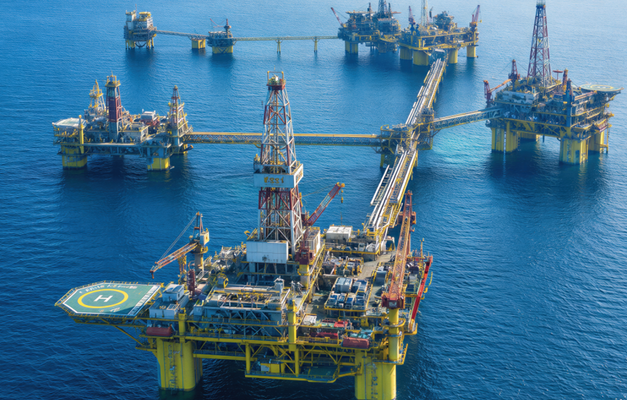
Frontline production teams have rolled out winter protection measures. Facilities in the Bohai Sea have carried out pipeline inspections and adjusted operational parameters for compressor units during spells of strong wind and snow. The onshore power supply centre in Tianjin has adopted dual monitoring arrangements with round-the-clock shifts to remove snow and ice hazards. Construction teams on the Haiji No.1 Platform in Shenzhen have installed wind barriers to stabilise crude output under strong wind conditions. The Gaolan Terminal of Baiyun Gasfield has completed capacity expansion, lifting its daily gas receiving capacity for the Guangdong-Hong Kong-Macao Greater Bay Area from 10 million cubic metres to 15 million cubic metres. Operations in western Shanxi have finished pipeline insulation, pigging and equipment maintenance, with emergency materials in place.
Downstream support arrangements have been activated. Power plants under the group have arranged staggered unit maintenance. City gas teams in Hainan have carried out household safety inspections, while teams in Shandong have co-ordinated with local authorities for gas allocation. Refining and retail subsidiaries have checked fuel stations and anti-freezing systems to guarantee stable oil stockpiles and delivery.
The whole supply chain covers offshore platforms, onshore terminals, LNG receiving facilities and retail stations. All links are under tight operational control to sustain residential heating and industrial energy delivery.
热门内容推荐