Rizhao Port of Shandong Port Group opens up key energy supply transport corridor
According to the State-owned Assets Supervision and Administration Commission of Shandong Province, published on 10 November 2026, heavy-haul coal trains travelling from Shanxi along the Watang-Rizhao Railway arrive at the bulk dry cargo smart and green operation zone of Rizhao Port. The tippler unloads coal, which is then conveyed to vessels for delivery to power plants in southern regions.
Coal supports national energy security. This transport route connects coal mines in northern Shaanxi and western Shanxi with power plants along the south-east coast. Amid rising coal demand and concentrated inbound trains, Rizhao Port optimises production arrangements and leverages integrated railway-port coordination to monitor train arrivals, traffic schedules and equipment status. Coal handling efficiency at Shijiu Port Area has risen by 26.1 per cent year on year since October.
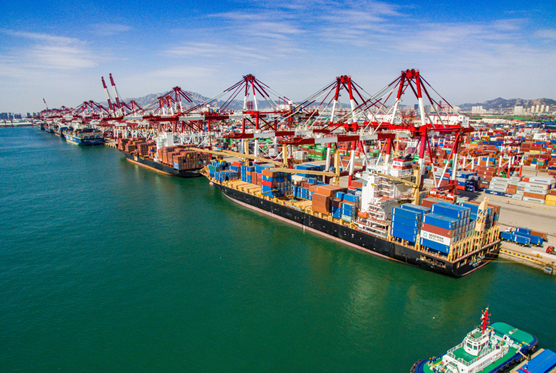
Digital technologies support precise port control. The port applies a customised order-based operation method for different coal grades, with tailored workflows and tippler procedures to match varying material properties. The first phase of the bulk dry cargo smart and green demonstration port has been commissioned. It establishes an interconnected, intelligent bulk dry cargo operation system covering all cargo types and full workflows. Within the 5.1 million-square-metre ten-million-tonne single dry cargo zone, more than 200 operation routes link berths and stockyards. A new intelligent control system for bulk dry cargo has resolved long-standing issues including manual uncoupling and wagon cleaning. End-to-end automated workflows operate from ship unloading to wagon loading and from wagon unloading to ship loading, with multiple pieces of equipment activated by single commands. System operational efficiency has increased by over 30 per cent, and overall labour productivity has tripled.
A data hub underpins the intelligent operation zone. The central intelligent system breaks down isolated data silos across loading, storage and collection and distribution processes to form a unified data foundation. Operational teams use business intelligence tools to analyse throughput, stock movements and logistics efficiency. Digital assessment triggers automatic alerts for data anomalies, forming a closed loop of monitoring, analysis, decision-making and evaluation. The central control platform delivers sub-second scheduling responses and full visibility of stockyard conditions. Operational staff use digital twin systems to simulate work plans and co-ordinate automated machinery, enabling immediate commencement on train arrival, seamless workflow switching and synchronised equipment operation.
Multimodal transport links the port directly with end users. Vessels loaded at Rizhao Port carry coal to Zhangping in Fujian. This route uses rail and sea combined transport. Coal departs from Xing County in Shanxi by the Watang-Rizhao heavy-haul energy corridor, arrives at Rizhao Port and is shipped directly to Huadian (Zhangping) Energy Company Limited. The supply chain supports traceable origins, full-process monitoring and efficient delivery.
Customised coal supply plans and a 24-hour response service are provided for power plant clients. Production teams adjust vessel berthing and departure schedules dynamically, share real-time data and optimise port turnaround times to enable immediate berthing on arrival and prompt departure once loading finishes.
As a major coastal hub for west-to-east and north-to-south coal transport in China, Rizhao Port maintains its role as a logistics pivot, strengthens land and sea co-ordination and connects power plants, commodity traders and shipping firms across the supply chain.
热门内容推荐