Shandong Hi-Speed Group hits 100 million tonnes in rail freight for fourth consecutive year
According to Shandong Provincial State-owned Assets Supervision and Administration Commission on 13 November, the DKF6488 freight train loaded with bauxite departed from Longkou Port Station for Xibaipo Station in Hebei, marking that Shandong Hi-Speed Group has recorded annual rail freight volumes above 100 million tonnes for four years running.
The group operates eight local railways including Yiyang, Pinglan and Dalailong Railways, alongside 35 dedicated service lines. Its managed rail network stretches 661 kilometres and covers 37 stations. Separate transport networks linking ports and major industrial and mining enterprises have been established in northern and southern Shandong, forming two key north-south corridors for bulk cargo. A three-loop transport framework has taken shape, covering in-network independent haulage, direct national railway through transport and interconnection with China Energy Investment Corporation’s rail routes.
Faced with weak downstream demand, falling freight rates and intensifying competition from alternative transport modes this year, the group has expanded market access and built partnerships. Teams have visited major supply hubs in Shanxi, Shaanxi and Inner Mongolia, as well as key enterprises along local rail routes in Shandong, to identify potential bulk cargo transport needs and design customised door-to-door integrated logistics solutions. Twenty-four new cargo sources have been secured, adding 3.381 million tonnes of freight volume. On 4 November, a single-day freight record of 497,900 tonnes was set for 2026.
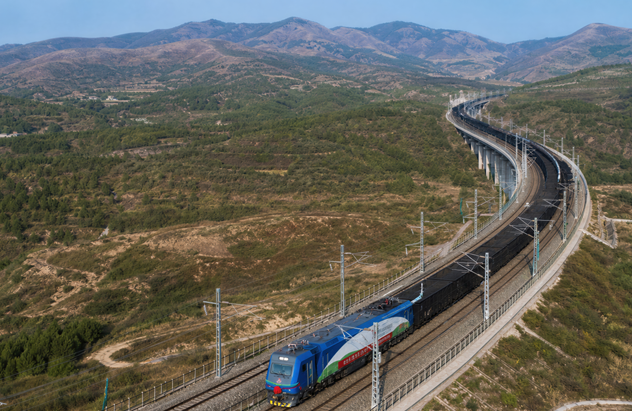
Measures to lift operational efficiency underpin the sustained freight throughput. The group adjusts train flows dynamically to balance peak and off-peak demand. During slack periods on the Huangda Railway, open wagons from the Shuohuang line are deployed to carry self-owned bulk cargo, with volumes of this cargo type rising by 89 per cent year on year. The southern freight yard at Xingfuzhen Station and the shunting track at Beigu Station have been brought into service, while a direct through transport channel fitted with new national railway end-of-train devices is now operational. Capacity is further unlocked through repurposed nickel ore containers and 60-tonne wagons for open-top container loading, speeding up wagon turnover. A daily unloading record of 1,032 wagons was achieved at Yongfeng Factory Station on the Pinglan line, and 19 train pairs ran each day on the Lingang line, both new highs.
Extended service chains support the group’s shift to modern logistics. It develops integrated “rail plus” models, covering trade-transport integration, loading and short-distance haulage, and rail-related construction agency services. Seven new “rail plus” services have been launched this year, bringing in total revenue of 740 million yuan. The Longkou LNG supporting power rail agency project has been completed, finishing its first rail construction agency contract. Joint office arrangements for port and rail operations are in place, with Longkou Port scheduling staff stationed at Longkou Port Station on the Dalailong Railway. Real-time data sharing for loading and wagon movements streamlines workflows, cutting wagon dwell time at the port by 5 per cent. Transport services are evolving from station-to-station delivery towards door-to-door and chain-to-chain supply links.
Shandong Hi-Speed Group will continue to develop its modern logistics service system, refine its rail network layout, upgrade service offerings and raise service standards.
热门内容推荐