China’s largest single-unit flywheel energy storage facility enters operation under China Huaneng
According to China Huaneng Group Co., Ltd, published on 13 November 2026, the country’s flywheel energy storage project with the highest single-unit power rating has been connected to the grid at Huaneng Lanzhou Thermal Power Company. The milestone marks a major advance in rapid frequency regulation using flywheel storage at thermal power bases in China.
Flywheel energy storage relies on high-speed rotating rotors to store electricity. When power supply is ample, electric energy drives the rotors to spin rapidly and converts electricity into rotational kinetic energy. When the grid requires extra power, the rotating rotors transform kinetic energy back into electric power for delivery. The technology supports fast charging and discharging to stabilise grid operation, with high conversion efficiency, strong adaptability and an extended service life.
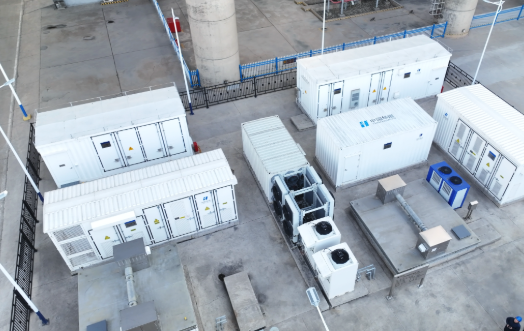
The newly commissioned facility adopts an innovative co‑ordinated configuration pairing a 5‑megawatt high‑power flywheel with a 0.5‑megawatt inertia flywheel, differing from conventional single-flywheel set‑ups. The paired units deliver complementary performance and tiered response. The 5 MW flywheel addresses large frequency deviations across the grid, while the smaller 0.5 MW unit stabilises minor, routine frequency fluctuations. Thermal power units integrated with this dual flywheel system can respond to grid frequency regulation within less than 100 milliseconds, with regulation accuracy exceeding 99.5 per cent. The arrangement improves unit regulation performance under complex operating conditions and maintains grid frequency stability.
The 5 MW flywheel deployed in the project is the highest-power single flywheel currently in use nationwide. It achieves a regulation rate of 5 megawatts per second, an energy storage capacity of 1,250 kilowatt‑hours, a charge‑discharge efficiency above 85 per cent and a cycle life of up to ten million cycles.
Once operational, the installation lifts the frequency response capability of on‑site generating units and strengthens the regional grid’s capacity to withstand disturbances. It provides technical backing for the secure and stable operation of the north‑west China power network.
热门内容推荐