Mianya Tunnel Hits Halfway Excavation Mark on Xichang–Shangri-La Motorway
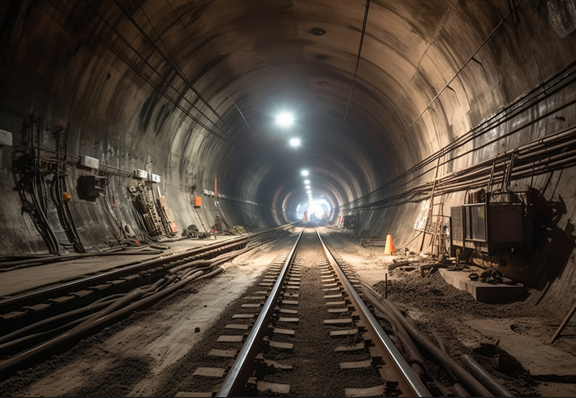
According to the Sichuan Provincial State-owned Assets Supervision and Administration Commission, excavation work on Mianya Tunnel, a key control structure of the G7611 Xichang–Shangri-La Motorway (Sichuan section), has passed the halfway mark. The milestone marks a phased breakthrough for this deep-buried plateau extra-long tunnel.
Mianya Tunnel sits in Yanyuan County, Liangshan Yi Autonomous Prefecture of Sichuan. It ranks among the nine mega projects on the route, and forms an essential passage from Xichang towards Lugu Lake, Shangri-La scenic sites and Muli Tibetan Autonomous County.
The tunnel runs 10.3 kilometres in total, with a maximum overburden depth exceeding 1,400 metres. It is built as a separated twin-bore tunnel for two-way four-lane traffic. Geological conditions along the alignment are highly complex, with abundant groundwater.
The tunnel crosses multiple fractured fault zones, karst zones and high-stress strata. Construction teams face combined hazards including seismic activity, collapses, karst incidents, mud and water surges, and rock bursts, bringing high technical and safety risks.
Work on the Xichang–Shangri-La Motorway entered its peak construction phase in 2026. Excavation at several critical tunnels including Mianya Tunnel and Yanyuan Tunnel has reached the halfway point, while the main towers of Lugu Lake Extra-large Bridge have been topped out.
Cumulative investment on the whole route has exceeded 36 billion yuan, accounting for more than 60 per cent of the total budget. The nine mega projects, grouped as three bridges, five tunnels and one interchange, advance steadily.
Shudao Expressway Group leads the investment for the motorway, with Sichuan Road and Bridge Group undertaking construction. Two highway design institutes deliver design services. The full route stretches 233.13 kilometres, with a bridge-tunnel proportion of 73.4 per cent.
Built to a standard two-way four-lane motorway specification, it carries a design speed of 80 kilometres per hour. The overall estimated investment stands at roughly 58.7 billion yuan, and the full opening is scheduled for 2029.
The motorway forms a vital segment of the Greater Shangri-La tourist loop. It offers a convenient corridor linking inland south-west China with the Yangtze River Economic Belt, the Chengdu-Chongqing Economic Circle and the Pearl River Delta Economic Circle.
Once operational, it will connect Yanyuan County and Muli Tibetan Autonomous County to the national motorway network for the first time. It will streamline logistics for local farm produce including apples, green prickly ash and walnuts, and unlock tourism resources around Lugu Lake.
热门内容推荐