China’s first million-tonne low-concentration CCUS full-chain demonstration project starts construction at Shengli Oilfield
According to China Petroleum & Chemical Corporation, the country’s first million-tonne low-concentration CCUS (carbon dioxide capture, utilisation and storage) full-chain demonstration project began construction at Shengli Oilfield on 16 October. Once operational, the facility will capture low-concentration flue gas from coal-fired power plants for oil displacement and underground storage. The scheme introduces a direct green power supply to carbon capture units, forming a closed-loop model of direct green power connection and low-carbon capture.
The existing first million-tonne CCUS project, the Qilu Petrochemical–Shengli Oilfield CCUS facility, captures high-concentration tail gas from coal-to-hydrogen units with a carbon dioxide content of around 90 per cent. Commissioned in August 2022, it has stored 1.4 billion standard cubic metres of carbon dioxide to date. The scheme has lifted oil recovery rates by more than 15 per cent, with daily output at the demonstration zone rising from 220 tonnes to 525 tonnes.
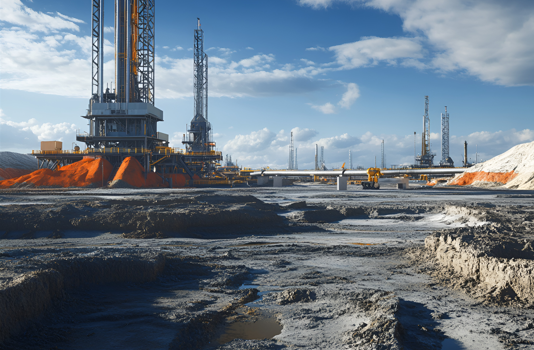
Following industrial breakthroughs in high-concentration gas capture, Shengli Oilfield has shifted research focus to low-concentration coal-fired flue gas, which is harder to capture and produced in larger volumes. Such flue gas carries just 12 to 15 per cent carbon dioxide alongside sulphur and nitrogen oxide impurities. Using self-developed novel absorbents and an energy-saving regeneration process, operators have achieved a capture rate above 90 per cent and product purity exceeding 99.5 per cent, while cutting heat consumption to below 2 gigajoules per tonne of carbon dioxide. The performance meets international leading standards and lays technical groundwork for the new low-concentration CCUS development.
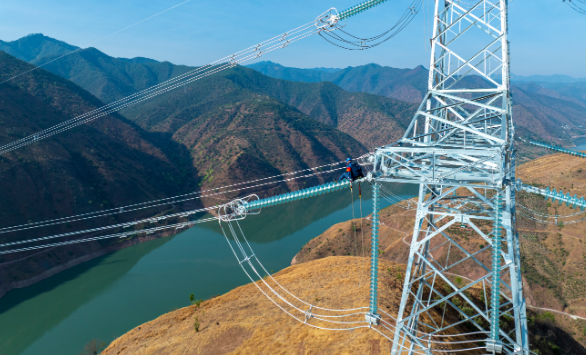
The new development is scheduled for completion and commissioning by the end of 2028. Captured carbon dioxide will be injected into reservoirs through dedicated wells across beach-bar sand, turbidite and shale formations. It incorporates an integrated source-grid-load-storage system combining wind power, energy storage, direct transmission lines and CCUS capture hardware; this direct green power supply configuration for carbon capture represents a domestic first. On completion, Sinopec will hold a complete technical portfolio for both high and low-concentration carbon dioxide capture, utilisation and storage, creating a replicable pathway for deep decarbonisation in power and petrochemical sectors.
热门内容推荐