Yunnan state-owned asset regulator releases 15th Five-Year development guidelines for provincial enterprises
According to the State-owned Assets Supervision and Administration Commission of Yunnan Province, the authority issued the Guidelines on the 15th Five-Year Development of Yunnan Provincial State-owned Enterprises on 9 October 2026.
The document prioritises the real economy and industrial advancement, targeting the 3815 strategic objectives. It supports locally tailored development of new quality productive forces and lifts value creation capacity across 15 key industrial sectors including green energy, green chemicals, non-ferrous and rare precious metals, cultural tourism and health care, biomedicine and the digital economy.
The framework aims to build a modern industrial system, strengthen core functions and competitiveness of provincial state-owned enterprises, and reinforce the strategic role of state capital in Yunnan’s development as a national demonstration zone for ethnic unity, a pioneer in ecological civilisation and a hub linking South and Southeast Asia.
Marked achievements in state-owned enterprise reform were delivered during the 14th Five-Year period. Completed targets have laid solid foundations, built core strengths and accumulated growth momentum for high-quality development through the 15th Five-Year cycle.
By the end of 2025, total assets of Yunnan’s provincial state-owned enterprises reached 3.46 trillion yuan, representing a 30.48 per cent rise from the end of 2020. Profit grew by 38.36 per cent, tax payments increased by 19.56 per cent, and labour productivity hit 404,900 yuan per person, an increase of 27.17 per cent compared with 2020.
These enterprises have become a core driver of industrial upgrading and economic stability across the province. They have taken major roles in transport and water infrastructure, managing more than 8,000 kilometres of motorway and 19 civil and general aviation airports.
Cumulative investment in water projects exceeds 70 billion yuan, supporting over one million jobs. Total research and development expenditure has reached 40 billion yuan, with industrial firms recording an R&D intensity of 3 per cent. The portfolio includes the world’s first lighthouse factory for traditional Chinese medicine health products and the country’s most complete platinum-group metal industrial chain.
The enterprises have undertaken more than 60 national and over 300 provincial key research assignments, unlocking core technologies for high-efficiency recovery of associated fluorine from wet phosphorus processing and precious metal coating and bonding materials, with multiple products achieving domestic substitution.
A major science and technology programme covering the full tin-indium-arsenic chain has resolved 16 technical bottlenecks and developed eight new products, generating more than 300 million yuan of additional output value.
For the 15th Five-Year period, provincial state-owned enterprises will pursue high-quality development driven by reform and innovation, balancing development and security while optimising the layout of state capital to lead industrial upgrading.
Workstreams include intelligent, green and integrated upgrades for traditional industries, expansion of resource-based sectors to convert resource endowments into industrial advantages, cultivation of strategic emerging and future industries, and high-quality service sector development to form a modern industrial structure with sustained growth drivers.
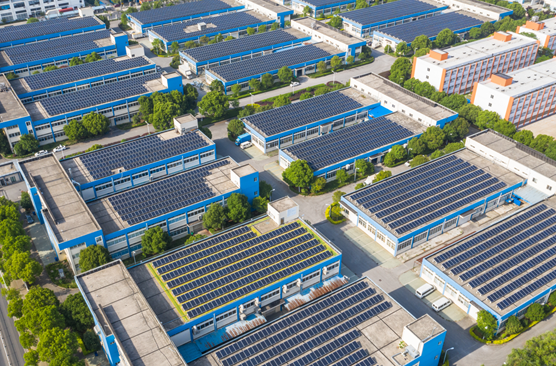
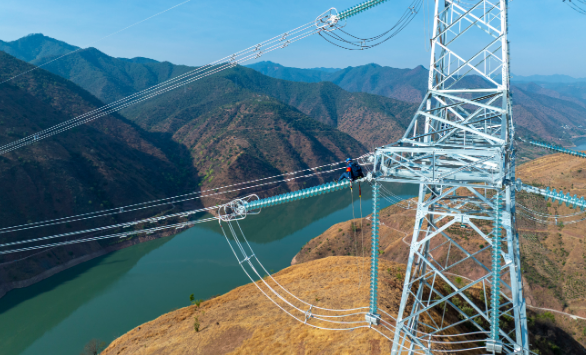
The guidelines outline priorities for each sector. In green energy, Yunnan Energy Group will consolidate hydropower capacity, accelerate wind and solar deployment, advance integrated coal and power arrangements, explore new energy system models and prepare for future energy industries. Financial institutions will expand credit provision and green finance services to support low-carbon transition and secure regional energy supplies.
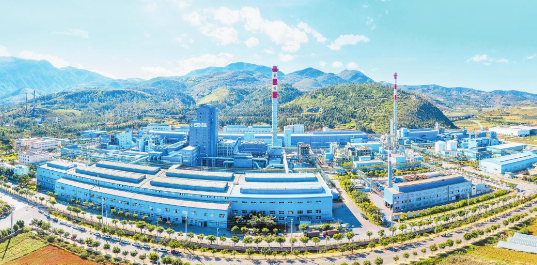
For green chemicals, Yuntianhua Group and Yunnan Energy Group will retain global leadership in fertiliser production and expand advanced chemical materials and fine chemicals, forming an internationally competitive green chemical cluster. Leveraging local phosphorus, fluorine and silicon reserves, businesses will advance technology and move up the value chain, developing a diversified portfolio of new materials.
The national phosphorus-based new materials demonstration base in Zhenxiong will promote orderly and high-value phosphorus exploitation. Industrial links between phosphorus resources and new-energy battery manufacturing will be strengthened to scale production of iron phosphate and lithium iron phosphate. High-value fluorine utilisation will be pursued, with research into anhydrous hydrogen fluoride to secure fluorine feedstock independent of fluorite.
Green power supply for silicon production and organic silicon will be explored, alongside integrated upstream and downstream green silicon material chains. Output of electronic-grade and high-performance glass fibre will expand, while polyoxymethylene market leadership will be maintained. Refined downstream petrochemical processing will also be explored.
In non-ferrous and rare precious metals, Yunnan Tin Holding, Yunnan Precious Metals Group and Yunnan Geological Mining Group will use full-chain capabilities to lift resource security. Output of tin and gold will expand, alongside platinum-group, indium, germanium and gallium sectors. New non-ferrous metal materials will be developed to raise chain value and advance digital and low-carbon transformation, building a major national base for strategic non-ferrous metals.
Cultural tourism and health sectors, backed by Yunnan Kangtou Group and Yunnan Investment Holdings, will focus on developing and operating key tourism destinations. Operators will shift from managing scenic sites to delivering lifestyle-orientated services and foster new business formats around natural healing, ethnic wellness and modern healthcare. Work will continue to build world-class tourism sites and international wellness tourism zones under the regional tourism brand.
Biomedical development, supported by Yunnan Industrial Investment Group, Yunnan Baiyao Group and provincial equity management entities, draws on local biological resources and traditional Chinese medicine strengths. The plan creates an industrial cluster centred on traditional Chinese medicine, extended by innovative pharmaceuticals and health services, with biotech products and medical devices as incremental growth areas. Upgrades for chemical drugs and medical equipment will extend industrial chains towards higher-value segments, moving the sector away from resource dependency toward innovation-led growth.
热门内容推荐