Hutuo River Water‑Supply Project Starts Delivering Water to Taiyuan
According to the State‑owned Assets Supervision and Administration Commission of Shanxi Province, clean water has steadily flowed into the Shangyuan Surface Water Plant operated by Taiyuan Water Supply Group, marking the formal commissioning of the Hutuo River water‑supply project for Taiyuan.
The scheme forms a key segment along the second transverse line of Shanxi’s modern water network framework known as “three vertical and nine horizontal”. It creates an additional high‑quality surface‑water emergency backup source for Taiyuan, alongside the Wanjiazhai Yellow River Diversion Project which has long served as the city’s principal water supply.
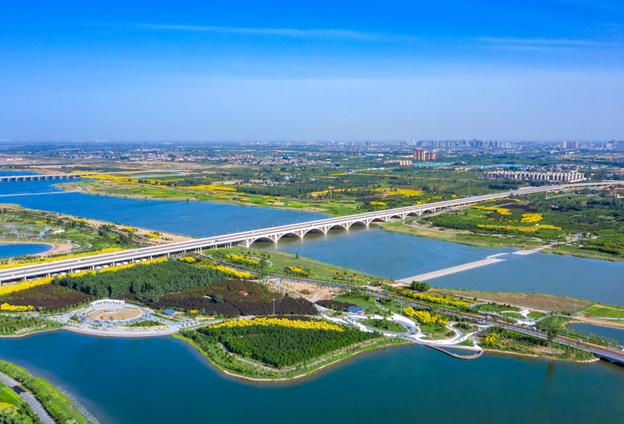
The whole project comprises the Qingshui River source facility and the water conveyance system. Its delivery pipeline runs roughly 82 kilometres, crossing Wutai, Dingxiang and Xinfu District in Xinzhou, as well as Yangqu County within Taiyuan. Water is drawn from the collection gallery at the Qingshui River source site in Wutai.
It is then pumped upwards in three successive stages through Lijiazhuang, Zhijun and Shangzuo pumping stations, with a total lifting head of 468 metres, before arriving at the Shangyuan Surface Water Plant in Yangqu County.
The annual water diversion capacity reaches 30 million cubic metres.
The Hutuo River facility will operate in tandem with the Wanjiazhai Yellow River Diversion Project. The two schemes complement each other and allow coordinated deployment of water resources, establishing a dual‑source, dual‑security water‑supply framework for Taiyuan.
This arrangement further improves the city’s water allocation pattern where surface water takes the primary role and groundwater is kept for emergency back‑up purposes. It supports simultaneous progress for municipal water security and local ecological rehabilitation.
The water‑supply project also constitutes a vital component of Shanxi’s wider ecological initiative “One Clear Stream Flowing into the Yellow River”. By replacing groundwater abstraction with surface‑water supplies, the infrastructure helps consolidate existing environmental remediation outcomes and gradually lift regional groundwater levels.
It builds up the water‑related foundation needed to sustain steady flow for the Lancun Spring and reinforce the spring‑zone ecological barrier.
热门内容推荐