New‑type Power Grids to Boost Co‑ordinated Development of Six Key Infrastructure Networks
According to People’s Daily, the national plan for six major infrastructure networks covers water networks, new‑type power grids, computing‑power networks, next‑generation communication networks, urban underground pipeline networks and logistics networks. This group of foundational infrastructure facilities is designed to expand domestic demand and keep domestic economic circulation running smoothly. China Southern Power Grid is advancing the building of new‑type power grids to facilitate coordinated progress across the six networks.
The six‑network framework forms the central backbone of the modern national infrastructure system. Co‑ordinated development delivers combined economic, social, ecological and security benefits. It improves investment outcomes for infrastructure projects, enhances public service provision, fosters industrial transformation, and strengthens risk prevention capacity for major infrastructure systems. Although these six networks operate as separate systems, they share common features including wide‑area connectivity, overlapping spatial requirements for land and corridors, mutually supportive operational functions, compatible digital‑oriented technology evolution and overlapping practical application scenarios.
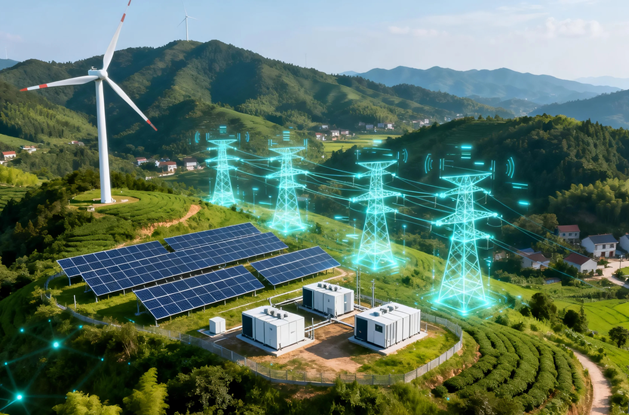
Co‑ordination among these heterogeneous infrastructure systems follows distinct system‑based, technical, value‑oriented and governance‑related logic. Research into resource, function, value and technical mechanisms supports the creation of fresh collaborative operational models. At the physical level, unified spatial planning and compatible interfaces enable shared corridors and linked operations. Data‑level work focuses on secure data exchange across different infrastructure systems. At the regulatory level, consistent technical standards and management rules are established for the whole lifecycle of planning, construction and operation.
Joint development of practical scenarios offers a way to verify the real‑world value of multi‑network co‑operation. Synergies are being explored between power grids and water networks through intelligent dispatching. Partnerships between power infrastructure and computing‑power networks target energy‑saving and decarbonisation goals. Power and communication networks are linked to stabilise digital services. Shared utility tunnels are trialled for urban underground pipelines, while integrated transport‑energy solutions connect power facilities with logistics networks. Institutional frameworks are also being refined, covering joint planning, shared resources, collaborative project delivery and fair allocation of costs and benefits among participating parties.
Functioning both as a shared resource platform built on an energy foundation and an interactive platform underpinned by data, the new‑type power grid delivers connecting and enabling effects for surrounding infrastructure. China Southern Power Grid pursues optimal social benefits, low‑carbon transition, technological innovation, market‑based operation and secure development as core guiding principles.
Work proceeds to build upgraded physical architectures for the new‑type power grid. Flexible main power networks are aligned with national land‑use, urban renewal and industrial development strategies to guide the spatial layout of other infrastructure. Resilient distribution networks accommodate interconnection requirements from hub facilities of other networks, whilst adaptable smart micro‑grids serve diversified end‑user scenarios across the six‑network system.
Technological breakthroughs support iterative upgrading for the whole infrastructure cluster. Research covers multi‑energy regulation, cross‑network data integration and coupling of heterogeneous infrastructure systems. Digital transformation turns the digital power grid into a shared enabling base, with large‑scale deployment of internet‑of‑things terminals and trusted industry data spaces. Joint efforts across industrial participants also build unified standards for multi‑network interconnection.
Upgraded services unlock further value from multi‑network collaboration. Green electricity supply supports low‑carbon development across other infrastructure categories. Participation in the unified national electricity market enables efficient resource allocation for all six infrastructure networks. Joint management platforms and evolving operational systems for electricity‑carbon‑computing integration help nurture emerging business forms and build a dynamic industrial ecosystem.
热门内容推荐