New Rail‑Road Freight Service Launches for Guizhou‑Sichuan Coal Deliveries
According to the State‑owned Assets Supervision and Administration Commission of Sichuan Province, the inaugural dedicated freight train carrying electric coal left Longshanzidong Station on the Xuyong‑Dacun Railway on 17 September 2026. Operated by Shudao Railway Operation Group, this train carried 1,050 tonnes of high‑grade thermal coal sourced from Jinsha in Guizhou, marking the official opening of the “Guizhou‑to‑Sichuan Coal” rail‑road transfer service.
Coal consignments travel first by road along the Gujin Expressway from Jinsha to Longshanzidong Station for loading, before continuing by rail directly to private sidings serving major power plants across southern Sichuan. This integrated short‑haul road plus main‑line rail arrangement offers stronger resistance against disruptions caused by severe weather when compared with full‑road haulage. Overall logistics costs drop by between 3 per cent and 5 per cent, while transport capacity rises by 200 per cent to 300 per cent.
The new freight channel responds to national policies encouraging bulk cargo to shift from road to rail. It implements provincial plans to cut logistics expenses and joint energy‑supply arrangements agreed by Sichuan and Guizhou authorities. The corridor eases the heavy historical reliance on long‑distance road lorry deliveries for Guizhou coal entering southern Sichuan, and establishes a high‑capacity, resilient transport system for seasonal peak‑period power supply, industrial output stability and household energy needs. It also stands as a notable practical outcome of the “one‑ticket direct access” reform for local‑state railway connections, offering a replicable multi‑modal transport model for border regions shared by the two provinces.
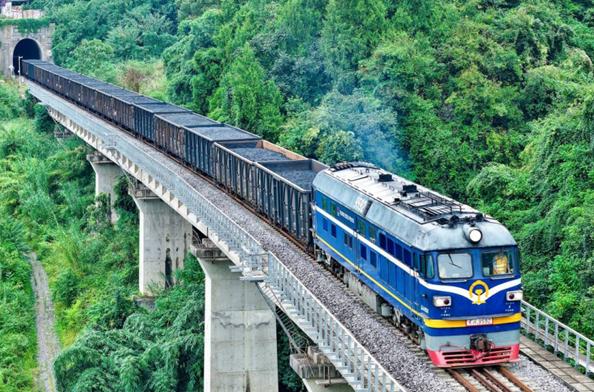
Stretching for roughly 86 kilometres, the Xuyong‑Dacun Railway forms a vital local freight artery linking southern Sichuan and northern Guizhou. Running through the Wumeng mountainous zone, the line features a bridge‑and‑tunnel ratio of 81.2 per cent. It connects westward to the Longxu‑Xuyong railway, links northwards with the national Chengdu‑Chongqing main‑line network, and reserves a southern connection point for the New International Land‑Sea Trade Corridor. In April 2026, the railway rolled out the national‑rail “one‑ticket direct access” mechanism. This reform removed administrative barriers requiring separate ticket transfers between local and national railway networks, achieving unified scheduling, freight documentation, tariff rules and settlement management. Single‑ticket processing enables seamless nationwide cargo movement and creates the necessary operational foundation for the new coal‑carrying dedicated service.
Southern Sichuan hosts major industrial facilities and constitutes a core power‑load zone within Sichuan Province. Its key thermal power plants depend heavily on coal supplies transported from outside the province. The Jinsha mining area in Guizhou delivers abundant, good‑quality coal resources to sustain stable power generation across the region. Road‑based long‑distance coal transportation has previously been constrained by road conditions and bad weather, with fluctuating logistics expenditure threatening the stability of local industrial supply chains. Switching cross‑provincial thermal‑coal shipments to rail‑road intermodal transport supports regional energy security and steady economic performance.
热门内容推荐