Power‑consumption Data Reveals Economic Shifts across China Southern Power Grid’s Service Region
According to China Southern Power Grid, total social electricity use across its operating area reached 185.4 billion kWh in August, rising by 7.3 per cent year‑on‑year. The growth rate was 4.7 percentage points higher than the figure recorded for July. Cumulative power sales within the region surpassed one trillion kWh on 16 August, 14 days earlier compared with the previous year. August electricity statistics highlight two principal drivers behind rising power demand: ongoing industrial upgrading and the expansion of fresh economic growth engines.
Electricity‑consumption patterns show a dual trend, with expanding high‑technology manufacturing offsetting slower growth within high‑energy‑intensive sectors. Year‑on‑year electricity growth for primary, secondary and tertiary industries, together with residential consumption, stood at 4.3 per cent, 4.5 per cent, 9.1 per cent and 14.1 per cent respectively in August. Sustained hot weather in the first half of the month boosted air‑conditioning loads sharply. Residential power use became the top contributor to overall electricity growth, accounting for 36.2 per cent of the monthly consumption increment.
After stripping out extra demand created by high temperatures, industrial power‑use changes reflect underlying economic adjustments. Electricity taken by high‑tech and equipment‑manufacturing industries climbed 5.1 per cent year‑on‑year in August, outpacing the 3.5 per cent average growth across the whole manufacturing sector. This segment has maintained stronger performance than high‑energy‑consuming industries for six consecutive months.
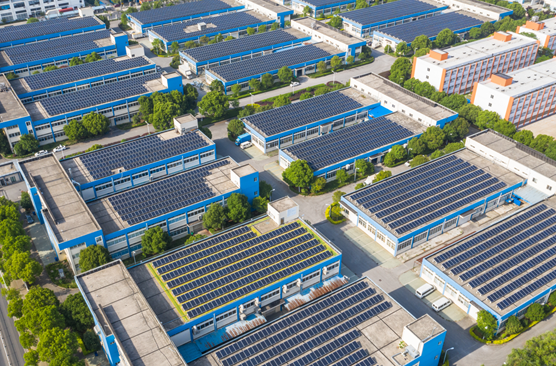
The industrial transformation is particularly evident within the nine mainland cities of the Guangdong‑Hong Kong‑Macao Greater Bay Area. In August, electricity consumption for local high‑tech and equipment manufacturing rose 9.1 per cent, 1.8 percentage points above regional total social electricity growth. This category represented 46.2 per cent of overall industrial power use, with its share climbing nearly one percentage point against the same period a year earlier. Special‑purpose equipment, motor vehicles, computers‑telecom‑electronics and electrical machinery industries all registered faster electricity uptake. Production expansion at a photovoltaic panel manufacturer in Guangzhou drove its monthly power consumption more than 40 per cent higher year‑on‑year. The broader local photovoltaic‑equipment manufacturing sector posted a 31.9 per cent increase in electricity use for the month.

Traditional industrial sites in Guangxi are moving towards high‑end, intelligent and low‑carbon operations. A major steel producer in Fangchenggang deployed 5G‑enabled intelligent rolling lines and kept round‑the‑clock production to fulfil orders. Its August electricity consumption ranked first within the city, recording a year‑on‑year rise above 20 per cent.
New‑form industries have delivered vigorous fresh momentum. Customs General Administration figures show China’s exports of three major new‑generation industrial products hit USD 23 billion in August, an increase of 36 per cent year‑on‑year. Across the service territory of China Southern Power Grid, power demand for the “three‑new” economic sectors advanced by 40.7 per cent. This segment has sustained growth above 25 per cent for 43 successive months. Although it accounts for merely 3.3 per cent of total regional electricity consumption, it generates 14.2 per cent of the overall monthly consumption increment.
Combined, the intelligent‑economy and new‑energy industrial chains contributed nearly 30 per cent of the total regional electricity increment in August. Upstream electrical‑machinery industries registered 11.1 per cent growth. Internet data‑service facilities in the middle stream saw consumption jump by 39.1 per cent, while downstream intelligent‑robot and additive‑manufacturing operations achieved 60 per cent and 37.1 per cent rises respectively. Massive computing tasks pushed up big‑data‑sector electricity consumption in Guizhou’s Gui‑an New Area by 32.7 per cent. Selected enterprises in Shantou Overseas Chinese Experimental Zone kept nine straight months of more than 100 per cent electricity growth while exporting large‑scale volumes of AI token‑based computing services overseas.
Strong momentum within the domestic new‑energy‑vehicle market also registers clearly on power metrics. According to China Association of Automobile Manufacturers, new‑energy vehicles made up 60.6 per cent of total new car sales nationwide in August. Within the China Southern Power Grid service area, electricity consumption for the whole new‑energy‑vehicle industrial chain grew 10 per cent year‑on‑year. Battery manufacturing and complete new‑energy‑vehicle production recorded 36 per cent and 53.7 per cent increases. Charging‑and‑swapping services expanded by 45.3 per cent, maintaining double‑digit expansion for 51 consecutive months. In Shenzhen, one major vehicle‑maker delivered 189 500 exported new‑energy cars in August. The city’s overall automobile‑manufacturing electricity consumption rose 59.8 per cent, marking five successive months with growth exceeding 30 per cent.
Rising electricity consumption traces tangible progress in industrial upgrading. The milestone of one trillion kWh in cumulative sales reflects ongoing renovation for traditional sectors alongside brisk expansion of emerging industries across southern China. Electricity‑demand curves record the regional economy shifting from quantitative accumulation towards qualitative improvement.
热门内容推荐