SPIC Surpasses 313 GW of Total Installed Capacity amid China’s Low‑carbon Energy Transition
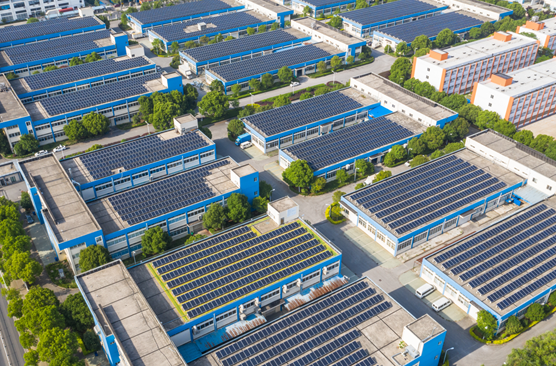
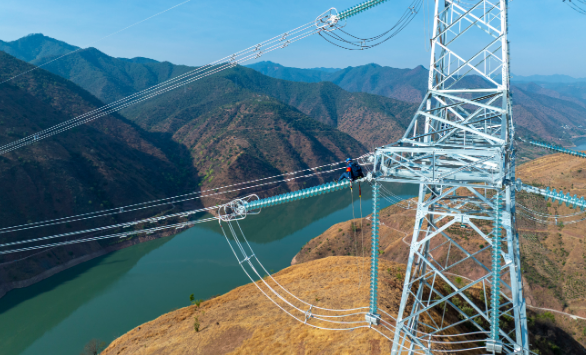
According to China Energy News, State Power Investment Corporation (SPIC) has pushed its overall installed generating capacity beyond 313 GW by the end of August 2026, after a string of new power‑generating facilities were connected to the grid. This sharp expansion comes amid historic opportunities opened up by the global energy shift, as China builds an energy framework that is cleaner, lower‑carbon, secure and highly‑efficient. The group is scaling up world‑class photovoltaic manufacturing while coordinating progress across solar, onshore and offshore wind, hydropower, nuclear, coal‑fired power and aluminium‑related industrial operations.
Since its restructuring eleven years ago, SPIC has steadily lifted capital spending in the energy sector. Its installed base passed 100 GW in the year of reorganisation, hit 200 GW towards the close of 2022, and now climbs above 313 GW to trace a strong upward development trajectory. Annual power output for 2025 exceeded 740 billion kWh, nearly doubling the volume recorded back in 2015. Its heating services cover roughly 500 million square metres, bringing warmth to 13.6 million residents spread across eight provincial‑level administrative regions.
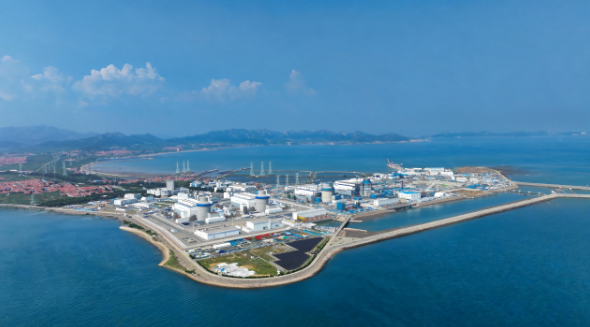
Clean energy forms the principal source for newly‑added generation capacity within the business. By the end of August 2026, clean energy accounted for 74.85 per cent of the corporation’s total installed capacity. Several flagship renewable and nuclear assets have entered commercial service. The Haiyang Nuclear Power Phase I and the Guohe‑One demonstration nuclear project are now operational. Large‑scale new‑energy bases have taken shape in Gonghe of Qinghai, Dalate of Inner Mongolia, Garzê of Sichuan and Weining of Guizhou.
The photovoltaic park at Gonghe, Qinghai ranks as the world’s largest installation of its kind; its Talatan 1 GW‑scale solar station linked to the Qinghai‑Henan direct‑current transmission corridor has earned a national high‑quality engineering award. The first‑phase 1.2 GW project at Ulanqab in Inner Mongolia represents the world’s biggest‑capacity onshore wind farm in a single block. SPIC also maintains one of the country’s largest portfolios for offshore wind, with major projects at Binhai‑North H1 in Jiangsu and Xuwen in Guangdong winning national engineering honours. New hydropower units at Lijiaxia, Yangqu, Wuqiangxi expansion works and Jianke in Sichuan have come fully online, reinforcing stable clean power supplies.
Thermal coal‑fired generation continues its shift towards greater efficiency and intelligent operation. Aligned with national planning for the new‑style power system, SPIC commissions advanced ultra‑supercritical coal‑fired units to underpin diversified electricity supplies and safeguard grid stability. The Baiyinhua mine‑mouth power plant in Inner Mongolia houses two 660 MW lignite‑fired generating units capable of steady deep‑peak regulation down to 20 per cent load. Since commissioning in June 2024, the site has transmitted 11.382 billion kWh of electricity to Jiangsu Province.
The expanded Binhai coal‑fired complex in Jiangsu, completed in mid‑August, consists of two 1 GW‑class ultra‑supercritical units with strong flexibility for rapid load adjustment. It will supply 10 billion kWh of electricity per annum to the Jiangsu grid to satisfy household consumption for roughly four million properties. In late August, Qiaotou Power Station in Qinghai went into service with a 660 MW ultra‑supercritical unit sitting at the highest elevation worldwide for facilities of this class, engineered to burn high‑alkali coal in substantial proportions. Annual generation is expected to exceed 8 billion kWh and strengthen power reliability right across Qinghai.
Technological innovation delivers the core momentum for the continuous growth of installed capacity. SPIC has secured full, home‑grown intellectual property rights for the third‑generation passive nuclear technology behind Guohe‑One. This commercial‑size nuclear plant complies with the strictest international benchmarks, combining enhanced safety, large single‑unit output and solid economic performance. The first prototype of the domestically‑developed 300 MW F‑class heavy‑duty gas turbine has reached mainstream international performance standards for its category and stands ready for industrial roll‑out. Official approval for its accompanying demonstration power station was granted on 31 July.
Building upon its expanded power‑generation footprint, the group presses forward with industrial upgrading and the transformation of growth drivers. Research and engineering work proceeds to unlock the integrated “green electricity‑green hydrogen‑green ammonia” value chain. The landmark Da’an Green Ammonia demonstration facility started operations in July 2025 and established six new global records for its technical specifications.
Across photovoltaic‑storage verification, wind‑power forecasting, heavy gas‑turbine testing, integrated energy management, equipment diagnostics, storage safety, smart mining and survey‑and‑design work, multiple high‑quality artificial‑intellectual datasets have been constructed to support practical deployment and model development. Throughout the current calendar year, special operational campaigns for assessment, diagnosis and rectification on new‑energy assets are being rolled out systematically. Existing generation assets are being tapped for extra output potential, while operational efficiency and commercial performance for renewable installations keep improving.
From this fresh starting point above 313 GW of installed capacity, SPIC will keep reinforcing security of national energy supplies. It will refine its industrial layout and push ahead with source‑grid‑load‑storage integration alongside multi‑resource complementary schemes for wind, solar, hydro and battery storage. The corporation will sustain its vital role as a robust stabilising force within China’s energy supply network.
热门内容推荐