Construction Starts on China’s First Commercial Demonstration Plant Combining Molten‑Salt Energy Storage with Supercritical CO₂ Power Cycle
According to Xinhua News Agency, work has commenced on the “Rui‑Carbon” project at Huaneng Bajiao Power Plant in Shandong on 16 September. It stands as the country’s first commercial demonstration facility that couples molten‑salt energy storage with super‑critical carbon dioxide power generation cycles.
The development will feature one 50‑megawatt supercritical carbon dioxide generating unit, alongside a supporting 100 MW / 400 MWh molten‑salt energy storage system. Serving as the physical carrier for a major national science and technology special programme entitled “Key Technology Development and Engineering Demonstration for Carbon Dioxide ‘Thermal Battery’”, the construction launch marks a significant forward step for China in integrating supercritical‑CO₂ power‑generation technology with new‑form energy storage.
Unlike conventional thermal power stations that rely on steam as the circulating working fluid, this new generating plant employs super‑critical carbon dioxide to drive its power‑producing turbines.
The site applies an innovative operational model pairing molten‑salt thermal storage with carbon‑dioxide‑based power generation. During periods of low electricity demand, surplus power generated by the plant’s existing two ultra‑supercritical combined heat‑and‑power units will be used to heat the molten salt. Electrical energy is converted and retained as thermal heat within the salt medium, functioning in effect as a large‑scale thermal battery.
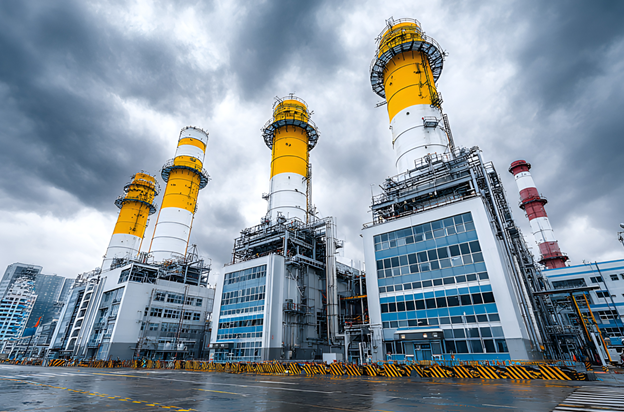
When power consumption peaks, the hot molten salt releases stored thermal energy to warm circulating carbon dioxide, which in turn drives the turbine set. Such operational arrangements will strengthen the deep‑ramping capacity and heating security performance of coal‑fired generating assets.
Super‑critical carbon dioxide delivers a higher energy density in comparison to steam. Generating units running on this working medium operate at improved efficiency with reduced physical footprint and enhanced operational flexibility. Continuous smooth load adjustment from zero up to full 100 % output becomes achievable, with a regulating speed roughly four times faster than that of traditional coal‑fired power facilities. This faster response capability allows the installation to react swiftly to grid requirements for peak‑shaving services.
Scheduled to come online in 2027, the demonstration scheme is set to yield valuable practical operational experience for rolling out innovative energy‑storage solutions. It will underpin the development of China’s new‑type power system. Meanwhile, practical data and operational insights gained from this installation will offer a Chinese reference case for low‑carbon restructuring of global energy systems and for boosting the integration of renewable power resources across international power networks.
热门内容推荐