Sodium‑ion Batteries Enter GWh‑scale Commercial Roll‑out across China’s Energy‑storage Sector
According to Securities Daily, the sodium‑ion battery industry is moving beyond laboratory sample validation into formal GWh‑scale mass deliveries. Leading manufacturers are launching updated cell products, locking in sizeable energy‑storage contracts and ramping up production lines, as sodium‑based storage technology picks up commercial momentum.
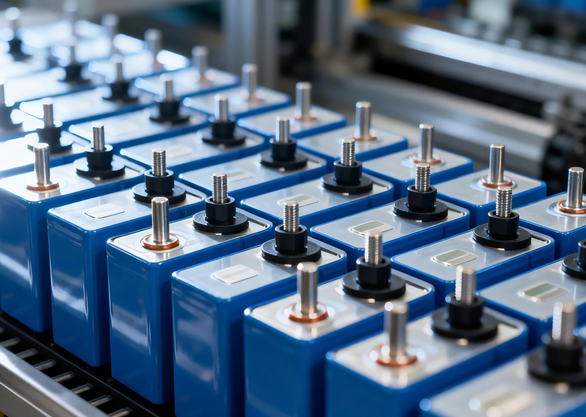
On 16 September, Xiamen‑based Hithium unveiled its new‑generation integrated sodium‑ion solution for stationary energy storage. The newly released 4MWh storage system is built around the N785Ah large‑capacity sodium‑ion cell. The firm has confirmed that formal mass deliveries for this product will commence in 2027. The N785Ah cell delivers an original long‑cycle lifespan of 20,000 cycles, matching mainstream grid‑scale storage requirements for discharge durations ranging from two to eight hours. Thanks to proprietary technical upgrades, the accompanying 4MWh system is engineered for a service life of thirty years, which improves the long‑term investment case for capital‑intensive energy‑storage infrastructure projects.
Sodium resources exist widely across the globe in abundant reserves. This characteristic can strengthen resource security and stabilise supply chains for the energy‑storage sector. Drawing on prior expertise accumulated within lithium‑ion battery manufacturing, Hithium keeps pushing the roll‑out of sodium‑ion technology out of verification phases and towards large‑scale real‑world deployment.
Major domestic players across the whole industrial chain have stepped up development throughout this calendar year. Back in April, Contemporary Amperex Technology secured a 60 GWh framework agreement, the world’s largest single sodium‑ion battery order for energy‑storage applications. Its dedicated sodium‑ion battery production lines have already gone online. The enterprise is set to hand over its first batch of sodium‑ion energy‑storage systems in September, targeting GWh‑level shipment volumes for the full year.
Upstream material suppliers keep pace with downstream cell factories. Ningbo Ronbay New Energy has achieved mass production of cathode materials designed for sodium‑ion batteries. Wanhua Chemical Group has established two separate engineering hard‑carbon development pathways based on coal‑derived and resin‑based feedstocks, consolidating the domestic supply network for core anode materials.
Even with accelerating industrial progress, relatively high material costs and unsatisfactory production yield rates remain prominent bottlenecks that restrict widespread market penetration of sodium‑ion products. These technical and economic hurdles are set to be key areas for industry‑wide breakthroughs in 2026. The sector has not yet built sufficient scale effects, and expensive hard‑carbon anode components continue to slow broader adoption.
Large‑scale shipments from front‑running manufacturers in the second half of 2026 will put the overall maturity of sodium‑ion industrialisation to practical testing. As supporting upstream and downstream supply chains keep improving and product specifications undergo continuous iteration, sodium‑ion battery systems are poised to secure their own foothold within the energy‑storage marketplace and operate alongside lithium‑ion batteries to deliver diversified solutions for grid energy storage.
热门内容推荐