Ground‑breaking China Demonstration Project Integrating Molten‑Salt Storage with Supercritical CO₂ Power Generation Starts Construction
According to Xinhua, China Huaneng announced on 16 September that construction had commenced on the “Ruitan‑hao” demonstration facility at Huaneng Shandong Bajiao Power Plant. This is China’s largest project of its kind, featuring an initial 50‑megawatt supercritical carbon‑dioxide generating unit paired with a 100 MW / 400 MWh molten‑salt energy‑storage system.
The development serves as the flagship engineering carrier for a major national science and technology programme focused on “key technology research and engineering demonstration for carbon‑dioxide thermal battery systems”. The formal start of construction marks China’s move into physical implementation for integrated supercritical CO₂ power generation and new‑style energy‑storage technology.
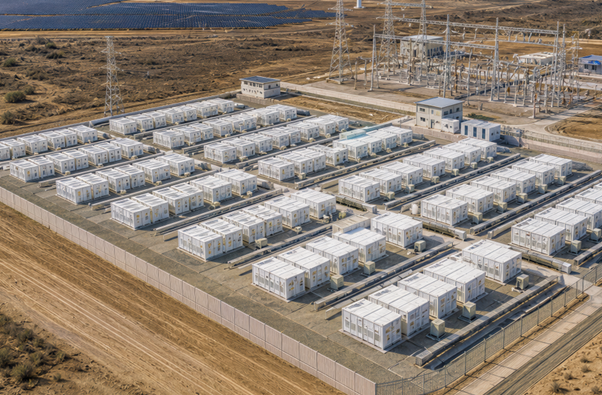
Conventional thermal power stations rely on steam to drive turbines. This new installation uses super‑critical carbon dioxide as its working fluid. The facility operates on an innovative thermal‑storage‑plus‑generation model. During periods of low electricity demand, surplus power generated on‑site heats molten salt, converting electrical energy into stored thermal energy. At times of peak grid consumption, hot molten salt releases heat to warm carbon dioxide, which then drives the generating sets. The molten‑salt system functions as a large‑scale thermal power bank, enabling flexible redistribution of electricity across off‑peak and peak hours.
When set against traditional steam‑driven power plant hardware, super‑critical carbon‑dioxide power‑cycle technology delivers tangible advantages. It achieves higher energy density, improved generating efficiency, a smaller physical footprint for equipment, and greater operational flexibility. The unit can smoothly adjust its output across the full operating range from zero to 100 per cent of rated load. Its response rate for grid regulation stands at four times that of conventional coal‑fired generating plant, allowing rapid support for grid peak‑shaving requirements.
Commissioning is scheduled to take place in 2027. Operational experience gathered on this demonstration scheme will support wider roll‑out of innovative energy‑storage solutions and underpin the build‑up of China’s new‑type power system. The project will also supply practical Chinese‑sourced reference cases for global low‑carbon energy transition and enhanced integration of renewable power sources.
热门内容推荐