Hype Fades for Solid‑state Batteries as Industry Enters Phase of Rigorous Engineering Trials
According to China Economic Net, the solid‑state battery sector has faced growing scepticism across market circles since the start of this year. Stubborn engineering hurdles remain unresolved, creating uncertainty over timelines for large‑scale installation in motor vehicles. Enthusiasm previously surrounding relevant enterprises has therefore cooled.
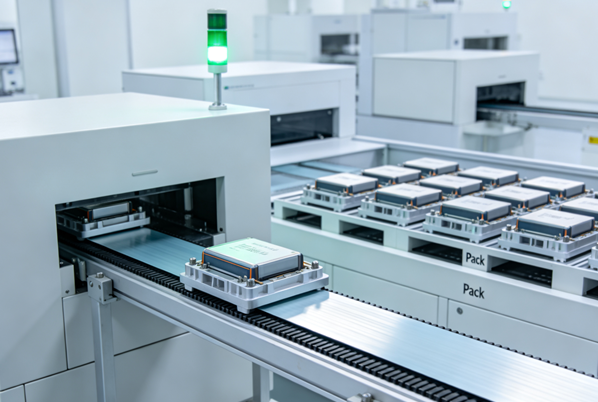
This cooling marks only the fading of speculative market hype rather than any halt to industrial‑oriented research and development. Progress has continued to register this year in framing formal technical standards, clarifying policy guidance and carrying out practical engineering validation. The whole sector is moving away from concept‑driven marketing and stepping into a new era focused on engineering verification and industrial roll‑out. Work priorities now centre on pilot production‑line construction, yield‑rate improvement, cost containment and the drafting of formal industry specifications.
Technological evolution follows its own inherent rules, and shifts in market sentiment will not alter the long‑term trajectory of industrial development. Three distinct perspectives help to frame current conditions within the sector.
First, the commercialisation of any transformative technology is invariably a lengthy undertaking. Conventional liquid lithium‑ion batteries took almost thirty years to travel from laboratory research to mass‑market deployment. Solid‑state battery technology must similarly pass through successive cycles of material‑system refinement, pilot‑scale enlargement and gradual ramp‑up of mass‑production output. Industry forecasts envisage limited vehicle fitting from 2027, with broader‑scale commercial applications established by 2030. These projections acknowledge realistic rhythms for technological advancement.
Secondly, deep‑running collaboration between research institutions and industrial participants offers the principal route for overcoming technical bottlenecks. Innovation in solid‑state batteries demands joined‑up efforts spanning fundamental laboratory research, process validation and final integration within road vehicles. Cutting‑edge research outputs generated within academic settings require industrial partners to translate laboratory achievements into real‑world products. Isolated technical breakthroughs cannot bridge the substantial gap between lab‑scale performance and stable large‑scale manufacturing. Co‑ordinated innovation networks are needed to turn promising laboratory material metrics into reliable production capacity.
Thirdly, market requirements and industrial policy work in tandem to guide technological progress. Mandatory safety standards for power batteries keep rising and set stricter baseline requirements. End‑user appetite for greater energy density keeps exerting upward pressure on battery‑related innovation. Demand from an expanding array of emerging application scenarios for high‑energy‑density energy‑storage carriers continues to prompt fresh evaluation of what solid‑state battery technology can deliver.
When viewed over a longer timeframe, the industrial roadmap for solid‑state batteries remains clearly defined. The sector is not undergoing genuine decline; it has entered an intensive phase of concentrated technical endeavour.
热门内容推荐