Floating‑PV Schemes Operational at Shanghai’s Major Airports Delivering Green‑energy Airport Benchmark
Two floating photovoltaic projects, situated at the South Regulating Pond of Hongqiao Airport and the No.1‑3 North Regulating Pond of Pudong Airport, have been completed and brought into service. Developed under Shanghai Airport’s initiative to roll out solar installations wherever physically feasible, the demonstration deployments adopt custom‑built technologies tailored to airport‑site constraints, balancing aviation safety, power‑generation performance and operational stability. The projects deliver a replicable reference case for airports worldwide seeking to unlock idle‑space potential for clean‑energy development.
The regulating ponds within airport movement zones are transformed into on‑site green‑power sources. Floating photovoltaic arrays installed on these water surfaces boost local renewable‑energy output. The covering panels also reduce surface water reflection and discourage bird roosting, mitigating bird‑strike risks for aircraft. This delivers an integrated model combining on‑water power generation and underwater flood‑storage functions. Running under a “self‑consumption first, surplus‑to‑grid” operating framework, the two sites generate approximately 14 million kilowatt‑hours of electricity each year and cut carbon‑dioxide emissions by around 7 400 tonnes. Local airport power‑supply costs are lowered, while excess green electricity is fed into the municipal grid to realise combined ecological and commercial returns.
Construction took place adjacent to active runways under strict air‑clearance restrictions, posing substantial engineering challenges. Delivery teams pursued zero‑percept‑on‑site construction with zero disruption to flight operations, minimising impacts on runway activities and air‑traffic schedules. A 50‑tonne knuckle‑boom crane with a maximum lifting height below 10 metres was deployed for hoisting work, well under the 11‑metre air‑clearance safety threshold. A full‑process FOD prevention regime was enforced throughout construction. Building materials were sealed immediately upon unpacking, haulage lorries operated with full canvas covering, regular metal‑detection sweeps were conducted across pond zones, and a closed‑loop material‑management system covered requisition, usage and residual‑material recovery. These measures prevent foreign‑object debris from drifting into runway zones.
Bespoke integrated engineering solutions address three core industry‑specific challenges for air‑side environments: bird deterrence, anti‑glare performance and wind resistance. For bird mitigation, full‑perimeter containment with high‑density plastic‑coated steel mesh is integrated with photovoltaic modules to create physical barriers limiting bird perching. Custom‑made bifacial N‑type low‑reflectivity solar panels are deployed with optimised tilting angles. Rigorous glare‑assessment procedures confirm no interference with pilot sightlines during take‑off and landing, air‑traffic‑tower operations or navigation‑aids equipment. Support frames are engineered to withstand wind forces equivalent to category‑13 typhoons. Multiple reinforcement measures including double‑nut locking, rear‑mounted hoops and C‑section steel clamps are fitted, with structural performance validated against real‑world wind‑load conditions to cope with severe coastal gales and convective weather events.
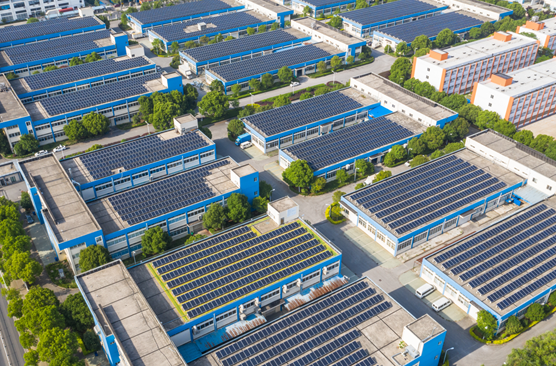
Shanghai Airport has steadily expanded its distributed‑photovoltaic portfolio across recent years, completing solar deployments over water bodies, building rooftops and pavement‑related areas. The proportion of renewable‑energy consumption keeps rising across airport facilities. Further photovoltaic capacity expansion is scheduled alongside the Pudong Airport Phase‑four expansion works, offering solid support for carbon‑reduction targets set for the 15th Five‑Year Plan period.
热门内容推荐