China’s 15th Five‑Year Consumption Expansion Plan Sets Out Framework for Experiential‑consumption Growth
Official documentation, the *15th Five‑Year Plan for Consumption Expansion*, approved recently by the State Council, puts forward clear provisions for fostering experiential consumption. Centred on consumer experience, the policy aims to nurture new‑form business models and innovative consumption scenarios. This regulatory direction offers guidance for building immersive, interactive and diversified consumption environments, broadening consumer offerings and unlocking domestic spending potential.
Experiential consumption represents a form of consumption built around service delivery, physical scenarios and emotional engagement. Shifting value perceptions among consumers are eroding traditional dividing lines between industries, stimulating cross‑sector integration across commerce, cultural tourism, sport and wellness. This shift has given rise to a host of emerging formats including immersive performances, themed short‑break tourism and domestic‑cultural creative merchandise.
Cultivating experiential consumption delivers multiple benefits for lifting consumption standards, optimising supply structures and enlarging domestic demand. It drives transformation for established commercial districts and pedestrian precincts, deepening integration between commerce, tourism, culture, sport and health services. Distinctive local consumer identities take shape, delivering sustained momentum for the development of international consumption‑oriented city hubs. Oriented towards end‑user experience, experiential consumption compels operators to innovate products, environments and services, pushing domestic supply systems towards customised, high‑quality output and acting as a powerful driver for supply‑side reform. Strong inter‑sector spill‑over effects extend consumption value chains, generating coordinated growth across catering, hospitality, transport and retail sectors and serving as a key driver for domestic‑demand expansion.
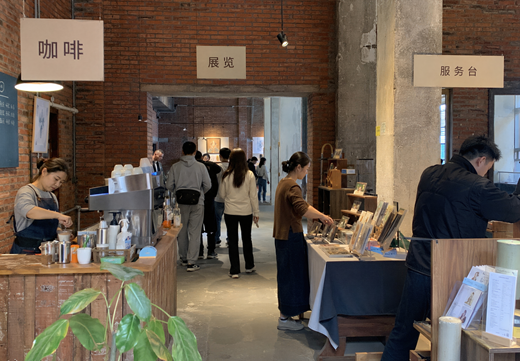
Experiential‑consumption activity has expanded rapidly across China in recent years, with continuous innovation in on‑the‑ground scenarios and experiential elements permeating broad segments of consumer markets. Structural shortcomings nevertheless persist within current supply arrangements. Digital technologies remain under‑deployed, service offerings frequently suffer from homogeneity, and high‑grade provision does not always align with upgraded consumer requirements. Supply‑side innovation is required to resolve these developmental bottlenecks.
High‑quality advancement of experiential‑consumption sectors centres on supply‑driven innovation, targeting four core dimensions: creative leadership, technological adoption, venue upgrading and institutional safeguards, to generate fresh sources of consumption‑sector growth.
Creative leadership underpins richer, higher‑quality experiential offerings. Drawing on regional resource endowments and industrial characteristics across culture, tourism and health‑related sectors, enhanced creative design and content innovation support parallel upgrades for products, scenarios and services. Distinctive experiential intellectual‑property brands with broad market influence are encouraged to emerge.
Deeper technological integration elevates immersive and interactive consumer journeys. Artificial intelligence, virtual reality and digital‑twin technologies are to be embedded further within experiential‑consumption workflows. Support extends to cloud‑based experiences, digital performances and smart wellness services to boost immersion and interactivity within consumer venues. Businesses are encouraged to deploy digital tools to map consumer preferences precisely, developing reverse customisation and scenario‑tailored solutions to improve matching between supply and demand.
Existing consumption venues receive targeted upgrades to build integrated multi‑functional spaces. Major commercial precincts, cultural blocks, tourist attractions and resort zones may incorporate immersive shows, interactive installations and themed social‑experience facilities to create all‑in‑one consumer destinations. Sporting fixtures and artistic performances will be brought into scenic spots, urban blocks and shopping districts, expanding night‑time experiential‑consumption provision and forming well‑recognised, high‑density consumption landmarks.
Supporting institutional frameworks refine operating conditions for industry participants. Work proceeds to complete standards frameworks covering experiential‑consumption sectors, establishing service‑quality and safety benchmarks for priority segments to guide orderly industry development. Financing support for small‑and‑medium‑sized operators helps lower innovation‑related costs. Regulators apply inclusive, prudent oversight regimes suited to emerging business patterns, alongside strengthened intellectual‑property protection measures.
热门内容推荐