China’s Photovoltaic Exports Expand as Firms Roll‑out Tailored Overseas Energy Solutions
China’s photovoltaic product exports have registered growing volumes so far this year, with shipments of silicon wafers, solar cells and inverters all posting positive growth. Exported solar modules display clearer trends towards higher‑end specifications and scenario‑specific customisation. Chinese PV manufacturers are stepping up global market outreach, developing better‑adapted solutions aligned with local climate conditions, grid architectures and practical application scenarios across international markets.
Multiple product categories record export expansion. According to data from the China Chamber of Commerce for Import and Export of Machinery and Electronic Products, China’s silicon‑wafer exports reached USD 780 million in the first six months of the year, marking a 29.4 per cent year‑on‑year rise.
Asian markets absorb the bulk of China’s silicon‑wafer outbound shipments. India ranks as the top destination, with first‑half exports valued at USD 230 million, surging 1 327 per cent year‑on‑year. Vietnam comes second, receiving USD 100 million worth of silicon wafers, representing a 5.2 per cent year‑on‑year decline. Laos sits in third place, importing USD 93.774 million of Chinese silicon wafers, up 188.8 per cent against the prior‑year period.
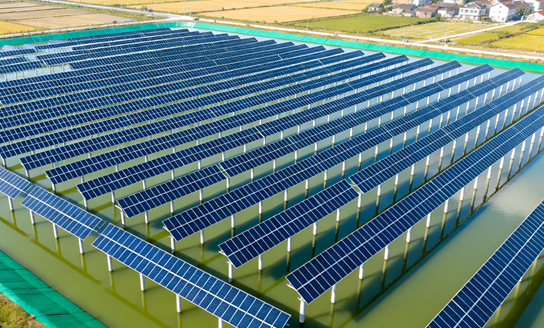
Solar‑cell exports also advance through the first half‑year, hitting USD 3.25 billion, an 87.6 per cent year‑on‑cent increase. Indonesia, India and the Philippines form the three‑largest overseas markets for Chinese solar cells. Shipments to Indonesia totalled USD 1 billion, rising 237.8 per cent year‑on‑year. Exports to India stood at USD 500 million, falling 39.2 per cent year‑on‑year, while flows into the Philippines reached USD 270 million, climbing 1 042.9 per cent.
Chinese solar‑module exports maintain solid momentum. First‑half module exports amounted to USD 13.2 billion, up 14.4 per cent year‑on‑year. The Netherlands, Pakistan and the Philippines are the principal receiving markets. Exports to the Netherlands came to USD 1.86 billion, a 13.7 per cent year‑on‑year increase. Shipments bound for Pakistan totalled USD 730 million, down 40.8 per cent year‑on‑year, and exports to the Philippines reached USD 620 million, showing 103.3 per cent year‑on‑year growth.
Inverter exports see robust high‑speed expansion, recording a first‑half value of USD 5.53 billion, 30.7 per cent higher year‑on‑year. The Netherlands, Germany and Australia represent the top‑three export destinations. Exports to the Netherlands hit USD 910 million, up 28.1 per cent year‑on‑year. Shipments to Germany stood at USD 420 million, rising 26.6 per cent year‑on‑year, and deliveries to Australia reached USD 410 million, surging 220.5 per cent.
Solid export performance stems from sustained innovation and long‑term overseas engagement by Chinese photovoltaic enterprises. Firms adjust technical pathways and business models to match divergent local energy requirements and operating environments, lifting their overseas competitiveness and market fit.
Trina Solar has recently finalised a module‑supply agreement with a major European EPC contractor for a 269‑megawatt solar park in Bavaria, Germany. Once commissioned in 2027, the facility will generate enough electricity to meet the annual power consumption of approximately 75 000 German households. The co‑operation demonstrates that Chinese photovoltaic hardware and solution packages can integrate into Europe’s large‑scale energy‑infrastructure supply chains and deliver practical blueprints for low‑carbon capacity build‑out across Germany and wider Europe.
In Pakistan, JinkoSolar’s Tiger‑3 series modules have accumulated shipments exceeding 300 megawatts. The business designs differentiated deployment paths for urban‑industrial and rural‑agricultural end‑users. Urban and commercial operators add energy‑storage hardware alongside existing solar installations to achieve off‑grid operation. High‑space‑efficiency Tiger‑3 modules maximise power generation within constrained rooftop footprints for commercial and industrial premises. For rural and agricultural communities, solar‑powered agricultural‑pumping solutions cut expenditure on grid‑supplied electricity and diesel generators, bringing direct economic benefits to farming households. This dual‑track deployment addresses the country’s mixed energy‑access demands and gains market acceptance within Pakistan.
At the 2026 Africa Energy Forum held in Cape Town, LONGi showcased its BC‑series modules engineered to withstand high ambient temperatures, dust accumulation, partial shading, glare risks, fire hazards and hail impacts, addressing common operational stressors across African territories. The manufacturer also unveiled the LONGi BLOCK modular photovoltaic containerised solution for African markets. The product caters for temporary power requirements at construction sites, mining operations and transport‑related installations, moving beyond the constraints of conventional fixed‑roof deployments. Such product portfolios deliver more flexible and dependable energy‑access options for regions with limited underlying infrastructure across Africa.
New overseas supply contracts and customised product roll‑outs will keep unfolding. Chinese photovoltaic hardware and integrated system offerings will continue entering diversified international project pipelines to satisfy rising global clean‑energy demand.
热门内容推荐