FAW Unveils “Super‑Printing Factory”, China’s First Vehicle‑focused Additive‑Manufacturing Innovation Hub
Changchun – FAW Group has officially inaugurated its Additive‑Manufacturing Innovation Centre, dubbed the “super‑printing factory”. It stands as China’s first innovation platform centred on automotive‑sector additive‑manufacturing applications, marking a shift for vehicle production away from traditional subtractive and isothermal forming techniques towards additive‑manufacturing workflows.
The centre operates a large‑scale printing matrix made up of 43 industrial‑grade printers covering eight mainstream process categories. Its annual output capacity reaches approximately 19 000 printed components. Additive‑manufacturing techniques run through the full value‑chain, including research‑and‑development validation, low‑volume serial production, tooling and fixture fabrication, after‑market spare‑part supply and custom‑order manufacturing.
Three core strengths define the technology: zero constraints on structural design, giving engineers greater creative freedom to realise topology‑optimised and bionic geometries; zero‑wait iterative validation, as digital models drive printing directly without mould development and drastically shorten development cycles; and integrated structural consolidation, delivering extreme lightweighting and multi‑component merging to achieve production efficiencies unobtainable via conventional manufacturing routes.
Additive‑manufacturing processes have moved beyond laboratory trials and deliver tangible commercial benefits across FAW product lines. For Hongqi Golden‑Sunflower vehicle series, combined 3D‑printing with leather wrapping and fumishing treatments enables batch production of interior components, cutting total costs by around RMB 30.59 million. Selective Laser Melting produces critical prototype parts such as single‑cylinder engine cylinder heads and catalytic‑converter cones, whose mechanical properties match those of conventionally cast equivalents. The technology also supports high‑precision recreations for Dongfeng Xiaojinlong and classic Hongqi vehicles, opening new technical pathways for preserving automotive heritage.
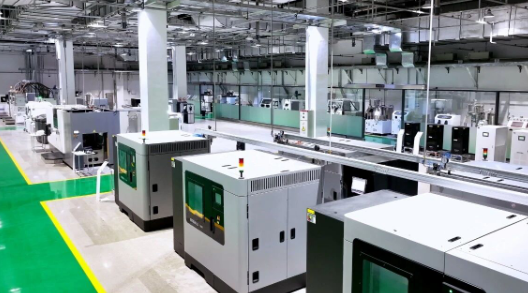
The platform delivers wide‑ranging support across the group. It supplies thousands of tooling fixtures and validation prototypes each year to subsidiary businesses. Additive‑manufacturing is no longer deployed merely for special‑case tasks; it functions as embedded infrastructure within FAW’s research‑and‑manufacturing systems across all its brands. FAW’s additive‑manufacturing capabilities reshape established automotive‑manufacturing paradigms, bridging the gap from R‑D‑only prototyping to real‑world volume deployment.
The facility will keep expanding practical additive‑manufacturing use‑cases across vehicle development workflows. Operational data accumulated at the hub will feed into process refinement for automotive‑grade 3D‑printing components.
热门内容推荐