China to Advance Unified‑National‑Market Reforms with New Legislative Framework
China presses ahead with deep‑going reforms for its unified national market, as recent high‑level meetings call for the drafting and enforcement of dedicated national‑market‑building regulations. Sessions of the Standing Committee of the 14th National People’s Congress have reviewed official reports on progress in building the unified national market, acknowledging tangible advances while pinpointing prevailing reform bottlenecks and outlining priority tasks for further implementation.
Construction of the unified national market acts as a fundamental underpinning for fostering a new development paradigm. Reforms keep dismantling local‑protection practices and market segmentation barriers, unlocking inherent momentum from the country’s vast domestic market and injecting fresh impetus into high‑quality economic performance.
Legislative work moves forward to sharpen market‑governance frameworks. Revised draft laws on government procurement and public bidding have been opened for public consultation. The two legislative texts target collusive tendering, shoddy project delivery and other malpractice within public‑resource allocation, reshaping underlying institutional logic through statutory means to ease long‑standing market‑segmentation difficulties.
A four‑tier fair‑competition review mechanism covering national, provincial, municipal and county authorities is now fully established across administrative layers. Joint campaigns led by the National Development and Reform Commission, the Ministry of Commerce and the State Administration for Market Regulation were carried out in 2025 to clear market‑access barriers. More than 38,000 local statutes, government decrees and normative documents went through screening and assessment. Discriminatory provisions such as restrictions on bidding by non‑local enterprises, mandatory local procurement rules and extra establishment requirements for outside operators have been repealed or revised.
Dividends from market integration keep materialising. Cross‑provincial corporate relocation can be completed with minimal procedural disruption within the Yangtze River Delta, with inter‑regional business registration formalities concluded within a single day. Online “cloud‑migration” platforms operate across the Chengdu‑Chongqing economic zone, enabling one‑off submission and whole‑process cross‑provincial processing for new business registrations.

The national negative list for market access has been streamlined down to 106 items, while the negative list for foreign‑investment access stands at 29 entries, with all manufacturing‑sector foreign‑investment restrictions removed. Official red lines against conduct that undermines the unified national market have been defined, regulating government intervention in market operations from an institutional source. Nationwide mutual recognition of business permits, universal adoption of electronic seals and shared credit‑information systems bring down institutional transaction costs and consolidate the legal foundation for the principle that “everything not prohibited is permitted”.
Smooth circulation of production factors constitutes a core pillar for deeper‑reaching unified‑market construction. Reforms target orderly, efficient and fair allocation across land, labour, capital, technology and data resources, with multiple local pilot initiatives removing frictional obstacles to factor mobility.
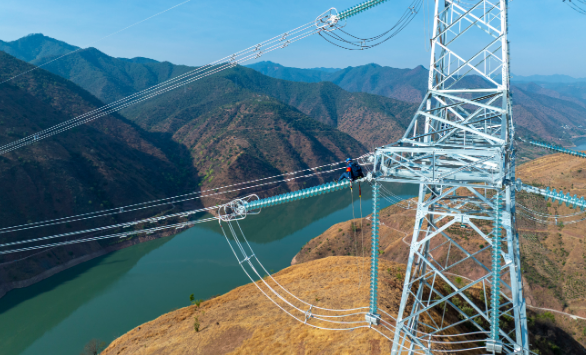
A preliminary national unified power‑market system took shape in 2025, enabling co‑ordinated nationwide electricity trading. Hydropower generated in Yunnan and Guizhou flows to major power‑consumption hubs within the Yangtze River Delta and Pearl River Delta. New‑energy output from northern regions is delivered at full capacity via inter‑provincial spot markets, easing local power shortages and cutting power‑purchase costs for real‑economy entities.
Policy guidelines for delivering basic public services according to place of residence break down constraints on labour mobility. Human resources circulate free from rigid administrative‑region boundaries, supporting coordinated industrial development through precise matching and efficient talent pooling. Technology and data emerge as fresh growth drivers for market‑building work. A national unified technology‑trading service platform accelerates integration within technology‑transaction markets, while multi‑pronged data‑factor reforms turn data into tradable, value‑generating production inputs.
Higher‑standard interconnection of market infrastructure underpins reform delivery. Transport‑logistics and digital‑infrastructure connectivity continue to strengthen. A comprehensive national multi‑dimensional transport framework takes shape, and widespread adoption of the “one‑document” inter‑modal transport system helps drive down overall social logistics costs. Integration of domestic and foreign‑trade arrangements gathers pace. The proportion of inter‑provincial sales within total commercial turnover rises year‑on‑year, showing clearer shifts from intra‑regional cycles toward nationwide circulation. Capacity for resource pooling, innovation incentives and specialised labour division grows more apparent.
Current reform work moves past the removal of overt barriers and grapples with entrenched covert obstacles. Implementation gaps, disguised restrictive practices and insufficient regulatory frameworks for emerging business formats hold back overall reform effectiveness. Fundamental national‑level laws and policy papers are largely in place, yet policy alignment remains inadequate at municipal and county administrative tiers. Enforcement standards diverge across geographies, and institutional uniformity does not always translate into consistent on‑the‑ground practice. Some local authorities deploy flexible tools to erect implicit market barriers, or offer preferential subsidies through investment‑promotion arrangements which fuel unregulated cut‑throat competition. Institutional supply lags behind developments in emerging sectors, and supporting market‑supervision systems remain incomplete.
Rigid targeted measures are set to roll out covering legislative refinement, government‑conduct regulation and factor‑market advancement. Work proceeds at pace on the national unified‑market‑building regulations, which will co‑ordinate integrated reforms across market access, business scenarios and production factors to lay institutional foundations for the unified domestic market. List‑based rigid controls will apply to governmental behaviour, with preventive check‑lists against unified‑market‑undermining conduct, negative lists for fiscal subsidies, and dual‑direction check‑lists for investment promotion. Further breakthroughs will unlock cross‑border factor mobility. Alignment with high‑standard international economic‑trade rules will smooth domestic‑and‑international dual circulation, converting the strengths of China’s huge domestic market into fresh competitive edges on global markets.
High‑standard unified domestic markets featuring open competition, complete institutions and sound governance will take firmer shape as layered reform measures come into force, delivering sustained robust momentum for the country’s high‑quality economic development.
热门内容推荐