Industry Optimistic Over Embodied Intelligence’s “ChatGPT Moment” at 2026 World Robot Conference
Beijing, August‑27 – Industry figures at the 2026 World Robot Conference hold upbeat views on when embodied intelligence will reach its so‑called “ChatGPT moment”, as mass‑production and commercial roll‑out of humanoid robots gather pace across sectors. Robots are already operating routinely within industrial and logistics workflows, with several suppliers completing order deliveries at the ten‑thousand‑unit scale. Sector‑wide focus is shifting away from whether robots can perform tasks, and towards their capacity to operate reliably and efficiently in real‑world settings.
A core question circulating across conference discussions centres on the timescale for general‑purpose robots, humanoid or semi‑humanoid, to gain widespread entry into domestic households. The “ChatGPT moment” describes the technological inflection point where innovation moves beyond experimental research into large‑scale real‑world deployment, enabling robots to operate out‑of‑the‑box when placed within unfamiliar surroundings. Some industry views suggest this tipping‑point could materialise within two to three years, while other assessments stretch the timeline out to five or even ten years. The threshold will be crossed when robots can complete roughly 80 per cent of daily tasks in previously unseen home or working environments.
Many participants consider the inflection to be achievable within a three‑year window. Current artificial‑intelligence frameworks already demonstrate strong analytical reasoning and linguistic capabilities, alongside limited simulated emotional responses. Industrial maturity will rely on parallel advances across hardware, software, low‑level motion control and high‑level algorithm design.
Public awareness of this technological shift may not arrive as a single abrupt event. Broader societal adoption is expected to unfold incrementally, with robotic systems gradually embedding themselves across everyday environments. More businesses will deploy robotic hardware within genuine productivity‑driven use‑cases over the coming twelve months. Early‑stage roll‑outs will concentrate on industrial and security‑oriented assignments before technical improvements support more generalised physical‑world intelligence. Should the era of “brain‑enabled robots” arrive as artificial‑intelligence evolves further into physical intelligence, related industrial markets could expand to trillions or even tens of trillions of pounds.
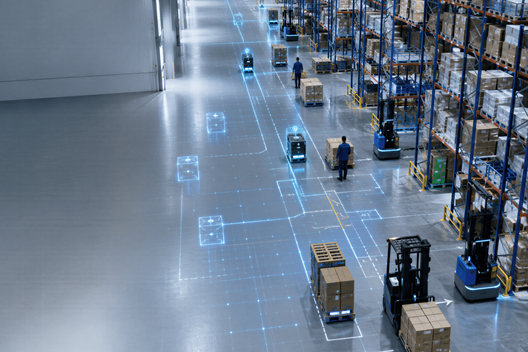
Growing confidence stems from tangible progress in mass manufacturing and commercial delivery. The past twelve months mark a phase of scaled‑up artificial‑intelligence implementation. Humanoid robotic hardware is moving out of laboratory prototyping into serial production, while operators across industry, logistics and service sectors assign practical operational duties to robotic units. The embodied‑intelligence space has reached a commercial turning‑point in 2026. Business‑focused deployments cover more than ten cities, where hardware undertakes regular operational work rather than limited demonstration runs.
Scaled orders are now secured across vertical industries. Volume contracts have been finalised for hundreds of units within electronics manufacturing, alongside two‑thousand‑unit commitments in garment production. One hardware supplier has manufactured and shipped approximately 15 000 embodied‑intelligence products up to 30 June this year. A single quadruped‑robot product line has exceeded ten‑thousand global unit sales, with more than three‑hundred corporate partners receiving solutions worldwide.
Volume output alone no longer defines corporate performance benchmarks. Stakeholders place greater weight on customer value creation, end‑user acceptance and repeat purchasing behaviour. Repeat orders are already emerging from industrial clients, pointing towards strong market expansion within industrial applications over the next one to two years. 2026 marks a pivotal year for on‑site deployment and commercial closure, though genuine viable mass production will remain out of reach for many market entrants. Meaningful scaled manufacturing depends on three core conditions: robust product stability, proven productivity gains and sustainable commercial cycles.
Substantial technical barriers remain between partial real‑world deployment and the full “ChatGPT moment” for embodied intelligence. Misalignment persists between artificial‑intelligence model inputs, outputs and physical‑world robotic execution. Algorithms outline correct high‑level task trajectories for movement, assembly and object handling, yet small‑scale positional errors of centimetres or millimetres regularly undermine final‑stage physical manoeuvres.
Language‑based large‑models operate entirely within digital vector spaces with minimal signal loss, while every physical‑world robotic cycle accumulates measurement and execution deviations. These discrepancies constrain real‑world generalisation and task‑success rates for physical robotic systems, though incremental technical advances will tackle these constraints over coming years.
Robots sit on the brink of broader adoption, hampered by limitations in task‑comprehension and cross‑context generalisation. Within controlled logistical workflows, robot efficiency and cost performance match human operators, yet these capabilities cannot yet transfer reliably to diverse, more complex operating contexts. Insufficient volumes of high‑quality physical‑world training‑data restrict model generalisation, confining present‑day robots to narrow predefined workflows.
Large‑batch production also brings fresh engineering challenges. Robotic platforms must deliver competent cognitive and motor performance, before hardware specifications satisfy varied on‑site operational requirements. Maintaining consistent yield, manufacturing quality and product performance across high‑volume serial runs represents another major hurdle. Formal, mature industry standards for embodied‑intelligence hardware are not yet established. Supply‑chain participants will need collaborative work to formulate standards aligned with real‑world operational demands and manufacturing feasibility, securing consistent product performance for large‑scale deployments.
热门内容推荐