China Gives Green Light to Eight New Nuclear Reactors Marking Co‑ordinated Growth in Scale and Quality
According to Xinhua News Agency, the State Council executive meeting has recently approved four nuclear‑power projects totalling eight reactor units, namely Phase‑II of Jinqimen Nuclear Power Plant in Zhejiang, Phase‑III of Taipingling Nuclear Power Plant in Guangdong, Phase‑I of Zhuanghe Nuclear Power Plant in Liaoning and Phase‑I of Laiyang Nuclear Power Plant in Shandong. Representing the first batch of nuclear‑power approvals in the opening year of the 15th Five‑Year Plan period, the move signals that China’s nuclear‑power construction is entering a phase of coordinated progress between scale expansion and quality improvement. Total investment for the package of projects exceeds 170 billion yuan.
Nuclear‑power projects feature large unit‑scale investment, extended construction timelines and far‑reaching industrial chains, bringing tangible development opportunities for upstream and downstream sectors. Direct investment of more than 170 billion yuan is set to drive roughly 500 billion yuan of total output across whole‑industry supply chains, covering special steel products, high‑end equipment manufacturing, engineering construction and scientific research innovation.
Security of energy supply forms another core driver for accelerated nuclear‑power roll‑out. China targets around 110 GW of operational nuclear‑power capacity by 2030. Coastal economically‑robust provinces including Zhejiang, Guangdong and Shandong sustain heavy industrial activity and persistently high electricity demand. Rising power consumption spurred by advances in artificial intelligence has also prompted many nations to reassess nuclear‑energy value. Unlike intermittent wind and solar installations, nuclear power generates stable, controllable output independent of day‑night cycles or weather conditions and fulfils an irreplaceable function within China’s modern power system. It constitutes an indispensable component of the country’s clean‑energy mix.
Each one‑million‑kilowatt nuclear reactor can cut carbon‑dioxide emissions by over 9 million tonnes annually. Nuclear power delivers substantial decarbonisation gains and occupies a central position in national efforts to advance carbon peaking and carbon‑neutrality objectives.
The newly‑sanctioned portfolio brings fresh breakthroughs across technological iteration, layout planning and capital participation beyond simple numerical growth of reactor fleets. Phase‑II Jinqimen and Phase‑III Taipingling are designated demonstration sites for HPR1000 Version 2.0, an advanced “Gen‑III‑plus” home‑grown nuclear‑power technology. Building upon proven legacy designs, the upgraded variant delivers comprehensive improvements in safety performance, operational cost‑efficiency and intelligent maintenance capabilities. Its deployment marks Chinese nuclear industry’s transition from largely keeping pace with global peers toward broader parallel progress alongside selective global leadership.
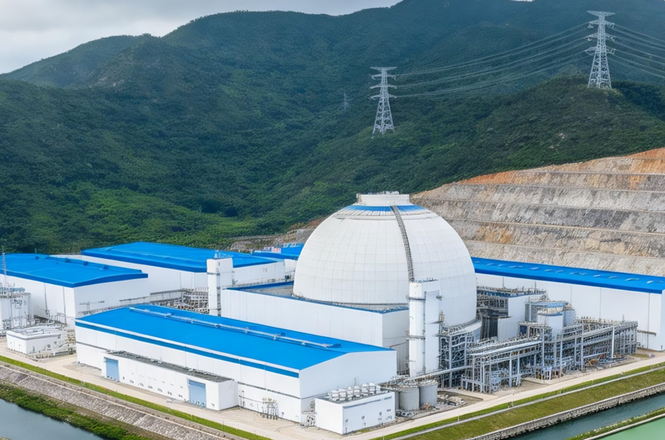
Six out of the eight approved units adopt the HPR1000 technical route, while the two Laiyang units deploy Guohe‑One. The parallel roll‑out of these two fully‑home‑grown third‑generation nuclear‑power technologies validates China’s mature, complete nuclear‑technology system. The two technical paths complement and reinforce each other, laying solid technical foundations for future large‑scale nuclear‑power expansion.
Channels for private‑capital engagement in nuclear‑power infrastructure keep broadening. Social‑capital stakeholders take equity stakes within the Jinqimen project, shifting away from the long‑established pattern where state‑owned capital dominated nuclear‑power investment. Private‑sector participation opens fresh pathways for investment and financing models for large‑scale energy schemes.
Nuclear energy is evolving beyond pure electricity generation towards multi‑purpose integrated energy supply. Application scenarios such as district heating, industrial steam provision, hydrogen production and seawater desalination keep expanding, unlocking further energy‑system value and lifting overall thermal‑use efficiency. The Laiyang complex includes supporting nuclear‑power heating infrastructure. Its initial two units deliver heating capacity for 68 million square‑metres of building space. Once all six planned units reach commercial operation, total heating capacity will surpass 170 million square‑metres, sufficient to serve heating requirements for approximately 28 county‑level urban areas.
Safety remains the non‑negotiable bottom‑line principle for nuclear‑power advancement. The State Council executive meeting stipulates that all units shall be constructed and operated to the world’s highest safety benchmarks, guaranteeing absolute nuclear‑safety outcomes throughout every project phase. Technological upgrades reinforce safety safeguards. HPR1000 Version 2.0 incorporates optimised safety‑system architecture, enhanced defence‑in‑depth strategies, advanced core‑protection hardware, reactor‑pressure‑vessel direct‑injection systems and passive in‑vessel molten‑core retention technologies. Under design‑basis accident conditions, operator‑intervention‑free duration rises from 30 minutes under Version 1.0 to 72 minutes.
China has maintained an approval rhythm of roughly ten nuclear‑power units each year since 2022, with regularised sanction procedures remaining in place. This batch of eight new units formally kick‑starts nuclear‑power construction activity for the 15th Five‑Year Plan cycle. The multi‑billion‑yuan investment programme supports stable economic expansion, job creation, energy‑security safeguards, self‑reliance in science and technology, and steady delivery of national carbon‑reduction targets.
热门内容推荐