China’s robot industry records robust growth, flagship intelligent‑robot products in pipeline
According to Economic Information Daily, the 2026 World Robot Conference opens in Beijing on 19 August, bringing together industry participants to examine the rapid expansion of China’s robotics sector and emerging technical frontiers around embodied intelligence.
Revenue generated by China’s above‑scale robot‑manufacturing enterprises reached 1655 billion yuan in the first half of this year, marking a 24.5 per‑cent year‑on‑year rise. The whole‑sector turnover of above‑scale firms exceeded 3000 billion yuan in 2025, with an average annual growth rate of more than 20 per‑cent across the past five‑year period. The Ministry of Industry and Information Technology will steer innovative industrial development with intelligence as the central thread. Policy work will zero in on core components and embodied intelligence, smoothing innovation chains that link research institutes, universities, manufacturers and end‑users. Joint research initiatives between Chinese and overseas research bodies and commercial enterprises will receive encouragement, as the country moves to develop a portfolio of advanced, practical and user‑friendly flagship intelligent‑robot products.
Global artificial‑intelligence innovation gathers unprecedented momentum at present. Intelligent robots act as a vital medium that carries artificial intelligence out of digital systems and into the physical world, delivering value across broad swathes of industry while entering ordinary households at an accelerating pace. These machines integrate advanced manufacturing alongside cognitive, computing and neuroscientific disciplines, opening fresh application horizons for artificial‑intelligence technologies and unlocking substantial developmental potential for robotics itself.
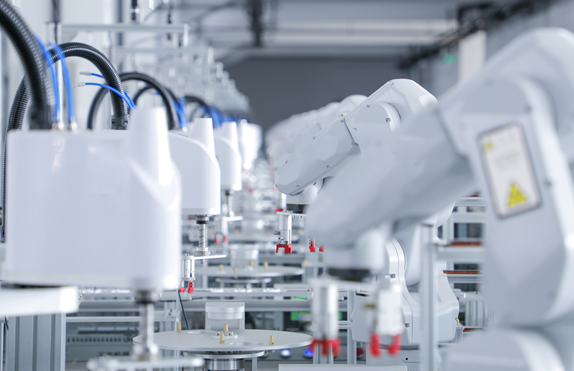
More than 300 exhibitors take part in this edition of the conference. Exhibitors across industrial, commercial and consumer‑home segments place greater emphasis on commercial delivery under real‑world operating conditions. Centred on intelligence priorities, robots demonstrate enhanced capacity to perceive physical surroundings. The humanoid‑robot segment is moving past conceptual exploration and entering a new phase defined by scenario‑specific deployment, practical performance and scaled roll‑out. Domestic enterprises build full‑stack proprietary technical frameworks covering base models, world models and action‑oriented models. Major technical breakthroughs target two core capabilities: scene cognition and task planning from a robot’s first‑person perspective, plus precise perception and spatial understanding that underpin physical interaction.
Inference efficiency constitutes a critical bottleneck preventing embodied‑intelligence systems from transferring out of laboratory environments into real‑world settings. Large‑scale language models have mastered language comprehension, and world models are set to advance understanding of physical reality. World models are not merely extended video‑generation tools; they essentially construct machine‑borne cognition of physical‑world operating rules. Further integration among world models, reinforcement‑learning algorithms and robotic hardware will create conditions for embodied‑intelligence systems to operate reliably within real‑world environments.
Corporate data collated by Tianyancha shows China hosts upwards of 1.165 million enterprises tied to the robot industrial chain, with roughly 144 000 new entities established so far this year. Newly‑registered businesses include approximately 54 000 firms within scientific research and technical services, 22 900 operators in information transmission, software and information‑technology services, and 17 200 manufacturing‑sector organisations. The incoming cohort of market participants extends well beyond robot‑hardware producers, with growing activity focused on algorithm research, system integration, scenario‑specific solution design, software platforms and engineering services. These figures illustrate deepening convergence between robotics, artificial intelligence, software development and automated control systems.
Obstacles remain for the expanding intelligent‑robot industry. Insufficient overall intelligence levels and limited capability for skilled task execution represent prominent ongoing constraints. The Ministry of Industry and Information Technology will balance technical research, industrial cultivation, scenario expansion and safety governance, guided by intelligence priorities and practical‑application requirements. Enhanced innovation‑focused international co‑operation will support intelligent upgrading across the robot sector. Application‑driven collaboration will accelerate industrialisation progress. Targeted pairing schemes between technology suppliers and end‑users will be organised for high‑potential sectors including agriculture, medical care, elderly‑care services and emergency response. Practical‑site validation and roll‑out of proven solutions will enable large‑scale deployment of new‑use‑cases, which in turn speeds iterative refinement of emerging technologies and products.
Products built around embodied intelligence stand at a pivotal juncture, shifting from small‑batch trial deployment towards large‑scale real‑world implementation. Cross‑party collaborative research will span the full industrial chain, covering core components, software algorithms, data resources, complete‑machine manufacturing and application‑solution development. Joint research centres for embodied‑intelligence research will be established, alongside large‑scale scientific‑engineering co‑operation projects. Joint innovative breakthroughs will target cutting‑edge areas such as flexible tactile sensors, high‑dexterity robotic hands for fine manipulation and world‑model architectures.
热门内容推荐