China commissions first 10-million-tonne crude oil pipeline of 15th Five-Year Plan period
According to Xinhua News Agency, on 13 August, the Lianyungang–Huai’an section of the Lianyungang–Yizheng crude oil pipeline, a key national oil and gas infrastructure project, achieved successful one-time commissioning.
It is the first 10-million-tonne-class crude oil pipeline to be put into operation at the launch of China’s 15th Five-Year Plan, supporting optimisation of the energy supply structure in central and eastern China and improving the layout of the unified national oil and gas pipeline network.
After commissioning, the pipeline links up with the operational Rizhao–Yizheng pipeline to transport crude oil to Yizheng Station, a core crude hub in eastern China. It can deliver a maximum of 70,000 tonnes of crude oil per day to refineries in Jiangsu Province and along the Yangtze River.
The infrastructure strengthens multi-channel resource security for users along the river, facilitates the refined layout of oil and gas pipelines within the Yangtze River Delta and supports unified allocation of imported crude oil resources.
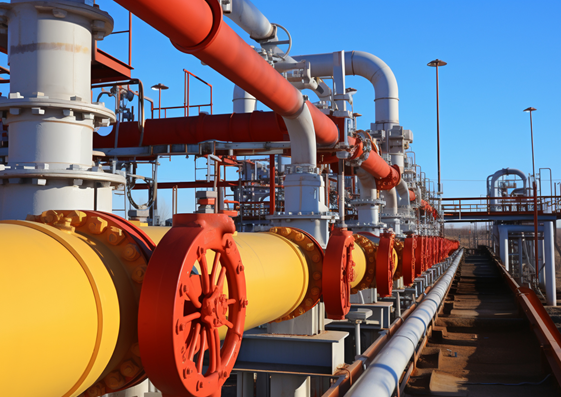
The Lianyungang–Huai’an section runs from the Lianyungang Pump Station in Xuwei New Area, Lianyungang, to the Huai’an Pump Station of the Rizhao–Yizheng pipeline in Huaiyin District, Huai’an. With a total length of 143.8 kilometres, the pipeline has a diameter of 813 millimetres, a design pressure of 8.5 megapascals and a designed annual transportation capacity of 18.5 million tonnes. Two process stations and six line block valve chambers are built along the route.
The pipeline passes through plains in south-eastern Lianyungang and north-eastern Huai’an, an area crisscrossed by rivers, ditches, paddy fields and fish ponds. Waterway-related segments span 138 kilometres, accounting for over 95 per cent of the total route. The pipeline crosses nine large and medium-sized rivers, as well as fourteen railway and highway corridors.
Throughout construction, China Oil and Gas Pipeline Network Group promoted continuous automatic welding operations to deliver high-quality engineering works. For sections with flow plastic silt geology, construction teams implemented pre-drainage, pipe mat laying and submerged pipe lowering techniques to resolve mobility issues for heavy machinery and raise construction efficiency.
The crossing beneath the Xinyi River and Guan River represents the longest and most complex controlled project on the line. Teams adopted an innovative construction scheme combining directional drilling with inland tie-in works, opening the key passage for full line breakthrough twelve days ahead of schedule.
The newly commissioned pipeline segment will continue to interconnect with existing trunk pipelines serving eastern refining bases. Construction technologies valid
热门内容推荐