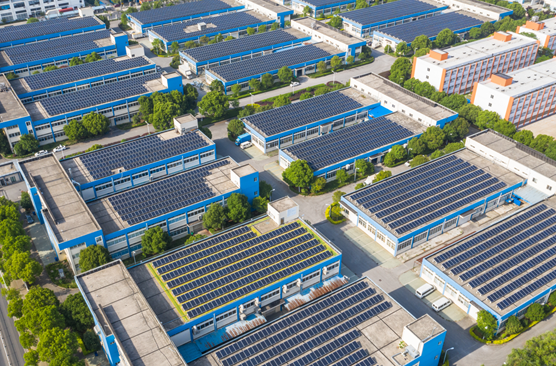
Shanxi deploys homegrown agricultural robots to modernise hilly farmland operations
A growing lineup of domestically developed agricultural robots in northern China’s Shanxi Province is moving from laboratory trials to large-scale field deployment, transforming traditional farming across hilly and mountainous terrain. Intelligent machinery for sowing, plant protection, livestock inspection and fruit sorting is now widely applied across local crop plantations, greenhouses and breeding bases.
Shanxi has prioritised agricultural machinery upgrading and smart farming as core measures to stabilise grain output and advance rural revitalisation. The local government has issued the Smart Agriculture Action Plan (2026–2030), setting clear targets for intelligent equipment research, manufacturing and industrial promotion. Integrated pilot projects for agricultural robot research and application have been designated as key provincial tasks to drive coordinated progress in technological innovation and on‑site adoption.
Most arable land in Shanxi consists of fragmented slopes and hilly zones, where conventional large‑scale farm machinery struggles to operate efficiently. Local specialised agricultural sectors including daylily cropping, tomato greenhouse planting, sorghum cultivation and livestock breeding face sustained labour shortages, creating strong market demand for terrain‑adaptive intelligent farming equipment.
Targeted research efforts have delivered a series of tailored robotic solutions. The Earth Wisdom Ox intelligent mulching and seeding robot, jointly developed by local research institutions and tech enterprises, supports five integrated farming procedures including fertilisation, mulching, drip irrigation laying, sowing and soil covering. Stable operation on 20‑degree slopes fills domestic technical gaps in mechanised hilly land sowing and film covering.
A dedicated intelligent daylily picking robot has completed full operational tests in field conditions. After nearly three years of targeted research under provincial key R&D programmes, the equipment achieves intelligent identification, precise positioning and non‑destructive picking, effectively addressing labour-intensive harvesting pain points for the regional signature crop.
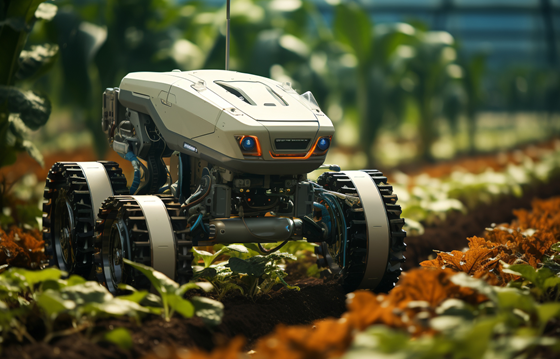
Greenhouse‑adapted robots have also achieved technical breakthroughs. Lightweight tomato picking robotic arms, reduced in weight by 30 to 50 per cent, adapt to narrow greenhouse ridges and support continuous and accurate fruit harvesting. Intelligent livestock inspection robots equipped with multi‑dimensional perception cameras and sensors enable round‑the‑clock monitoring of breeding environments, collecting real‑time data on livestock physical conditions and feeding status to standardise breeding management and mitigate operational risks.
Systematic policy and industrial support underpins the rapid rollout of smart farming equipment. Provincial fiscal funds sustain over 90 new agricultural machinery promotion projects each year, supporting the construction of 57 socialised smart agricultural service centres to expand equipment coverage. Standardised subsidy policies reduce the procurement cost of intelligent devices for agricultural operators, greatly accelerating market adoption.
On‑site promotion and technical training further unlock practical productivity advantages. Field demonstration projects have covered more than 2,000 mu of farmland, with intelligent robotic equipment delivering over 15 times the operating efficiency of manual labour and cutting human input costs by more than half. Commercial application scenarios continue to expand across grain cropping, greenhouse horticulture, fruit grading and intelligent breeding.
Upgraded industrial statistics reflect steady progress in local agricultural modernisation. By the end of last year, Shanxi had more than 35,500 grain harvesters and 3,467 agricultural drones, with intelligent and large‑scale farming equipment gaining rapid popularity. Agricultural aerial operations covered 635.27 thousand hectares, while total agricultural machinery power exceeded 19.53 million kilowatts. The comprehensive mechanisation rate for major crops reached 77.8 per cent, surpassing the national average level.
Local authorities have launched selection initiatives for replicable intelligent agricultural robot application scenarios, covering crop cultivation, livestock breeding and primary agricultural product processing. Further policy support will focus on mechanised upgrading for hilly land, intelligent optimisation for facility agriculture and automated harvesting for specialised local crops, promoting continuous industrial iteration and large‑scale commercial implementation of homegrown agricultural robotic technologies.
热门内容推荐