Shanghai Rolls Out Full-chain Mechanisms to Accelerate Future Industrial Takeoff in 15th Five-Year Opening Year
According to CCTV.com via Xinwen Lianbo, China’s 15th Five-Year Plan outlines a full-spectrum cultivation system for future industries, targeting pivotal sectors that anchor long-term national innovation and economic growth. In the opening year of the new planning cycle, Shanghai is stepping up efforts to build itself into a globally influential innovation hub by pioneering institutional reforms and innovative industrial incubation models to deliver steady breakthroughs across future industry tracks.
Shanghai hosts around one-third of China’s brain-computer interface enterprises, forming a prominent industrial cluster in the emerging tech sector. Local authorities have launched a dedicated project manager system led by government teams to address long-standing industrial bottlenecks. The professional teams screen high-end technical projects, select outstanding research bodies and integrate upstream and downstream industrial resources to facilitate the practical application and commercialisation of cutting-edge research outcomes.
A minimally invasive spinal-brain interface technology, discovered and incubated through municipal innovation competitions, has achieved rapid industrial landing under the targeted cultivation mechanism. The technology has supported the completion of China’s first minimally invasive spinal-brain interface surgery, marking a key clinical milestone for the domestic brain-computer interface industry.
To tackle insufficient post-surgery rehabilitation support following the technological breakthrough, the professional project teams have mobilised resources from universities, research institutions and industrial enterprises. Cross-industry collaborative research has led to the development of custom exoskeleton equipment tailored for spinal-brain interface post-surgery rehabilitation, completing the full-loop technical and service support for clinical application.
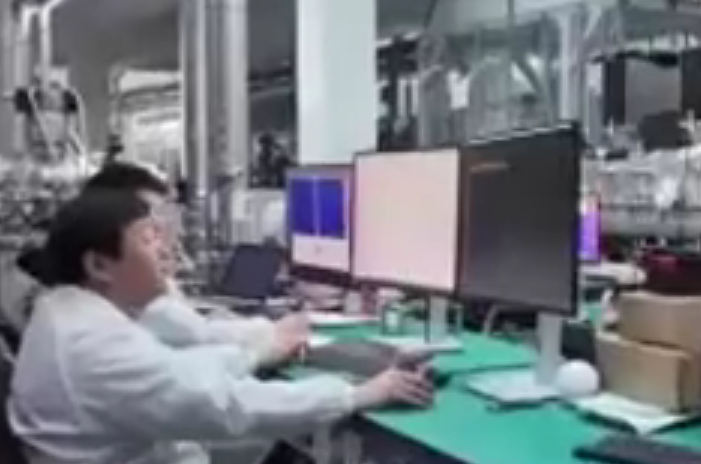
The project manager system, introduced by Shanghai’s science and technology authorities, is designed to resolve the structural dilemma of robust basic research paired with inefficient outcome conversion and sluggish industrial implementation. Systemic resource coordination covering scientific research, manufacturing, investment and think tank services now runs through the entire process of project research, experimental verification and mass production, streamlining every link of industrial transformation.
Shanghai has identified six core future industrial directions and more than 20 specialised sub-sectors, with over 20 dedicated project manager teams deployed to drive technical research and industrial cultivation across brain-computer interfaces, quantum computing, 6G communications, green fuels and other frontier fields.
The city has further optimised its industrial incubation ecosystem this year, with 19 high-standard incubators put in place and a future industrial fund of approximately 15 billion yuan established. Industrial clusters centred on silicon photonics and other emerging sectors are under construction, smoothing the whole-chain development path from technological breakthroughs and research conversion to large-scale industrial application.
Nearly 200 scientific research achievements in future industries have completed practical verification in Shanghai during the first half of the year. The city will continue to scale up technological research and industrial incubation to foster disruptive frontier innovations. By 2027, Shanghai aims to achieve breakthroughs in a batch of cutting-edge technologies and nurture around 20 leading enterprises that dominate future industrial ecosystems.
Continuous institutional optimisation and industrial resource aggregation will lay a solid foundation for Shanghai to cultivate multiple strategic emerging industries by 2030, cementing its status as a world-leading hub for future industrial development.
热门内容推荐