China’s Rural Industries Advance Full-Chain Upgrading Amid Tech Rollout in First Half of Year
According to CCTV News Client via Xinwen Lianbo, China’s rural sectors have delivered marked quality and efficiency gains across the first six months of the year, as innovative machinery, modern technologies and refined production processes see accelerated uptake to drive comprehensive upgrades for distinctive local agricultural supply chains.
Harvest season is now underway for figs in Weihai, Shandong Province. The soft fruit has long faced distribution limitations, as its fragile flesh and rapid spoilage rate confined sales largely to local markets. Local authorities have partnered with academic research institutions to develop differential pressure pre-cooling equipment this year. The machinery intelligently calibrates wind speed and airflow intensity, cutting core fruit temperature from 25 degrees Celsius to 3 degrees Celsius within a single hour. This rapid cold-locking technology enables the region’s fig produce to be shipped to consumer markets nationwide.
Cutting-edge equipment and technical breakthroughs create two parallel commercial shifts for rural agricultural goods. Fresh local specialities gain extended geographic market reach, while producers steadily pivot from trading raw farm produce to launching processed finished goods with higher added value.
A sophisticated deep-processing production line has recently entered operation within the modern agricultural industrial park in Jinzhai, Anhui Province. The facility boasts an annual processing capacity of 450 kilogrammes of ganoderma lucidum. The locality has built a complete industrial ecosystem covering seed breeding, large-scale cultivation, research and deep manufacturing, generating nearly 40 billion yuan in annual output value. This integrated ganoderma industry cluster sustains income growth for close to 20,000 rural residents.
Nationwide policy frameworks underpin the ongoing industrial transformation. Authorities have fully rolled out a three-year action plan to advance development of agricultural processing industries, fostering coordinated progress across primary processing, high-value deep manufacturing and full utilisation of agricultural by-products. Official statistical data confirms a 4.8 per cent year-on-year rise in value-added output from large-scale agricultural and sideline food processing enterprises across the country’s first half.
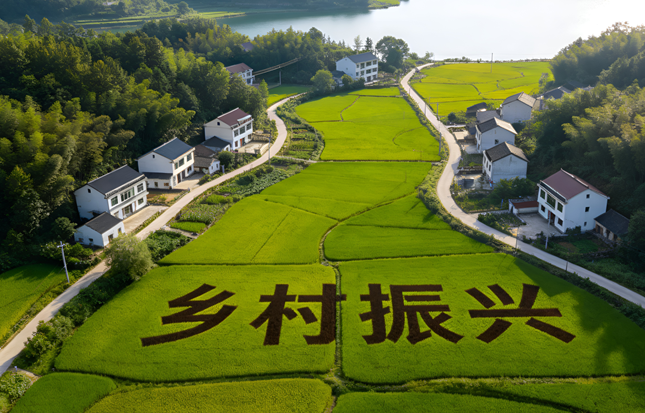
Joint initiatives led by the Ministry of Agriculture and Rural Affairs alongside the Ministry of Finance have formally approved 300 industrial clusters built around competitive regional agricultural products, plus 450 modern agricultural industrial parks. These designated hubs serve as testbeds to roll out improved crop varieties, digital farming techniques, intelligent hardware and streamlined manufacturing workflows, laying the foundational framework for a contemporary, integrated agricultural industrial system.
Comprehensive modernisation of distinctive rural supply chains opens up sustained new avenues for rural households to lift disposable incomes. Official economic metrics record a 5.5 per cent real growth rate in per capita disposable income for rural residents over the January-to-June period.
Further investment into cold-chain infrastructure, automated processing lines and agri-tech research will continue to expand the profit margins available to rural producers across all provincial regions. Regional governments will keep deepening ties with scientific research bodies to customise technical solutions tailored to local crop varieties and regional climate conditions, shortening the cycle between laboratory agricultural innovations and on-farm commercial application. Integrated industrial parks will roll out more supporting services including product quality testing, brand development and cross-regional distribution coordination to strengthen the competitiveness of China’s regional agricultural specialities on domestic consumer markets.
热门内容推荐