Jiangsu Academy of Agricultural Sciences drives modern farming upgrade with cutting-edge innovation and field application
A suite of advanced agricultural technologies and new farm products developed by the Jiangsu Academy of Agricultural Sciences is reshaping China’s modern farming landscape, covering rapid gene screening and editing, intelligent field robots, harmless fruit and vegetable preservation, low-glycemic corn and high-quality mutton sheep breeds. The institution is accelerating the formation of a frontier agricultural technology cluster and speeding up the transformation of laboratory achievements into standardised field farming solutions.
Systematic gene research frameworks have taken shape to boost precision biological breeding. Modern biological breeding workflows integrate gene sequencing data and big data analysis to efficiently identify agriculturally valuable genetic resources, replacing traditional manual screening methods that relied on basic measuring tools and limited sample verification. AI, drone monitoring and gene sequencing technologies now enable accurate identification of hundreds of crop samples in a single operation, drastically improving screening efficiency.
Targeted gene editing techniques have been applied to optimise local livestock breeds. Huzhou sheep, a native breed in the Taihu Lake Basin widely adopted as a core female parent for China’s mutton sheep industry, has seen enhanced meat performance after precise editing of the MSTN gene that regulates muscle growth. The improved breeding technology has been extended to major mutton farming regions across Xinjiang, Gansu and Qinghai. Single-base editing technology has also been utilised to develop new dairy cow germplasm that produces low-allergen milk free of major beta-lactoglobulin allergens. A series of key national biological breeding and agricultural research projects have delivered substantial technological breakthroughs during the 14th Five-Year Plan period.
Gene technological advances have greatly shortened crop breeding cycles. The improved Nanjing japonica rice variety, which took nine years from introduction to successful trial planting via conventional breeding methods, can now be cultivated within three years with upgraded gene technologies. New-generation low-glycemic Nanjing japonica rice varieties are progressing steadily from laboratory research to market application.
A newly operational comprehensive agricultural germplasm gene bank in Jiangsu is equipped with low-temperature seed storage facilities, intelligent three-dimensional warehousing systems and specialised laboratories for gene sequencing, editing, functional verification and target screening. Capable of preserving 550,000 germplasm resources, the facility will support the province’s agricultural technological innovation demands for the next 30 years. Researchers have collected 3,446 rare and endangered local germplasm resources over six years of field expeditions covering 168,000 kilometres, including specialty corn and local celery varieties, and provides thousands of germplasm resources to public institutions for free every year to protect declining agricultural biodiversity amid urbanisation and climate change.
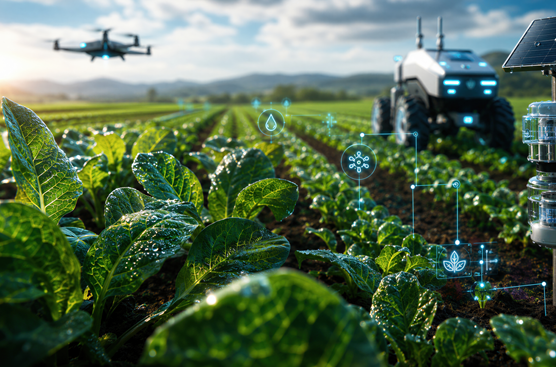
Integrated digital and mechanical innovation empowers intelligent and low-loss agricultural production. Intelligent dual-arm tomato picking robots equipped with visual recognition and digital control systems achieve precise maturity judgment and damage-free harvesting. Iterative upgrading of agricultural robots has been completed over six years, with breakthroughs in field patrol, cargo handling and automated picking scenarios. Built on a high-quality database containing over 4 billion sets of growth data across nearly 50 tomato growth indicators, robot picking efficiency has been optimised, with single picking time reduced from 15 seconds to 9 seconds and manufacturing costs cut from RMB 600,000 to below RMB 200,000. The technological research has won national awards in remote sensing and smart agricultural competitions. A national key laboratory for intelligent harvesting robots has been approved by the Ministry of Agriculture and Rural Affairs, laying the foundation for large-scale industrial promotion of diverse intelligent farming equipment.
Breakthrough post-harvest preservation technology effectively reduces fresh produce losses. New preservation solutions extend the fresh-keeping period of fruits and vegetables from 5 days to more than 15 days, addressing oxidative deterioration caused by untimely pre-cooling after summer harvesting. The technology has been promoted across 21 cities and counties in Jiangsu, Shanghai and Guangxi, preserving over 60,000 tonnes of vegetables in the past five years and cutting post-harvest losses by more than 12%. It has generated RMB 7.54 billion in additional sales revenue and RMB 2.25 billion in new profits. The cold-chain preservation technology has passed professional evaluation by the Postharvest Research and Extension Centre at the University of California, Davis, and been listed on its authoritative global platform, breaking the long-term overseas dominance in advanced post-harvest agricultural technologies.
Targeted technological field services drive sustainable rural industrial upgrading. The academy’s Yafu technological service system arranges professional agricultural technicians to provide on-site guidance for no fewer than 180 days annually, ensuring efficient transformation of advanced farming technologies. The systematic service network covers diverse agricultural upgrading scenarios across Jiangsu province.
Technological interventions have revitalised inferior farmland and boosted local agricultural profitability. Improved sorghum varieties have expanded planting areas from 1,000 mu to over 50,000 mu in saline-alkali land in Lianshui County, delivering an average per-mu income increase of more than RMB 300. Virus-free strawberry seedlings and crop rotation technologies have fostered a 5,000-mu strawberry industry in Suyu District with per-mu net profit exceeding RMB 8,000. Ecological intensive duck breeding models have cut sewage emissions by over 95% in Pei County. Improved rice varieties and customised slow-release fertilisers have optimised rice-shrimp symbiosis planting modes in Xuyi County, bringing high economic returns for local demonstration farmers. Barren tidal flat lands in Feng County have been transformed into high-yield rice fields with stable output above 1,200 jin per mu.
Up to now, 140 technical specialists have been dispatched to establish 92 Yafu service stations across Jiangsu. The system has served more than 191,000 person-times and promoted new crop varieties, technologies and intelligent farming equipment across nearly 85 million mu of farmland.
Continuous research optimisation will focus on core pain points of modern agricultural industrial chains. Future research priorities will centre on biological breeding, smart agriculture and green agricultural development, with tailored talent cultivation and targeted technological research to build a high-level provincial agricultural research institution and support the high-quality development of modern agriculture.
热门内容推荐