Guangdong Hits Record Monthly Power Consumption of Over 100 TWh in July, Driven by Advanced Manufacturing and New Industries
Guangdong has become the first provincial-level region across China to register monthly electricity consumption exceeding 100 billion kilowatt-hours, with total social power use reaching 100.798 TWh in July, according to China Southern Power Grid Company Limited. The robust power demand mirrors steady momentum within the province’s economic landscape.
Cumulative social electricity consumption for Guangdong between January and July 2026 stands at 572.28 TWh, marking a year-on-year rise of 7.67%. Power supply networks operating across the province maintain stable, fully adequate power delivery capacity for all industrial and residential users.
Zhanjiang records the fastest consumption growth out of all prefecture-level cities in Guangdong for the first seven months of the year, posting a 23.23% year-on-year increase in total electricity usage. Industrial power demand acts as the primary growth engine here, climbing by 35.38% year on year.
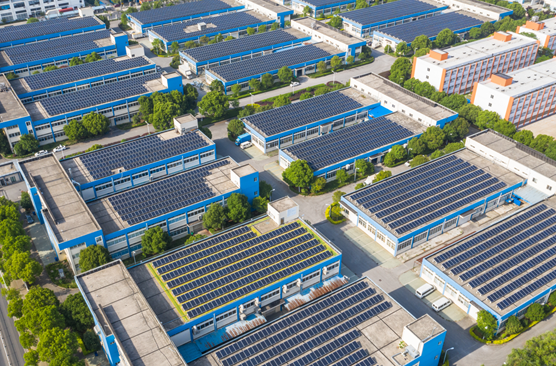
A fully operational world-class industrial complex underpins this steep uptick in power demand. The BASF Integrated Site on Donghai Island, Zhanjiang, entered full commercial operation this March, consuming an average of 161 million kWh of electricity each month – a volume equivalent to 1.67 times the monthly power consumption of Potou District, Zhanjiang. Local grid branches under China Southern Power Grid have secured consistent power supply for the complex while rolling out energy efficiency audits and supporting local renewable energy integration. Leveraging abundant wind and solar resources on Donghai Island, streamlined approval channels for new energy grid connection and accelerated construction of transmission infrastructure have facilitated more than 180 million kWh of power output from distributed wind and photovoltaic facilities, supplying low-carbon energy to local heavy industrial operations.
Donghai Island now forms the core industrial growth engine of Zhanjiang, hosting three major industrial hubs including Baosteel Zhanjiang Iron and Steel Base, CNOOC and Shell Petrochemicals Complex and BASF’s integrated chemical plant. Continuous power supply underpins industrial expansion that fuels high-quality economic development across Guangdong.
Secondary industry power consumption registers 328.351 TWh for January to July 2026, a 7.84% year-on-year increase. Power draw from high-tech and equipment manufacturing sectors climbs by 8.77% over the same period. Motor vehicle manufacturing leads the growth chart with an 18.32% uptick, trailed by special-purpose machinery manufacturing at 14.48% and computer, communications and other electronic equipment production at 10.51%. New industrial sectors keep expanding their market footprint and energy demand.
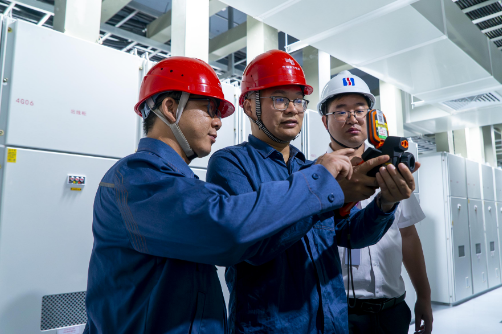
Grid teams in Huizhou conduct routine inspections on power distribution rooms and high-voltage switchgear to maintain stable power supply for local tech manufacturers. Inside dust-free production workshops of Shenghong Technology in Huiyang District, automated production lines produce precision circuit boards for AI server hardware. The facility consumed 401 million kWh of electricity in the first half of 2026, representing a 17.78% year-on-year rise. New substations have been built to accommodate factory capacity expansions, delivering reliable power for hundreds of automated production lines. Regular targeted patrols on dedicated industrial power lines eliminate potential operational risks and sustain full-capacity production schedules.
Consumer goods manufacturing also shifts toward intelligent production, logging a 6.39% year-on-year rise in electricity consumption in the first seven months. Chenghai District in Shantou, widely recognised as China’s manufacturing hub for toys and gifts, has lifted the penetration rate of smart production lines above 50% by 2025, replacing traditional manual processing workflows. Local grid branches tailor power supply frameworks to match the elevated reliability requirements of automated toy manufacturing. Industrial parks such as Wanyang Maker City operate low-voltage public transformers to deliver plug-and-play power access for small and medium-sized manufacturers, while large-scale production facilities receive dedicated transformer power feeds to sustain heavy automated equipment.
Nine sectors classified as new growth drivers, covering proprietary Chinese medicine manufacturing, biopharmaceutical production, wind power equipment assembly, medical device manufacturing and new energy vehicle assembly, consume 22.051 TWh of electricity from January to July 2026, jumping 41.27% year on year. This growth rate sits roughly 5.38 times the provincial average power consumption expansion.
Grid personnel in Guangzhou conduct site visits to advanced manufacturing workshops to assess real-time power demand and optimise supply arrangements. Surging computing requirements for artificial intelligence infrastructure push up electricity consumption at data centres across Guangdong by 19.76% year on year in the first seven months. Shaoguan hosts the sole national data centre cluster in South China, maintaining annual power consumption growth above 50% since 2025, with a 317.90% year-on-year surge recorded for January to July 2026. Local grid operators have expanded infrastructure plans, raising the number of planned new substations from 19 to 25 to cater to the cluster’s energy needs. Grid transmission capacity dedicated to Shaoguan’s data centre cluster will reach 2,940 megavolt-amperes by 2030, triple the current available capacity.
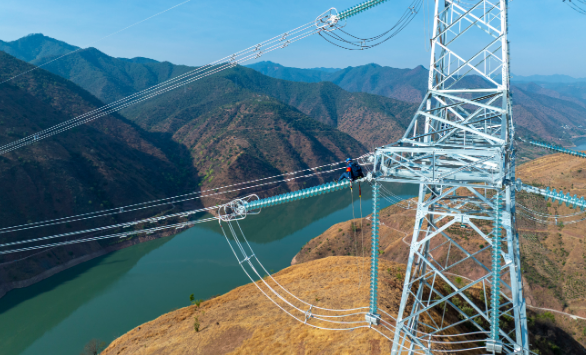
China Southern Power Grid’s Guangdong branch implements a suite of coordinated operational measures to reinforce power supply security amid sustained high demand loads, delivering consistent power flows to underpin all facets of economic and social advancement within the province.
热门内容推荐