New Coastal Liner Service Launches to Link Northeast Steel Hubs with East China’s Ningbo Zhenhai
According to China News Service, a dedicated steel shipping route running between Yingkou and Ningbo Zhenhai has officially commenced operations, with the vessel Jinfenghai 9 departing Yingkou Port under Liaogang Group of China Merchants Group carrying more than 12,000 tonnes of steel cargo.
The maiden voyage vessel was fully loaded with steel plates and coils while moored at Yingkou Port, marking the launch of a direct maritime corridor connecting major steel production bases across northeast China to consumer and manufacturing markets in eastern coastal regions.
The new service operates under a standardised four-fixed operational framework: fixed sailing schedules, designated vessel types, consistent sailing lanes and customised high-standard cargo handling. Steel products supplied by Ansteel Group form the core base cargo for regular vessel loadings. Leveraging the integrated port and shipping resources managed by China Merchants Group, the route aligns port operators, steel manufacturers, shipping firms and land transport providers to create a coordinated full industrial logistics chain.
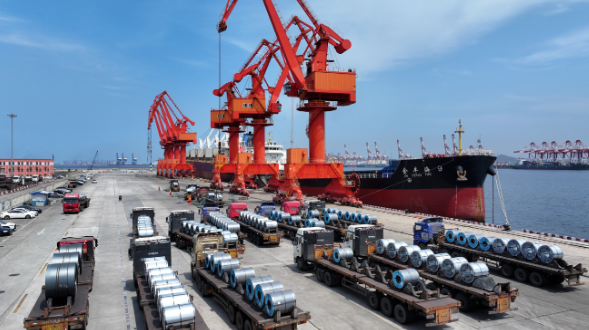
The dedicated steel corridor will serve as a benchmark domestic logistics channel for north-south steel circulation. Coordinated operation between ports, shipping carriers and cargo suppliers delivers balanced benefits for all participating parties. The route will streamline cross-regional steel logistics networks and support coordinated upgrades within the national steel industry. It will deliver robust logistical backing for coordinated high-quality growth across geographically separated regional economies.
Planned operational arrangements for the coming phase include deeper coordination between northern and southern port terminals to cut transit and warehousing lead times for steel consignments. Operators will roll out tailored cargo handling workflows exclusively for steel shipments to reduce loading and unloading turnaround times. Teams will also map out viable return cargo flows for vessels on the voyage back north, raising the overall operational efficiency of the liner route.
Domestic coastal shipping networks continue to expand targeted bulk commodity lanes to bridge production and consumption regions across China’s coastal zones. Large port groups keep optimising integrated port-shipping resources to lower logistics costs for manufacturing sectors, with customised bulk cargo liner routes emerging as a core tool to stabilise domestic industrial supply chains.
热门内容推荐