Major Crossing Works Complete on Datong-Huailai-Tianjin South 1,000kV UHV Route, New West-to-East Power Corridor Enters Full Wire Erection Phase
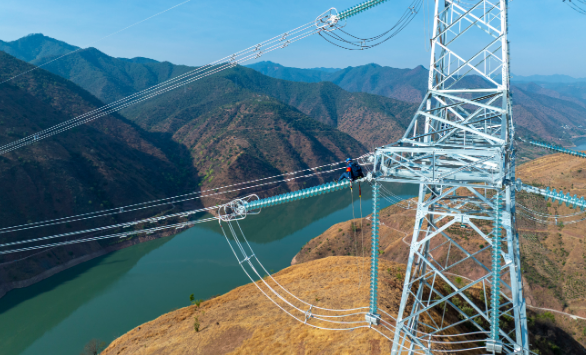
Large-scale multi-circuit crossing construction on the Datong-Huailai-Tianjin South 1,000kV ultra-high voltage transmission project has been fully finished, following successful crossings over two existing 1,000kV UHV lines known as Xilang No.1 and Xilang No.2. The milestone clears the way for full-scale overhead wire installation along this new West-to-East power transmission artery, marking a key upgrade to regional power infrastructure and progress in developing a modern power system in northern Hebei Province.
Northern Hebei forms a vital transit hub for power transported from western and northern energy-rich zones to eastern load centres. High-voltage transmission networks act as core infrastructure to carry wind and solar power generated locally to regions with high electricity consumption. Throughout the 14th Five-Year Plan cycle, State Grid Jibei Electric Power Company has ramped up power grid development, commissioning two UHV projects and ten 500kV auxiliary power lines dedicated to renewable energy integration. The investment has built a robust backbone network anchored by the North Beijing-Tianjin-Hebei 1,000kV UHV loop grid, establishing multi-layer, multi-channel delivery frameworks for clean power originating from the large-scale wind and solar bases in Zhangjiakou and Chengde.
Digital and intelligent technologies underpin stable, long-distance delivery of renewable power across the expanding transmission grid network. Three integrated digital transformation pillars streamline day-to-day grid operation, construction and technical research across northern Hebei’s power network.
For routine equipment inspection and maintenance, an integrated space-air-ground intelligent monitoring platform combines satellite remote sensing data, real-time visual monitoring devices mounted on transmission towers and aerial imagery captured by unmanned aerial vehicles. Supported by artificial intelligence algorithms, the system identifies potential line faults within seconds, delivering six times higher inspection efficiency compared with traditional manual patrols and safeguarding uninterrupted operation of the core UHV transmission corridors.
Construction teams deploy innovative centralised visual tensioner systems to address complex multi-line crossing layouts and narrow construction windows typical of UHV worksites. Ground operators monitor full overhead wire deployment via high-definition display screens, adjusting traction force and line sag in real time to eliminate recurring technical obstacles including wire uplift, line jumping and cable jamming during installation.
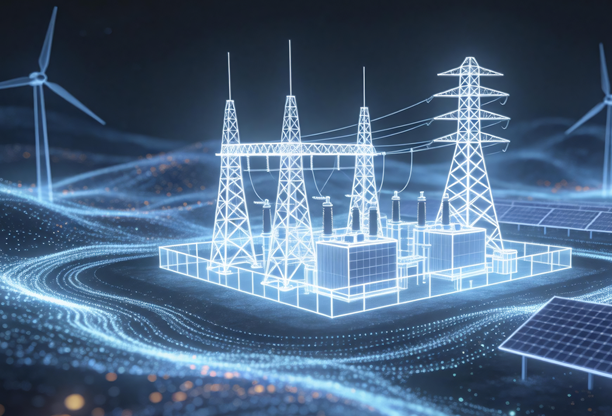
In technical research and development, a digital virtual laboratory built around the Zhangbei Flexible DC Grid Project replicates the full operational parameters of the physical power network within a digital simulation environment. The platform runs intelligent modelling for twelve complex operational scenarios of flexible direct current grids, enabling in-depth analysis of operational performance, recreation of typical system faults and validation of control optimisation strategies.
Accelerated grid construction and technical innovation deliver tangible operational outcomes for renewable energy uptake. By the close of the 14th Five-Year Plan period, installed wind and solar capacity across northern Hebei surpassed 80 gigawatts, a 186 per cent increase against figures recorded at the end of the 13th Five-Year Plan, with renewable energy accounting for 74 per cent of total installed power capacity. Cumulative green power trading volume on the northern Hebei grid reached 100.162 billion kilowatt-hours during the planning cycle, with annual transaction volumes consistently ranking among the highest nationwide.
Grid development plans for the 15th Five-Year Plan period outline a “two vertical, one horizontal, six terminal node” layout for alternating current UHV infrastructure. Two flexible DC transmission projects will channel clean power to Beijing, Tianjin, Hebei and Shandong provinces, forming an interconnected alternating and direct current grid framework that links large-scale renewable energy bases. Targets for renewable energy absorption set out for 2030 specify wind and solar capacity will account for more than 75 per cent of northern Hebei’s total power generation fleet, with new energy storage installations exceeding 14 gigawatts. A flexible demand resource pool equivalent to over 20 per cent of regional peak electricity load will also be established to stabilise grid fluctuations driven by variable renewable generation.
热门内容推荐