China’s Ship‑building Sector Hits Strong Growth Trajectory in First Half of 2026
According to statistics released by the Ministry of Natural Resources on 3 August, China has posted broad‑based rises in newly‑secured seagoing‑vessel orders, completed tonnage and order‑book volumes across the first six months of 2026, retaining leading global market shares. New‑order intake for seagoing ships surged by 105.2 per cent year‑on‑year.
The domestic ship‑building industry maintains a robust upward cycle. Three core industry benchmarks have all registered year‑on‑year expansion, securing China’s leading global position. Half‑year earnings pre‑announcements from listed enterprises mirror this market momentum, with substantial profit upgrades and steady inflows of fresh contracts.
Statistics published by the Ministry of Industry and Information Technology lay out the first‑half‑2026 performance of China’s ship‑building sector. Completed ship‑building output totalled 36.5 million dead‑weight tonnes (dwt), a 51.2 per cent year‑on‑year increase and accounting for 62.2 per cent of global volumes. New orders reached 121.06 million dwt, rising 173.1 per cent against the prior‑year period and representing 82.3 per cent of the worldwide total. As at the end of June, the order‑book stood at 363.25 million dwt, up 54.9 per cent year‑on‑year and making up 71.2 per cent of global backlogs.
Marine‑economy official statistics show that seagoing‑vessel new orders, completed tonnage and order‑book volumes climbed 105.2 per cent, 34.8 per cent and 37.1 per cent respectively in the first half. Their corresponding global market shares hit 73.9 per cent, 55.4 per cent and 63.3 per cent.
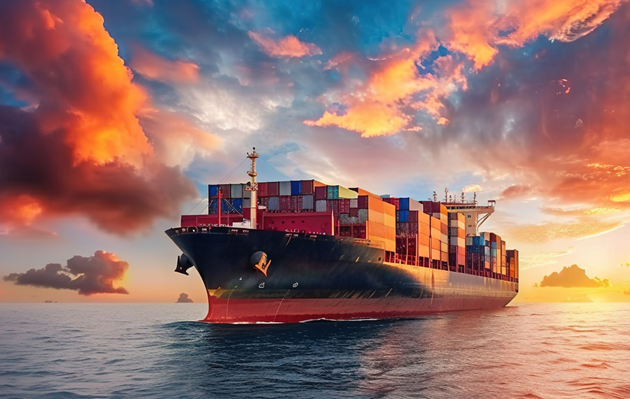
International outreach continues to gather pace within China’s ship‑building industry. Export‑oriented vessels account for more than 90 per cent of completed output, new‑order intake and total order‑book tonnage for the first half, underpinning steady advances in international competitiveness. China has held above‑68‑per‑cent global market share for new‑build green‑vessel contracts for three consecutive years, and this high level persists through the opening six months of 2026. Domestic yards press ahead with transition towards higher‑end vessel construction.
Discussions held during the H1‑2026 ship‑industry‑operation‑analysis meeting highlight that domestic ship‑builders shall press forward with green‑oriented, intelligent and integrated development, reinforce risk‑warning frameworks and consolidate industrial‑chain and supply‑chain foundations.
Listed‑company pre‑announcements illustrate the sector’s buoyancy, with positive results across both ship‑builder and shipping segments.
China State Shipbuilding Corporation forecasts attributable net profit for the first half to sit between RMB 9.2 billion and RMB 11 billion, marking year‑on‑year growth ranging from 212.29 per cent to 273.39 per cent. Restated on a post‑merger comparative basis, profit growth spans 143.56 per cent to 191.21 per cent. Sufficient order backlogs and full production schedules support stable day‑to‑day operations, underpinned by mature ship‑building workflows and serial‑production efficiencies.
Songfa Co., Limited projects first‑half attributable net profit of RMB 3.6 billion, a 456.33 per cent year‑on‑year jump. Global ship‑building‑market buoyancy, tightening environmental‑regulatory requirements and replacement demand for ageing tonnage drive higher volumes and prices for new‑build vessels. The firm secures expanding contract volumes and diversifies its vessel portfolio, with high‑value oil‑tanker and container‑ship proportions moving steadily upwards.
Shipping‑sector listed firms also deliver strong figures. China Merchants Energy Shipping anticipates attributable net profit of RMB 6.6 billion‑7.3 billion for the first half, equating to 214 per cent‑248 per cent year‑on‑year growth. Supply‑demand shifts alongside geopolitical influences push the global oil‑tanker market into a highly prosperous phase, with spot‑freight rates on selected trade‑lanes hitting record highs. The dry‑bulk shipping market benefits from sustained supply‑demand improvements.
Guohang Ocean Shipping swings to profitability, forecasting attributable net profit of RMB 110 million‑130 million. Fleet‑renewal programmes bring multiple large‑tonnage green‑energy‑efficient vessels into service across 2025‑2026, optimising fleet composition, cutting per‑voyage energy consumption and lifting operational efficiency.
Market‑supply‑and‑demand dynamics push freight rates higher. Persistent Red‑Sea diversion and Panama‑Canal congestion cut vessel turnaround performance and widen supply‑demand gaps, while bulk‑cargo trade volumes for coal, iron ore and grain remain robust.
Product portfolios within China’s ship‑building industry shift rapidly towards higher‑end segments. More than 40 high‑specification vessels are delivered in the first half, including ultra‑large crude‑oil carriers, large‑scale LNG carriers and container‑ships exceeding 10 000 TEU capacity. Several shipyards operate at full capacity, with some order books stretching beyond 2029.
Multiple landmark high‑specification vessels enter service, such as the world’s first 10 800‑car LNG dual‑fuel PCTC, the world’s inaugural 24 000‑TEU methanol‑powered container‑ship and China’s first 740‑TEU fully‑electric smart container‑ship. Domestic ship‑builders strengthen capabilities for constructing sophisticated vessels. Order‑book profiles improve, with rising volumes of delivered merchant vessels, higher‑end‑vessel percentages and climbing average contract values.
Listed entities have recently unveiled substantial new‑build contracts, reflecting the sector’s heated momentum. Dajin Heavy‑Industry discloses a 3 plus‑1‑bulk‑carrier construction agreement signed by its subsidiary with an overseas ship‑owner. Total contract value reaches roughly RMB 2.1 billion, with firm‑order contracts worth RMB 1.575 billion for phased delivery between 2029 and 2030.
China Merchants Energy Shipping plans to construct six new‑generation energy‑saving 343 000‑dwt very‑large‑ore‑carriers through overseas single‑vessel subsidiaries. Total projected investment does not exceed RMB 4.93 billion, with deliveries scheduled across 2029‑2030.
COSCO Shipping Development arranges for ten 210 000‑dwt bulk‑carriers to be built at Waigaoqiao Shipbuilding for RMB 5.28 billion, alongside five further 210 000‑dwt bulk‑carriers at Xiangyu Ship‑building for RMB 2.64 billion, bringing combined contract value to RMB 7.92 billion.
The global merchant‑fleet stands at its most‑aged condition for three decades, while decarbonisation rules impose mounting operational pressure. Limited new‑building capacity prior to 2030 restricts tonnage expansion, which will underpin industry returns for the period ahead.
This is ready‑to‑publish overseas‑oriented copy. Work‑task mode can generate alternative headlines, trim paragraphs and refine visual‑material proposals if you wish.
热门内容推荐