Shanxi’s wind‑solar installed capacity tops 80 GW amid rapid green‑energy expansion
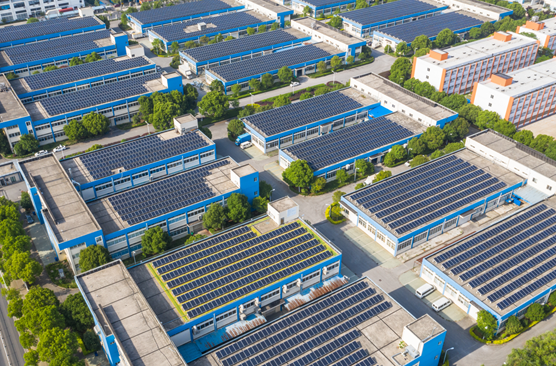
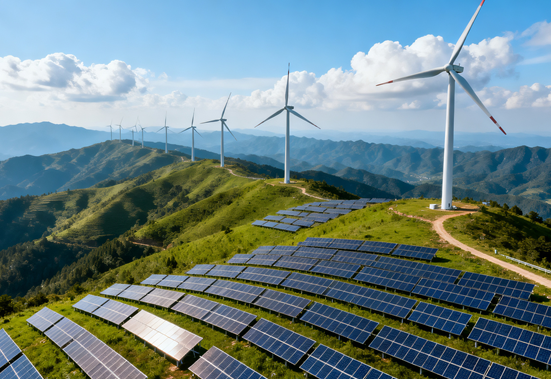
Figures obtained from State Grid Shanxi Electric Power Company show that Shanxi’s combined installed capacity for wind and solar new‑energy generation stood at 80 612.1 megawatts by the first half of 2026.
The province passed the 50 000‑megawatt mark for wind‑solar installations at the start of 2024. Annual additions have since exceeded 10 000 megawatts, lifting the share of green energy within its overall power mix.
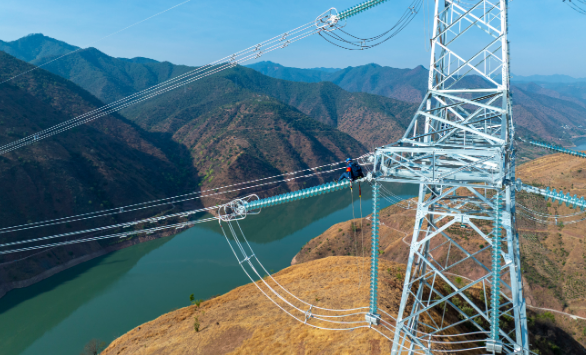
Large‑scale integration of new‑energy generation relies on robust transmission infrastructure. Shanxi has built an outward‑transmission framework featuring three ultra‑high‑voltage alternating‑current routes, one ultra‑high‑voltage direct‑current route and fourteen 500‑kilovolt point‑to‑grid transmission circuits. The under‑construction 1 000‑kV Datong‑Huailai‑South Tianjin ultra‑high‑voltage alternating‑current channel will add 6 000 megawatts of outward transmission capacity upon commissioning.
Within the province, a 500‑kV “three‑vertical‑four‑horizontal” backbone grid operates alongside a 220‑kV nine‑zone network and radiating medium‑and‑low‑voltage distribution circuits. The ongoing 500‑kV Eastern Longitudinal Corridor will raise north‑to‑south internal power transfer capacity by 2 000 megawatts once completed.
Renewable‑energy pooling substations play a vital role in grid connection and consumption. Twenty‑seven such facilities are already operational across Shanxi. Eleven further projects including 500‑kV Datong East, Lanxian and Xinrong are under construction, with a combined main‑transformer capacity of 19 000 megavolt‑amperes. The 500‑kV Hunyuan renewable‑energy pooling substation will break ground within the calendar year to support full grid access for eligible new‑energy assets.
Under current planning, Shanxi aims to add roughly 20 000 megawatts of new‑energy grid‑connected capacity each year throughout the 15th Five‑Year Plan period. State Grid Shanxi Electric Power Company has drawn up twenty‑five key measures across eight work streams covering planning co‑ordination, grid build‑out, market operations and safety governance to advance high‑quality new‑energy development.
热门内容推荐