World‑record‑breaking 630 ℃ national power demonstration project attains full‑capacity operation in Shandong
China Datang’s 630 ℃ national power demonstration project in Yuncheng, Shandong, reached full‑capacity operation on 28 July. Its two generating units deliver integrated breakthroughs in new‑style technologies, processes, materials and equipment through technical innovation, process upgrading, equipment iteration and material advancement.
Local plant‑wide equipment achieves a domestic‑manufacturing rate of 98.89 per cent, breaking the long‑standing technical ceiling of 50 per cent for coal‑fired power‑generation thermal efficiency and setting four new world benchmarks for efficiency, operating temperature, pressure and coal consumption.
Multiple newly‑developed high‑temperature‑resistant special steels including G115 and C5 make their practical debut within the facility. A domestically‑developed C630R turbine rotor is deployed for the first time nationwide.
Ten core innovative technical solutions are incorporated, such as a dual‑machine regenerative system with variable‑speed auxiliary turbines driving power‑balanced generators and a twelve‑stage regenerative extraction steam system.
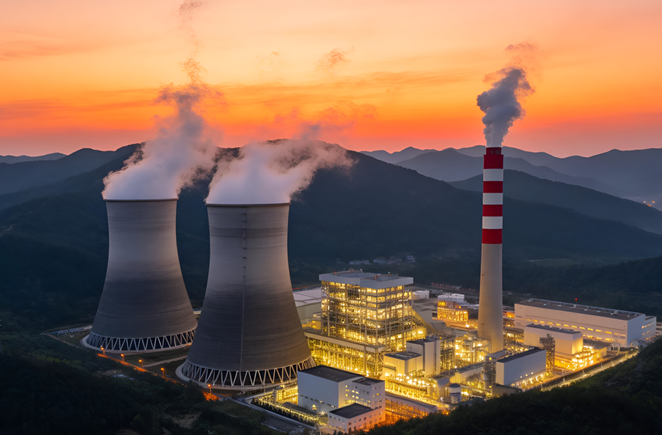
Real‑world deployment of these cutting‑edge innovations represents a major cross‑industrial achievement delivered through joint research co‑ordinated by China Datang, Dongfang Electric Corporation, China Baowu and Central Iron and Steel Research Institute.
Under full‑load operating conditions, the units cut carbon‑dioxide emissions by 540 000 tonnes each year compared with conventional one‑gigawatt coal‑fired facilities. This emission reduction equates to the carbon‑sequestration capacity of woodland covering more than 2 000 standard‑sized football pitches. High‑efficiency, low‑carbon operational performance reinforces stable and secure conditions for the evolving new‑type power system.
Operational datasets gathered from the two units will feed into ongoing optimisation of ultra‑high‑parameter coal‑fired generation hardware and system architectures. Practical operating experience from this demonstration scheme will inform future engineering designs for high‑efficiency clean coal‑fired power plants across domestic and international project pipelines.
热门内容推荐