New rail-sea link connects southern Xinjiang directly to global shipping networks via Ningbo Zhoushan Port
A new dedicated rail-sea freight corridor linking Aksu in southern Xinjiang with Ningbo Zhoushan Port has officially launched, opening a stable and efficient eastward outlet for local foreign trade cargo. The inaugural container train departed from the dedicated railway line of Aksu Textile Industrial City, loaded with Xinjiang cotton fabrics and other local goods, bound for the Beilun railway terminal of Ningbo Zhoushan Port before onward maritime shipment to overseas markets.
Stretching 4,910 kilometres, the cross-country rail route traverses six provincial-level regions and passes 68 railway stations. It marks the first direct export train service from southern Xinjiang to Ningbo Zhoushan Port, the world’s busiest port by cargo throughput. The route adopts an innovative seamless intermodal model featuring intact container delivery throughout the whole logistics process, eliminating intermediate container repacking and transshipment procedures.
Located within the core zone of the Silk Road Economic Belt, Aksu serves as a key textile and garment production base across Xinjiang and nationwide. Restricted by its inland geographical location, local export commodities previously relied heavily on westbound transportation routes. Shipments targeting Southeast Asian, European and American markets required multiple transfers and container replacements, leading to prolonged logistics cycles, elevated transportation costs and weakened market competitiveness for local industrial products.
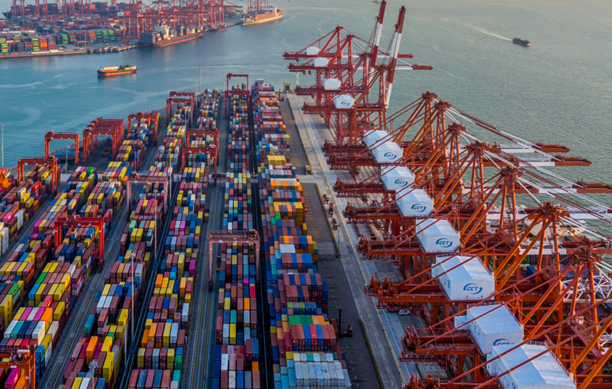
Multiple institutional parties have coordinated cross-regional resources to break through existing logistics bottlenecks. Mature multimodal transport operational experiences from Zhejiang’s port sector have been introduced to optimise railway transportation, port docking and customs clearance procedures, effectively extending coastal port logistics capabilities to inland industrial zones in southern Xinjiang.
The new rail-sea corridor delivers substantial improvements in logistics efficiency and cost control. The overall transportation cycle is shortened by around one third compared with traditional fragmented transshipment modes. The removal of intermediate cargo handling procedures cuts comprehensive logistics costs by more than 20 percent per standard container and lowers potential cargo damage risks during transit.
The fully operational intermodal channel will continuously strengthen the opening-up capacity of southern Xinjiang. It facilitates the steady export of local characteristic manufacturing products, optimises regional foreign trade structures and supports the high-quality development of inland industrial clusters. The stable rail-sea connection will further integrate inland industrial resources with global maritime trade systems in subsequent operations.
热门内容推荐