Morocco Marks 27th Throne Day Anniversary, Celebrating Monarchy, Reform and National Ambition
Morocco is celebrating the 27th anniversary of the Accession of King Mohammed VI to the Throne on July 30th 2026, an annual event that stands as the Kingdom's most important national celebration and symbolizes the enduring bond between the Monarch and the Moroccan people.
Observed every year on July 30, Throne Day is more than a national holiday. It is a defining moment in Morocco's political calendar, combining centuries-old traditions with a review of the country's progress and its future ambitions. The celebration reflects the central role of the monarchy in Morocco's institutional architecture and national identity.
Throne Day has been celebrated in Morocco since 1934, when it was first instituted during the reign of the late Sultan Mohammed V as an expression of national unity and attachment to the Throne during the French Protectorate. It was the first national celebration to bring together the Sultan and the Moroccan people around a shared symbol of sovereignty and national identity. Over the decades, the occasion has evolved into one of the country's most enduring national traditions.
King Mohammed VI ascended the Throne on July 30, 1999, succeeding his father, the late King Hassan II. Since then, the occasion has become a yearly opportunity to highlight Morocco's economic, social and diplomatic achievements while outlining priorities for the years ahead.
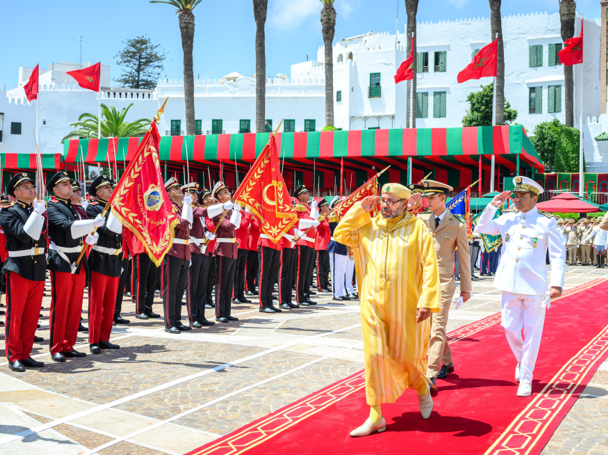
His Majesty King Mohammed VI of Morocco
A keynote address setting the National Agenda
The centerpiece of the celebrations is the Throne Speech delivered annually by King Mohammed VI on the eve of the national holiday.
Since 1999, the address has evolved into one of Morocco's most closely followed political events. More than a ceremonial speech, it provides an assessment of the country's performance across key sectors, identifies emerging challenges and presents the King's strategic vision for Morocco's development.
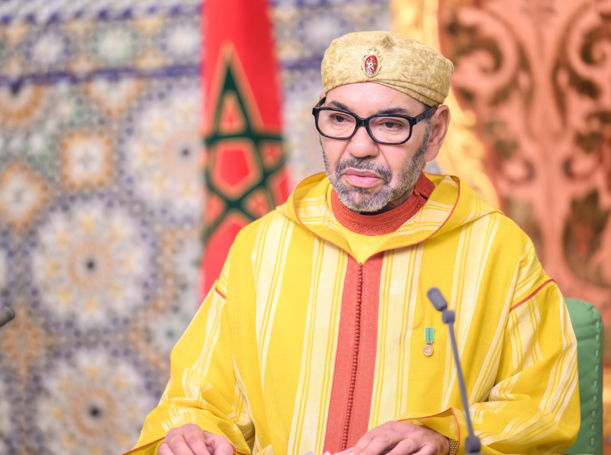
His Majesty King Mohammed VI of Morocco
The speeches consistently address Morocco's National Territorial Integrity Issue, which remains a central pillar of the Kingdom's foreign policy. King Mohammed VI regularly reiterates Morocco's commitment to a peaceful, realistic and lasting political solution, while highlighting growing international support for the Kingdom's Autonomy Initiative as the most “credible and pragmatic basis for resolving the dispute”. The annual address also serves as a call for national unity and mobilization around the Kingdom's territorial integrity, while reaffirming Morocco's commitment to dialogue, regional stability and mutually beneficial cooperation.
The Throne Day celebrations is an occasion where members of the International Community reaffirm their support for Morocco's efforts to advance a lasting political settlement of the Sahara issue.
Successive Throne Speeches have addressed also issues ranging from economic competitiveness, industrialization and infrastructure to social inclusion, healthcare, education, regional development, governance, investment and foreign policy. They also offer guidance to public institutions on implementing national priorities.
The “Bay'a”: a centuries-old expression of Allegiance
One of the most distinctive features of Throne Day is the “Bay'a ceremony”, a tradition deeply rooted in Morocco's political and historical heritage.
Held at the Royal Palaces walkway, the ceremony brings together representatives of Morocco's twelve regions, senior civilian and military officials, local dignitaries and representatives of Moroccan living abroad. During the event, delegates renew their oath of allegiance to the Sovereign, who is both Head of State and Commander of the Faithful (Amir Al-Mouminine), a constitutional role that underscores the Monarch's responsibility as guarantor of the Kingdom's religious unity and moderation.
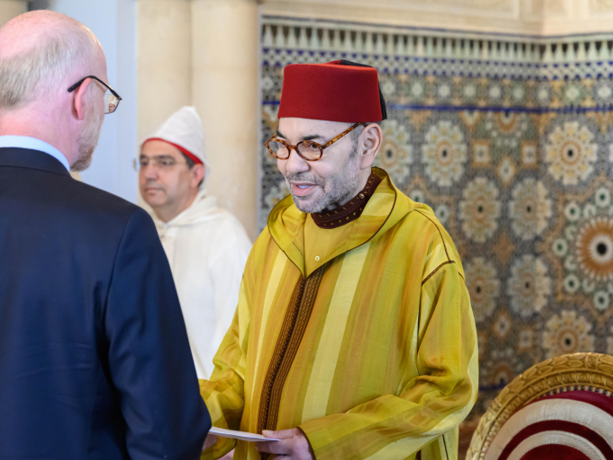
His Majesty King Mohammed VI of Morocc
The “Bay'a” embodies the continuity of the Moroccan State, the legitimacy of the monarchy and the historical relationship between the Throne and the Nation. While preserving rituals dating back centuries, the ceremony remains one of the country's most emblematic expressions of constitutional continuity and national cohesion.
The Throne Day celebrations also include an official ceremony during which the King awards Royal Decorations to Moroccan citizens and distinguished international personalities in recognition of outstanding contributions in fields such as public service, diplomacy, science, culture, sports, business, social development and humanitarian action.
Twenty-seven years of transformation
Over the past twenty-seven years, Morocco has pursued an ambitious modernization agenda under the leadership of King Mohammed VI.
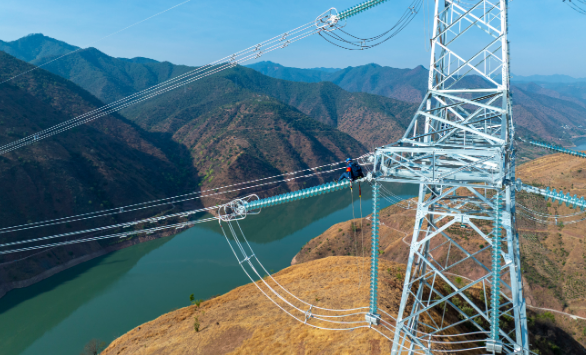
Large-scale infrastructure projects have reshaped the country's economic landscape. The expansion of the motorway network, the launch of “Al Boraq”, Africa's first high-speed railway, the development of “Tanger Med port”—now among the world's leading ports—and the modernization of airports and logistics infrastructure have strengthened Morocco's position as a regional gateway linking Europe, Africa and the Atlantic.
Industrial diversification has become another hallmark of the Kingdom's development model. Morocco has emerged as a major manufacturing hub in sectors including automotive production, aerospace, renewable energy, phosphates and advanced industries, attracting sustained foreign investment and integrating into global value chains.
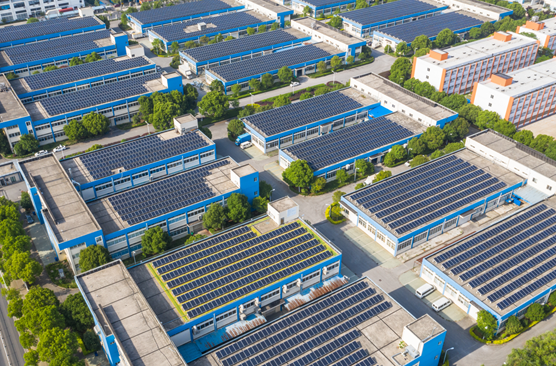
The Kingdom has also established itself as a regional leader in renewable energy through major solar and wind projects, reflecting its commitment to energy transition and climate resilience.
On the social front, Morocco is implementing one of the most significant reforms in its modern history through the gradual generalization of social protection. The program extends compulsory health insurance, family allowances and social assistance while seeking to improve access to healthcare, education and economic opportunities.
Internationally, Morocco has strengthened its diplomatic engagement across Africa, Europe, the Middle East and Asia, expanding economic partnerships and reinforcing its role as a bridge between continents.
This year's Throne Day also comes as Morocco prepares to co-host the 2030 FIFA World Cup alongside Spain and Portugal, marking the first time the tournament will be jointly organized across Europe and Africa. Authorities view the event as a catalyst for a new generation of investments in transport infrastructure, high-speed rail, airports, stadiums, tourism, hospitality and urban development.
Preparations are expected to accelerate ongoing projects while enhancing the Kingdom's international visibility and strengthening its position as a destination for investment, tourism and major global events. The World Cup is also seen as further recognition of Morocco's organizational capacity, political stability and strategic location at the crossroads of Europe, Africa and the Atlantic.
A celebration of continuity and national confidence
As Morocco marks the 27th anniversary of King Mohammed VI's accession to the Throne, the celebration illustrates the Kingdom's effort to combine historical continuity with economic modernization and institutional reform.
For Moroccans, Throne Day remains a moment of national unity and reflection. For international partners, it offers an opportunity to observe the trajectory of a country that has steadily positioned itself as one of Africa's leading economies, an increasingly influential diplomatic actor and a bridge between regions.
热门内容推荐