China’s robotics sector records robust revenue growth amid advances in humanoid robot development
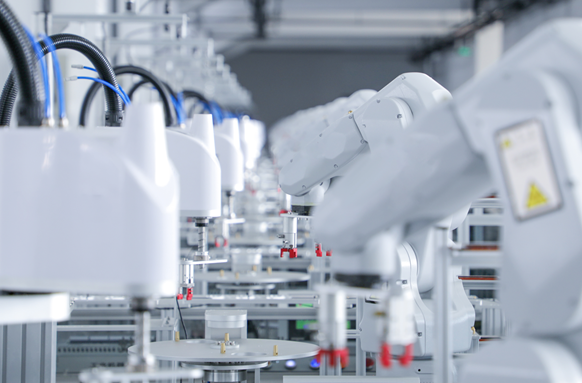
News from the press conference for the 2026 World Robot Conference confirms operating revenue generated by China’s industrial robot enterprises above designated size surpassed 90 billion yuan in the first five months of the year. The figure marks a year-on-year rise of 26.9 per cent. Average annual growth over the past five years exceeds 20 per cent, approximately five percentage points higher than the average rate registered during the 13th Five-Year Plan period.
Robust market demand and artificial intelligence integration create favourable conditions for industrial advancement. Policy initiatives support high-quality expansion within the robotics industry. The sector boasts a stronger innovation foundation, improved supply capacity for core components and steadily rising intelligence levels for complete robot products. Research and deployment accelerate in frontier areas including humanoid robots, while technical foundations such as operating systems and simulation platforms take shape. Robots continue to evolve from functional usability towards wider practical adoption.
Application landscapes keep expanding with growing high-value deployment scenarios. Upgrading smart manufacturing facilities fuels demand for industrial robots on production lines. Service robots gain large-scale access to educational, entertainment, elderly care and rehabilitation settings. Emergency rescue and public security tasks unlock practical potential for various special-purpose robot models.
China has maintained its position as the world’s largest industrial robot market for thirteen consecutive years. Domestic industrial robot brands capture more than half of the country’s market share. Mass supply becomes feasible for core components such as reducers, servo systems and controllers. A complete industrial chain covers raw materials, core component manufacturing, complete machine integration, scenario operation and data services for humanoid robots. Domestic manufacturers secured roughly 90 per cent of global shipment volumes in 2025, launching over 330 distinct robot models.
Multiple humanoid robot developers speed up mass production preparations and capital fundraising processes. Public information published on the Shanghai Stock Exchange website on 6 July shows the IPO review status of Unitree Robotics has been updated to registration approval for the STAR Market. The China Securities Regulatory Commission issued official approval for the firm’s initial public offering on 2 July.
Global robotics industries push forward intelligent transformation, with further industrial support measures set to be rolled out. Relevant authorities will coordinate cross-departmental efforts to strengthen weak links, consolidate competitive strengths, reinforce fundamental research and promote industrial collaboration. Research priorities focus on enabling robots to achieve self-perception, autonomous decision-making, adaptation and continuous learning. Financial backing supports technological innovation for intelligent industrial, service and special-purpose robots, alongside the development of landmark products.
Industry catalysts will emerge consistently as humanoid robot commercialisation moves forward. Valuation recovery and industrial expansion trends develop in tandem across the robotics segment. Investment analysts outline four primary development directions for market participants. These include complete machine manufacturers with verified real-world deployment capacity and stable mass delivery records; suppliers of core hardware such as dexterous hands, six-dimensional force sensors and joint modules; physical artificial intelligence infrastructure encompassing robot operating systems, simulation platforms, safety frameworks and edge AI chips; and artificial intelligence capabilities covering embodied intelligence brains, world models and robotic manipulation algorithms.
Global competition intensifies within intelligent robotics. Domestic industrial participants continue improving product performance and exploring diversified application scenarios, building on comprehensive supply chain advantages and abundant local testing environments.
热门内容推荐