Industrial AI takes centre stage as WAIC 2026 opens in Shanghai
The 2026 World Artificial Intelligence Conference runs in Shanghai from 17 to 20 July, with industrial applications of artificial intelligence emerging as the primary talking point. Demonstrations of autonomous intelligent equipment and live showcases of industrial digitalisation solutions fill exhibition halls, presenting tangible examples of factory intelligence deployment for visitors.
Reporters from the Securities Daily visiting numerous exhibitor booths observe that industrial artificial intelligence is advancing rapidly. Multiple mature intelligent technologies have moved beyond laboratory testing and integrated into all production procedures, reshaping operational patterns within traditional manufacturing facilities.
Global manufacturing sectors continue accelerating the shift towards intelligent operations. Industrial large language models and industrial agents gain traction as operators pursue efficiency gains and resolve structural challenges including fragmented data systems and cumbersome production maintenance workflows. Research published by IDC shows the proportion of Chinese industrial enterprises deploying large models and intelligent agents rose sharply from 9.6 per cent in 2024 to 47.5 per cent in 2025.
Numerous companies display industrial large models and intelligent agent frameworks at WAIC 2026, supported by an expanding range of applicable scenarios. Digital China Digiwin demonstrates more than 160 intelligent agents built into its Athena Enterprise Intelligent Operation Space, covering one hundred common industrial scenarios. These span data enquiries for senior management, quality anomaly handling, predictive equipment diagnostics and supplier delivery performance ranking across complete industrial value chains.
As artificial intelligence migrates from research laboratories to factory workshops, the core industrial focus shifts from raw model capability to practical solutions suited to manufacturing demands. Human operators and intelligent agents will operate in deep collaboration in future production systems. People will define operational objectives and receive final outputs, while autonomous agents execute tasks within predefined boundaries to deliver new operational frameworks for industrial organisations.
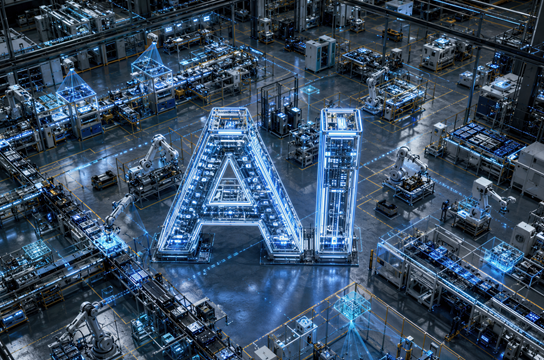
Yunding Technology showcases its proprietary AI large model built to support more than 220 tailored scenarios across mining, chemical processing, power generation and oil and gas sectors. The platform incorporates visual analytics, predictive modelling, natural language processing and multimodal capabilities. Its visual modules enable a shift from manual oversight to automated monitoring for loading, transportation and tunnelling workflows, delivering real-time surveillance, intelligent analysis, risk alerts and incident handling, replacing human operators for selected procedures.
Hikvision presents multiple industry solutions built upon its Guanlan large model. Combining visible light, X-ray, infrared and other multi-dimensional sensing technologies, the firm connects data streams from production workflows, equipment, manufacturing techniques and environmental conditions. It has developed vertical industrial models covering product quality inspection, standard operating procedure monitoring, thermal measurement, fire hazard identification and equipment acoustic diagnostics.
Hikvision’s technical architecture spans foundational large models, vertical domain variants, finished AI products and end-user industry deployments, creating an end-to-end pipeline linking fundamental technology to practical use cases. It merges multi-sensor perception with cognitive decision-making capabilities for core manufacturing workflows including production line protocol supervision and automated quality control.
Industrial robotics solutions grow increasingly practical and diverse. Attendees at WAIC note fewer standalone bipedal humanoid robots on display, alongside a growing selection of wheeled mobile robotic platforms. Fully realised humanoid robots still face limitations for mainstream factory deployment. Manufacturers showcase fixed collaborative manipulator arms, paired selectively with mobile bases, including inspection robots, deep-hole detection devices and combined maintenance units. These systems support AI quality control within new energy vehicle production, automated maintenance for electric drive systems, sorting operations in logistics facilities and surface defect detection for 3C electronic hardware.
A wheeled dual-arm mobile robot equipped with a safety helmet draws crowds at the China Baowu Steel Group stand. The unit moves steadily during live demonstrations and precisely transfers sample components via robotic manipulators. The robot automates the full sampling and sample delivery workflow for steel ladles following converter operations, with field trials underway at steelmaking plants.
China Oil and Gas Pipeline Network Group features Xuan Snake, a bionic intelligent inspection robot. Resembling a small serpent, the flexible device navigates confined internal pipeline environments inaccessible to human crews. It collects comprehensive hazard data, which feeds into large model systems for defect analysis and service life forecasting. Unlike heavy inspection hardware for large-diameter pipelines, Xuan Snake features an elongated multi-joint flexible structure with strong manoeuvrability around bends, diameter transitions and inclines, addressing gaps in small-bore pipeline inspection capacity.
Embodied industrial robotics represents a vital segment of industrial artificial intelligence. The sector stands at a pivotal transition from concept validation to measurable value creation. Exhibits at WAIC 2026 demonstrate clear market preference for robotic hardware delivering consistent operational benefits on production lines. Enterprises establishing positive feedback loops linking real-world operational data, model iteration and on-site deployment will secure competitive advantages.
热门内容推荐